

Muon Space, a US-based space systems company specializing in end-to-end satellite mission delivery, is highlighting the Constellation Stack, an integrated architecture that brings together spacecraft, payloads, ground systems and operations into a unified mission framework. The Constellation Stack reflects Muon Space’s approach to building scalable, mission-specific satellite constellations that address the growing demand for timely, high-quality Earth observation and space-based data services. Muon Space’s Constellation Stack is designed as a vertically integrated system that spans the full mission lifecycle from mission definition and spacecraft development to launch integration, on-orbit operations and data delivery.
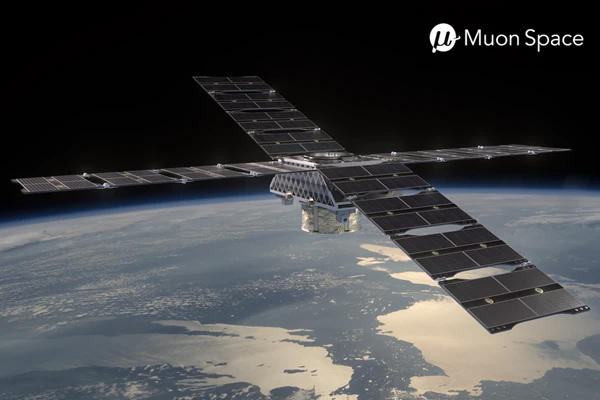
Rather than treating satellites, payloads, and ground infrastructure as separate elements, the stack aligns these components from the outset to ensure performance consistency, predictable timelines and operational efficiency. This approach allows mission requirements, such as revisit rate, latency, coverage and data quality, to be translated directly into constellation design and operational planning. At the core of the Constellation Stack are Muon Space developed spacecraft platforms engineered to support a range of mission payloads, particularly for Earth and environmental observation. The spacecraft buses are designed with standardized mechanical, electrical and data interfaces, enabling efficient payload integration while maintaining flexibility for mission-specific instruments. Payloads are tightly coupled with onboard processing, power management and thermal control systems, ensuring that sensor performance and spacecraft resources are balanced across the constellation. This integrated design supports consistent data quality across multiple satellites and reduces variability between units.

The Constellation Stack includes a fully integrated ground segment that supports command and control, telemetry monitoring, mission planning and data handling. Ground systems are designed to scale with constellation size, enabling operators to manage multiple spacecraft through coordinated scheduling, automated tasking and centralized monitoring. Mission operations are structured to support continuous data collection and rapid response to changing mission priorities, such as environmental events or time-sensitive observation requests. By integrating ground software and operational workflows with spacecraft design, Muon Space enables efficient day-to-day constellation management. A key element of the Constellation Stack is its data pipeline, which transforms raw satellite observations into usable products for end users. The architecture supports onboard data handling combined with ground-based processing to manage large data volumes while maintaining low latency. This allows customers to receive timely, analysis-ready datasets aligned with mission objectives. The system is designed to support repeatable processing across the constellation, ensuring consistency in data formats, calibration and quality over the mission lifetime.
Muon Space’s Constellation Stack is built to support growth from initial demonstration missions to full operational constellations. The modular nature of the spacecraft, ground systems and operations allows additional satellites to be incorporated without redesigning core infrastructure. This scalability is particularly relevant for missions requiring higher revisit rates, expanded geographic coverage, or increased data throughput over time. The stack’s design also supports constellation resilience through coordinated operations and standardized system elements. The Constellation Stack is well suited for missions focused on Earth observation, climate and environmental monitoring and scientific data collection.
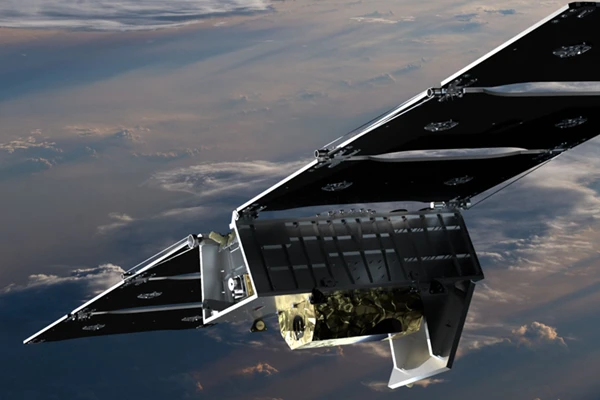
By integrating hardware, software and operations into a single architecture, Muon Space enables constellations that can deliver frequent, high-quality observations across large areas of interest. This capability supports applications such as weather analysis, climate research, environmental compliance and natural resource monitoring, where consistent and timely data are critical. By offering the Constellation Stack, Muon Space provides mission operators with a practical pathway to deploy and operate satellite constellations aligned with specific data needs. The company’s emphasis on system-level integration helps reduce development risk, streamline operations, and improve mission predictability, supporting organizations seeking reliable space-based data services without managing fragmented infrastructure.
About Muon Space
Muon Space is a US-based space systems company focused on delivering integrated satellite missions for Earth observation and scientific applications. Headquartered in California, USA, Muon Space provides end-to-end space services that span mission design, spacecraft and payload development, launch integration, ground systems and on-orbit operations. The company’s approach emphasizes system-level integration, aligning satellites, ground infrastructure and data pipelines to meet specific mission objectives with predictable performance and timelines. By combining engineering, operations, and data delivery within a unified architecture, Muon Space supports government, commercial and research customers seeking reliable space-based data solutions across the full mission lifecycle.