
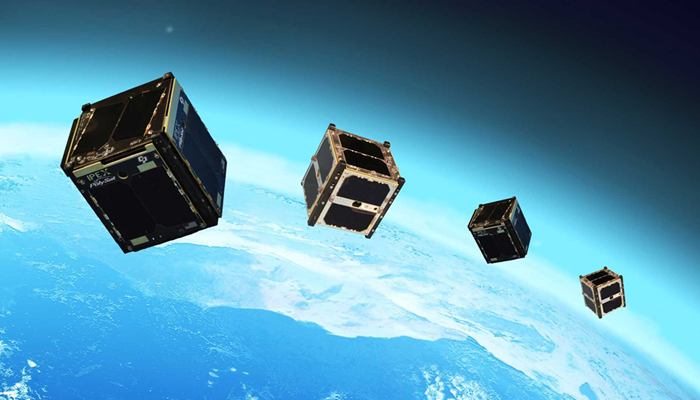
Miniaturization refers to the design and development of smaller, lighter and more power-efficient satellites and spacecraft systems without compromising their mission objectives. The approach provides advancements in microelectronics, materials science, and manufacturing techniques to pack significant functionality into compact designs. The miniaturization in space technology is a cost-saving trend and a strategic evolution, enabling faster deployment, more frequent launches and wider access to space for governments, research institutions, startups and even universities.
The miniaturization of satellites and space systems is being driven by several key factors that are reshaping the economics and pace of space exploration. The most significant drivers is the reduction in launch costs per kilogram, which has made it more feasible to send smaller, lighter payloads into orbit without compromising mission goals. At the same time, rapid advances in semiconductor technology and miniaturized sensors have enabled spacecraft to pack greater computational power, data processing capability and sensing precision into compact designs. The adoption of commercial off-the-shelf (COTS) components has further accelerated this trend by lowering costs, improving accessibility and shortening development timelines, even though it requires careful qualification for the harsh space environment. There is a growing demand for rapid technology demonstration and prototyping in orbit, especially from startups, research institutions and defense agencies, which favors small, agile satellite platforms that can quickly validate new innovations. These factors are fueling a new era of highly capable, miniaturized satellites that expand opportunities for both commercial and scientific missions.
CubeSats & NanoSats

CubeSats represent one of the most important innovations in the field of small satellite technology, built on a standardized modular form factor that makes them highly versatile and cost-effective. Each basic unit, known as 1U, measures just 10 × 10 × 10 cm and weighs around 1.3 kilograms, but these units can be combined into larger configurations such as 2U, 3U, 6U, or 12U, depending on the complexity and requirements of the mission. This modular design allows universities, startups, and even large space agencies to design and launch satellites quickly and affordably, significantly lowering the barrier to entry in space exploration. CubeSats are widely deployed for a variety of applications, including Earth observation, where they capture high-resolution imagery and environmental data; scientific research, where they conduct experiments in microgravity or study space weather; technology demonstration, serving as testbeds for new sensors, propulsion systems, and AI-driven software; and communication services, where they provide data relay and support emerging networks. Their small size, scalability, and low cost have made CubeSats an essential component of modern space missions, driving innovation across both commercial and scientific domains.
NanoSats, typically weighing between 1 kg and 10 kg, occupy a unique category within the small satellite spectrum that often overlaps with CubeSats but extends beyond their standardized design. Unlike CubeSats, which follow strict modular units, NanoSats can adopt non-standardized shapes and architectures, giving engineers greater flexibility in terms of payload capacity, subsystem integration, and mission customization. Despite their compact size, they retain the advantages of miniaturization, such as lower launch costs, faster development cycles, and the ability to integrate cutting-edge technologies into space missions.
The rise of CubeSats and NanoSats represents one of the most transformative shifts in the modern space industry. The traditional satellite missions required 5–10 years of development and millions of investments, these small satellites can now be designed, built and launched within 12–24 months at just a fraction of the cost. This shift has democratized access to space, empowering universities to provide students with hands-on training in real-world missions, enabling startups to experiment with satellite-based services, allowing governments to execute rapid-response missions for defense, disaster management, or climate monitoring and supporting commercial enterprises in building massive LEO constellations for broadband connectivity and Earth observation. CubeSats and NanoSats are reshaping the economics and accessibility of space, making it more inclusive, innovative and fast-paced than ever before.
Advantages of Miniaturized Satellites

- Lower Cost: Miniaturized satellites drastically reduce both development and launch expenses compared to traditional large satellites. This affordability enables universities, startups, and emerging nations to participate in space missions that were once financially out of reach.
- Faster Development Cycle: Unlike conventional satellites that can take up to a decade to build, CubeSats and NanoSats can be designed, tested, and launched within a few months. This agility allows quicker adaptation to new technologies and emerging mission needs.
- Standardization: The adoption of standardized CubeSat form factors simplifies design, testing, and integration with launch vehicles. This standardization also increases rideshare opportunities, reducing wait times and further lowering costs.
- Scalability: Miniaturized satellites can be launched in swarms or large constellations, enabling continuous global coverage and redundancy. This scalability is key to applications like broadband internet, Earth observation, and climate monitoring.
- Technology Demonstration: CubeSats and NanoSats provide an affordable way to test new payloads, sensors, or materials in the harsh space environment. Successful demonstrations pave the way for scaling innovations to larger missions or commercial deployment.
Applications of CubeSats and NanoSats

1. Earth Observation: CubeSats equipped with compact optical, infrared, or radar payloads capture high-resolution images of Earth’s surface. These images are invaluable for monitoring climate change, tracking agricultural productivity, managing natural resources, and providing rapid insights during disasters like floods or wildfires.
2. Communication: NanoSats are increasingly used in low Earth orbit (LEO) constellations to deliver affordable global broadband services. They also support IoT networks and machine-to-machine (M2M) communications, enabling seamless connectivity for smart cities, maritime tracking, and remote industries.
3. Scientific Research: CubeSats serve as cost-effective platforms for conducting experiments in space, ranging from atmospheric composition studies to magnetosphere and ionosphere monitoring. They are also used in interplanetary missions, providing opportunities for planetary exploration and astrophysics research at lower costs.
4. Technology Demonstration: Miniaturized satellites provide a testbed for validating new propulsion systems, advanced solar panels, radiation-hardened electronics, and AI-based onboard processing. Successful demonstrations in orbit build confidence before integrating these innovations into larger, high-value space missions.
5. Defense and Security: CubeSats and NanoSats are playing an increasing role in reconnaissance, surveillance, and secure communications for defense applications. They also contribute to space situational awareness (SSA), helping track space debris and monitor adversary satellite activities to enhance national security.
Challenges of Miniaturization in Space

- Limited Power Generation: Due to their small size, CubeSats and NanoSats have limited surface area for mounting solar panels. This restricts the amount of power available, making it difficult to operate high-demand payloads or advanced communication systems. Engineers often need to optimize power budgets carefully to balance payload performance with spacecraft survival.
- Thermal Management Issues: Miniaturized satellites have less room for radiators or thermal control systems, which makes managing heat dissipation a major challenge. As electronics operate in vacuum, they can quickly overheat or freeze depending on orbital conditions. This creates risks for both performance and long-term reliability.
- Radiation Susceptibility: Many miniaturized satellites use Commercial Off-the-Shelf (COTS) components to reduce cost, but these are not always radiation-hardened. Exposure to cosmic rays and solar radiation can cause single-event upsets, bit flips, or permanent damage to onboard electronics. Without proper shielding or redundancy, mission reliability can be compromised.
- Restricted Payload Capacity: The compact size of CubeSats limits the types and number of instruments they can carry. This reduces their ability to host complex scientific payloads, high-resolution cameras, or powerful communication systems. As a result, missions often prioritize specific, narrowly defined objectives.
- Shorter Lifespan: Most CubeSats and NanoSats are designed for operational lifetimes of only 1–3 years, much shorter than traditional satellites. This is partly due to limited onboard resources, susceptibility to radiation, and orbital decay in LEO. While cost-effective for rapid missions, it reduces their long-term utility compared to larger spacecraft.
Enabling Technologies Behind Miniaturization
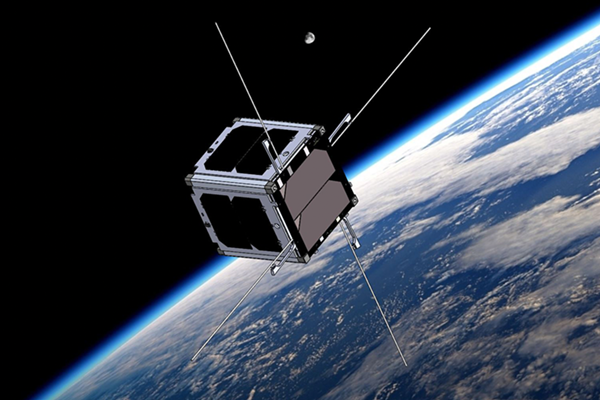
1) Micro-Electro-Mechanical Systems (MEMS): MEMS technology makes it possible to design highly compact sensors, actuators, and control systems that fit within the limited volume of CubeSats and NanoSats. These devices support functions such as attitude control, navigation, and environmental sensing with minimal power consumption. By replacing bulky mechanical systems, MEMS drastically reduce size, weight, and cost.
2) Miniaturized Propulsion Systems: Traditional propulsion systems are too large for small satellites, so engineers are developing miniaturized electric thrusters, cold-gas systems, and chemical micro-thrusters. These enable CubeSats to perform orbital maneuvers, station-keeping, or even interplanetary missions. The availability of propulsion expands mission flexibility and extends satellite lifetimes.
3) High-Efficiency Solar Cells: Next-generation solar cells, including multi-junction and lightweight thin-film photovoltaics, allow CubeSats to generate more power from limited surface areas. These cells are designed to withstand harsh radiation and thermal cycling in orbit. By maximizing energy production, they enable advanced payloads and longer operational lifespans.
4) Radiation-Tolerant COTS Components: To balance cost and survivability, engineers increasingly adapt commercial off-the-shelf (COTS) components with radiation-tolerant designs. Techniques such as shielding, error correction, and selective hardening improve reliability without driving up expenses drastically. This approach makes space missions more affordable while still ensuring functionality in hostile space environments.
5) 3D Printing and Additive Manufacturing: Additive manufacturing enables the production of lightweight, complex, and custom-designed satellite structures at lower cost and faster turnaround. Components such as brackets, antennas, and even propulsion parts can be 3D-printed, reducing reliance on traditional machining. This flexibility accelerates prototyping and lowers the barriers for small organizations entering the space industry.
Role of CubeSats in Mega-Constellations

- Mass production of satellites at scale – CubeSats and NanoSats are designed with standardized form factors, making them easier to manufacture in large quantities. This scalability lowers production costs and enables companies to deploy entire constellations much faster compared to traditional satellites.
- Rapid replenishment of satellites due to short lifespans – Since CubeSats typically operate for only a few years, mega-constellation operators must replace failed or deorbited units frequently. Their low cost and modular design allow for quick replenishment, ensuring uninterrupted service.
- Distributed architectures for resilience – Instead of relying on a few large satellites, mega-constellations use swarms of CubeSats spread across orbits. This distributed architecture ensures redundancy, so if a few satellites fail, the overall network still functions effectively.
- Deep Space Exploration – CubeSats are extending their role beyond Earth’s orbit into planetary exploration. NASA’s MarCO CubeSats demonstrated their effectiveness by relaying telemetry during the InSight Mars landing, marking the first use of CubeSats in deep space. Future missions plan to deploy CubeSats for tasks such as asteroid reconnaissance, lunar surface mapping, and studying solar activity, providing cost-effective support to larger spacecraft.
Future of Miniaturized Satellites
- Artificial Intelligence (AI) integration for autonomous operations – AI enables CubeSats and NanoSats to make real-time decisions without constant ground intervention. This includes adaptive mission planning, onboard anomaly detection, and autonomous navigation, which are critical for deep-space and high-density constellation operations. By reducing reliance on human operators, AI improves efficiency and responsiveness in unpredictable space environments.
- Swarm Intelligence for coordinated multi-satellite missions – Swarm intelligence allows groups of CubeSats to operate collaboratively, much like a school of fish or flock of birds. These coordinated behaviors can enable advanced applications such as distributed sensing, space-based radar, and real-time Earth observation. Such systems enhance resilience since the failure of one satellite does not compromise the entire mission.
- Hybrid Constellations combining small satellites with larger spacecraft – Future missions are likely to use hybrid constellations where CubeSats handle specialized tasks while larger satellites manage heavy data processing and communications. This division of labor makes missions more cost-effective and scalable. It also creates flexible architectures where smaller satellites can be rapidly deployed to augment or replace capabilities as needed.
- Cislunar CubeSats supporting Artemis and lunar exploration missions – CubeSats are expected to play a vital role in cislunar space, acting as scouts, communication relays, and resource-mapping tools. NASA’s Artemis program already plans to deploy CubeSats to study lunar water ice, radiation environments, and navigation systems. Their low cost and adaptability make them ideal for risk-taking and high-frequency missions beyond Earth orbit.
- Green Propulsion to minimize orbital debris and ensure sustainability – The future of CubeSats includes eco-friendly propulsion technologies such as electric, iodine-based, and water-based thrusters. These systems provide efficient maneuvering and reduce harmful propellants that can complicate deorbiting. By enabling controlled re-entry and collision avoidance, green propulsion ensures that the rapid expansion of small satellites does not worsen orbital debris challenges.
The miniaturization of space technology, particularly the rise of CubeSats and NanoSats, has revolutionized access to space. These compact satellites enable cost-effective, rapid and scalable missions, empowering universities, startups, governments and global corporations. From Earth observation and communication to deep space exploration, miniaturized satellites are driving a new era of innovation in space technology. They have a range applications from monitoring climate change and enabling broadband connectivity to supporting planetary science and interplanetary missions. Their versatility proves that even small platforms can deliver big impacts in advancing both scientific research and commercial opportunities.
Satellite Bus & Platform Manufacturers (View All)
-

Azista BST Aerospace
-

General Atomics
-

Space Inventor
-

Berlin Space Technologies
-

OHB Sweden
-

German Orbital Systems
-

York Space Systems
-

C3S Electronics Development