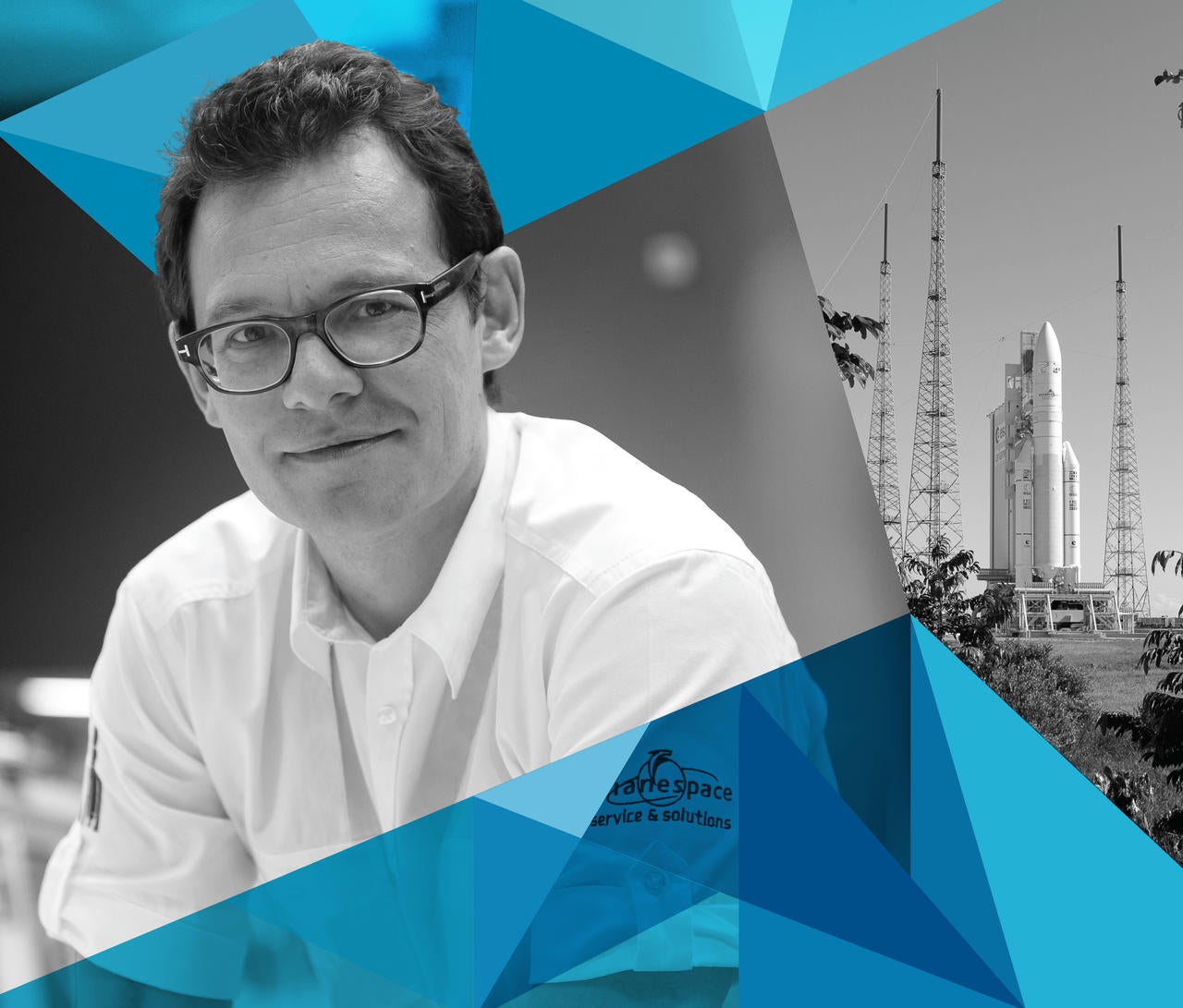
When Stéphane Israël took over the reins of Arianespace in 2013, it was at a time when the company was facing unprecedented competition in the launch services market. The emergence of SpaceX, as well as others, meant the future of the company, while not necessarily under threat, was more questionable than in previous years. The question was, could Israël stem the tide and keep Arianespace at the forefront of a more dynamic, diverse launch services market than we had seen in recent years?
The answer has been a resounding “yes” with huge contracts signed with the likes of OneWeb and Skybox Imaging (now Terra Bella), as well as a number of others. Arianespace has enjoyed two of the most successful years in its history. But, it is more than just the numbers of orders and successful launches that makes Israël stand out from the crowd. He has also navigated the ever-complex European political situation to put Arianespace in a situation where it can develop better, more cost efficient launch vehicles going forward, another major success for the company.
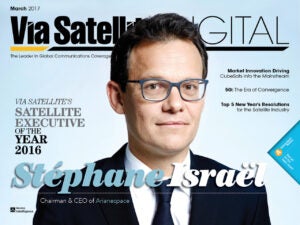
Explore the March 2017 Issue
Check out more from this issue and find your next story to read.
The Arianespace story has entered an exciting new phase, and Israël has been pivotal to banishing any doubts after he took on the job in challenging circumstances. As our Satellite Executive of the Year for 2016, he talks to Via Satellite about a rollercoaster four years, and how the company has managed to maintain such a strong leadership position in this competitive market.
VIA SATELLITE: When you took over from Jean-Yves Le Gall as the CEO of Arianespace, what did you see as the major challenges ahead of you, aside from continuing to launch successfully, which we almost take for granted now?
Israël: I think at the time, there were three main challenges. The first one was to be in a position to have as many launches as possible from the Guyana Space Center (CSG) with our family of vehicles, Ariane, Soyuz and Vega. The full exploitation of these three launch vehicles really only started in 2012 when Vega made its maiden flight, one year after our Europeanized Soyuz flew for the first time. Our target was to make, on average, every year, six Ariane, three Soyuz and three Vega missions and we had to get organized to do so. For instance, I made the decision to have a dedicated facility to fill the Soyuz upper stage, in order to accelerate Soyuz campaigns and to decouple them from Ariane and Vega.
The second challenge was to adapt to a new competitive reality. I joined Arianespace during a period of time where the landscape was changing very quickly. Before 2010, ILS and Sea Launch dominated the competition. When I arrived at Arianespace, these companies’ launchers were less attractive due to a high rate of failure, while SpaceX was making a bold entrance to the market, capturing the satellites we needed for the lower berth on the Ariane 5. My priority was to rebalance our order book and to propose more attractive offers for small satellites.
I would say the third challenge was to persuade all of our European stakeholders to make the right decision on the strategy of future launchers. In this period of time, there were some discussions about the Ariane 5 ME and Ariane 6. Regarding Ariane 6, there was a lack of consensus between the different stakeholders over what should be the final configuration of this new launcher, which is perfectly understandable for such a radical choice. I immediately decided that with its great wealth of knowledge about the launch services market, Arianespace had to jump into these discussions. And so we did!
VIA SATELLITE: Tell us about your background. What excited about you about the challenge of taking on Arianespace? How did you feel you could make a difference?
Israel: My experience with space started when I was an auditor at the French National Auditor’s Office, “Cour des comptes.” In this position, I had been responsible for the assessment and the monitoring of France’s space policy. This was my first real contact with space; I was 30 years old. One of my duties involved an audit of the Guiana Space Center. Unfortunately, I was in the Jupiter control center during the last Ariane failure. I was shocked by this failure, which planted a seed in my mind: I wanted to see Arianespace rebound. I would’ve never believed it at the time had someone told me that 10 years later, I would be CEO of Arianespace!
After this, because I found the space industry so fulfilling, I decided to join an aerospace company. I had an opportunity to join EADS (Airbus) in 2007 and spent five years in the company, until 2012. First, I was an advisor to the CEO, Louis Gallois. It was an exciting time as France and Germany decided to change its governance, with one CEO as opposed to two before. We had the “Vision 2020,” so it was a time of change for EADS, with a great “esprit de corps” between Louis Gallois and Tom Enders. After one year with Louis Gallois, I joined the operations. Initially, I worked in Astrium Space Transportation, in Les Mureaux, where Alain Charmeau, now President of Airbus Safran Launchers (ASL), was my boss. I was working on the finance for the program controlling the M51, the missile we put in the submarines for deterrence. After that, I worked on the Copernicus program, and was responsible for developing the services offered by Astrium Services for the European Commission. Eric Béranger, now CEO of One Web, was my boss.
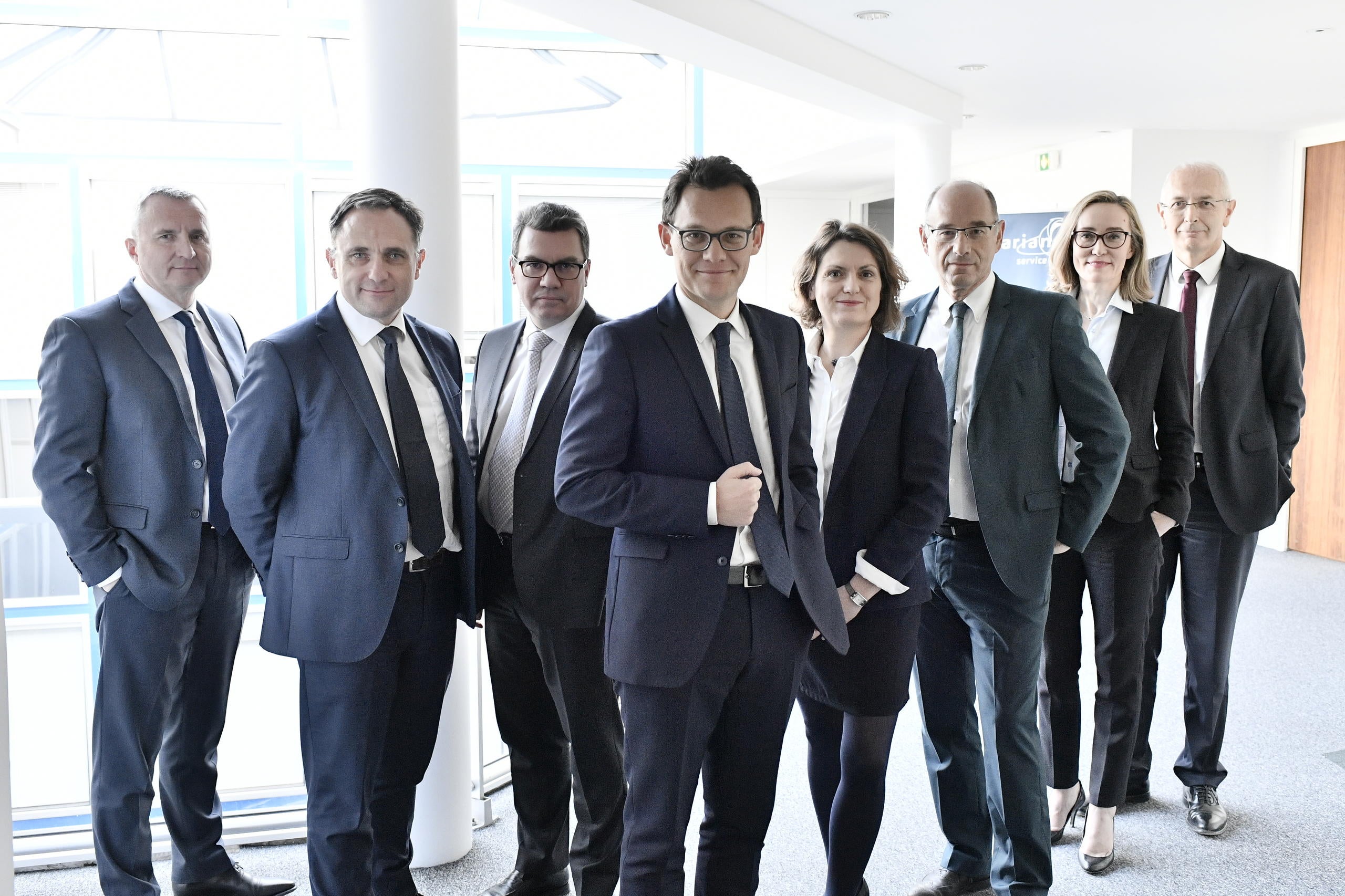
So, for four years I worked in the space sector, both military and civil. I had the privilege to be in contact with important players in our space family. I have recognized Alain and Eric, but I would like to mention as well François Auque, Jean-Jacques Dordain, and Josef Aschbacher, now ESA Earth Observation director. It was the second step after my experience as an auditor at the Cour des Comptes. After this, in 2012, I became chief of staff to the Minister of Industry, Innovation and Digital. When Jean Yves Le Gall became president of CNES, there was the opportunity to join Arianespace. Due to my experience at EADS and Astrium, the key shareholders of Arianespace thought I was a good fit for the job.
I like space; I like industry; I like the European dimension of Arianespace and its launchers. I remember as a child, I saw the first launch of Ariane, on December 24, 1979 — childhood dreams became reality in the Ariane odyssey.
But, I must admit before I joined Arianespace, what I had not done, was to sell big contracts all over the world. So, for me, it was challenging to imagine I would be responsible for that, and I was wondering how it would work with customers.
The first customer I met was my predecessor for the Satellite Executive of the Year, Michel de Rosen. When Michel knew I was about to join Arianespace, he called me, and said it would be a good idea to meet for lunch, since we would have to work together. Michel told me two things: “First, I like your launcher, it is terrific, but second, I also like competition and you will have competitors.” This was good and bad news! I will always remember this lunch. It was important for me to have this first contact. Michel was not only CEO of Eutelsat, he was also the chairman of ESOA. And since this first contact with a key customer, I must say I have always enjoyed interacting with our customers: negotiations can be hard, but the level of confidence between Arianespace and its customers is outstanding and it is the direct responsibility of a CEO to boost this confidence.
VIA SATELLITE: You came into the CEO role at a time when there has been unprecedented competition in launch services. Even though Arianespace has a rich heritage, how did you see the competition which was going to impact on your strategy?
Israël: I was a little surprised; when I joined Arianespace, some key people were speaking more about Proton than Falcon. So, for me to discover that the competition had changed was a “welcome surprise.” But I like competition and challenges. When I perceived that facing this new competitor would be no small feat, I quickly established what we would need to do in the short, medium and long term. In the short term, I saw we had no other choice but to lower our prices, and it was not easy. When you decrease prices, you have to decrease your costs. I had the full support of all our shareholders to move in this direction. By decreasing the prices for small satellites, we won almost all of the contracts open for bid in this segment in 2014 and 2015.
For the long-term, it was all about Ariane 6. As I have said, there was some vacillation between going directly to Ariane 6, or starting with an evolution of Ariane 5. This hesitation was reinforced by the fact that the Ariane 6, then envisaged, was non-modular and dominated by solid propulsion, and was not totally supported by our customers, industry and some ESA-member states, such as Germany. I then decided to share my opinion in this spirited debate, even though it was a little bit risky.
We made a thorough market analysis with our customers and the conclusion we arrived at was that if we wanted to go directly to Ariane 6, it was necessary to have a configuration different from the one then on the table. We presented our analysis to our shareholders and to ESA. They listened carefully to us and I am grateful to them for that; everyone was looking for the best solution. Airbus and Safran decided to propose a new Ariane 6 and, after some discussions, they received the support of ESA and the agencies. This was the basis of the agreement of the Luxembourg ESA Ministerial in December 2014, driven by France, Germany and Italy: go for Ariane 6 directly, but with a new configuration and a new corporate governance. This was an excellent agreement!
VIA SATELLITE: You said it was a risk to have your opinion heard. Why was that?
Israël: There were strong opinions for and against. As I mentioned, Arianespace’s key stakeholders were not totally in alignment with one another, so it is not the easiest thing to add one more voice, without solicitation, to a debate where there were already a number of very different, very legitimate and very strong opinions. I think some people were surprised that I was a little vocal in this debate immediately after having joined Arianespace, but for me it, I felt impelled to speak on behalf of our customers.
VIA SATELLITE: Arianespace has always been considered very good, very reliable, but also more expensive. How did you see this equation? How did you go about making Arianespace more attractive to customers?
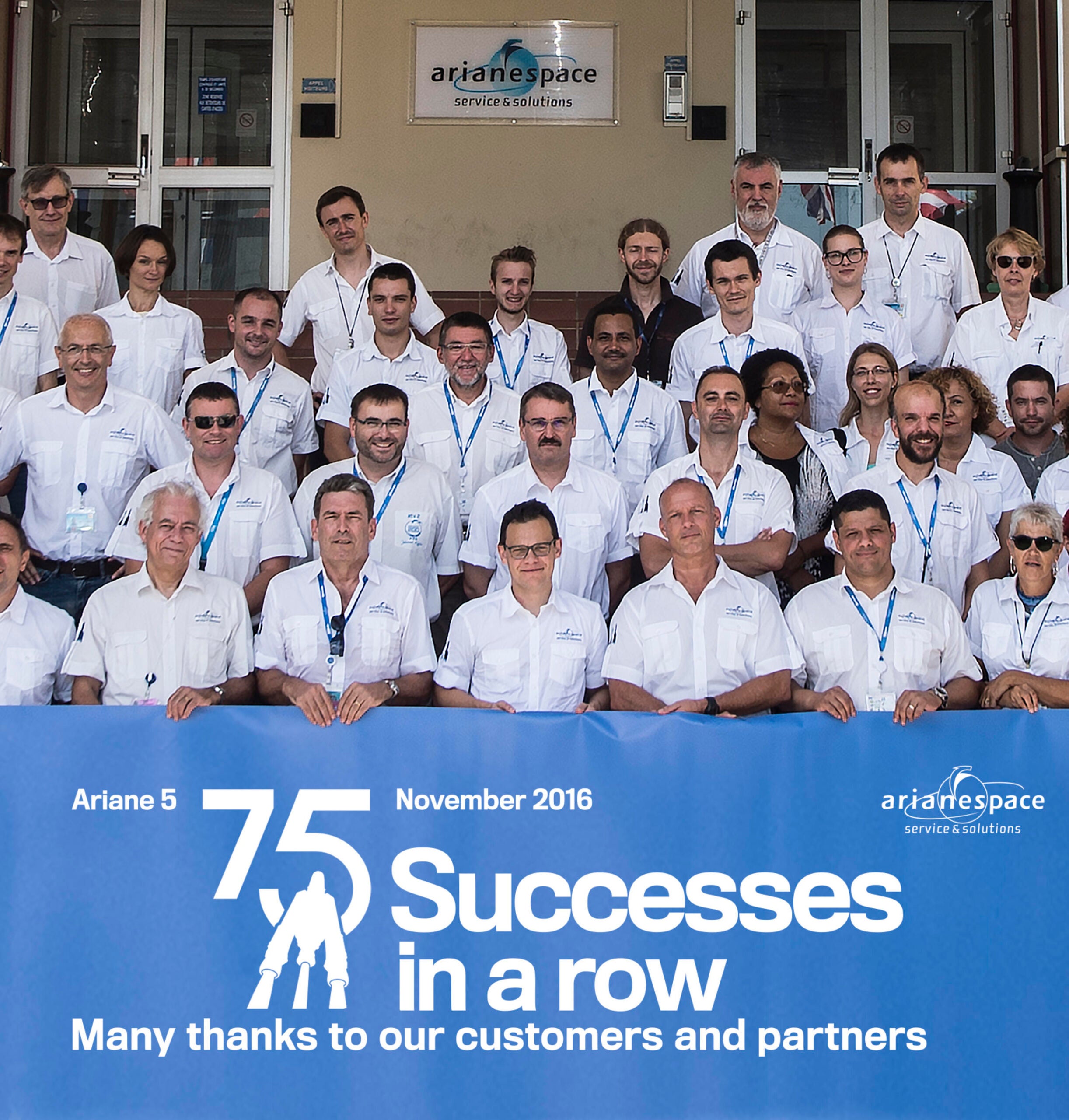
Israël: Our reliability is indeed one of our key assets. Last December we celebrated the 76th success in a row of our heavy lift Ariane 5. Vega, our light-lift rocket, has recorded eight successes out of eight launches. This is one of the reasons why newcomers to the satellite market, whether governmental like Qatar or commercial like PT.Bank Rakyat Indonesia, chose Arianespace when they look for a first launch services provider, and why we have such an equally strong relationship with legacy operators.
A satellite is like your baby: you do not want to put him in just any hands. Yet, we have to acknowledge that with Ariane 5, the room for maneuver is pretty limited. It is difficult to reduce dramatically the costs of a system whose ways were very well established. But, as we decided to reduce the prices for small satellites, we had no other choice but to change. So, we joined efforts with industry and CNES to reduce the cost of the Ariane program. For instance, at the Guyana Space Center, our sub-contractors, the “ground industrials,” agreed to reduce their prices in exchange for more activity and longer contracts. At Arianespace, our employees have been willing to make a few concessions in order to keep a lid on costs. They have adopted a new travel policy, and have begun to participate in more launch missions, to obviate the need for more personnel. I am very grateful to them for these sacrifices. Industry has also agreed to reduce its price for the new batches of Ariane 5. We knew that it would not change the whole economics of Ariane, but we recognized we could have room for maneuver if everyone was ready to pitch in. We have also been lucky to have, during this time of intensifying competition, an evolution of the exchange rate. The dollar has been stronger than before, and we have benefited from this. Sometimes you need to be a little bit lucky. In parallel, we kept on increasing the Ariane 5’s volume and performance. And last but not least, we kept an open dialogue with our customers to better guarantee on-time launches for them. In addition to the unique asset of our reliability, this is how we keep our customers with us.
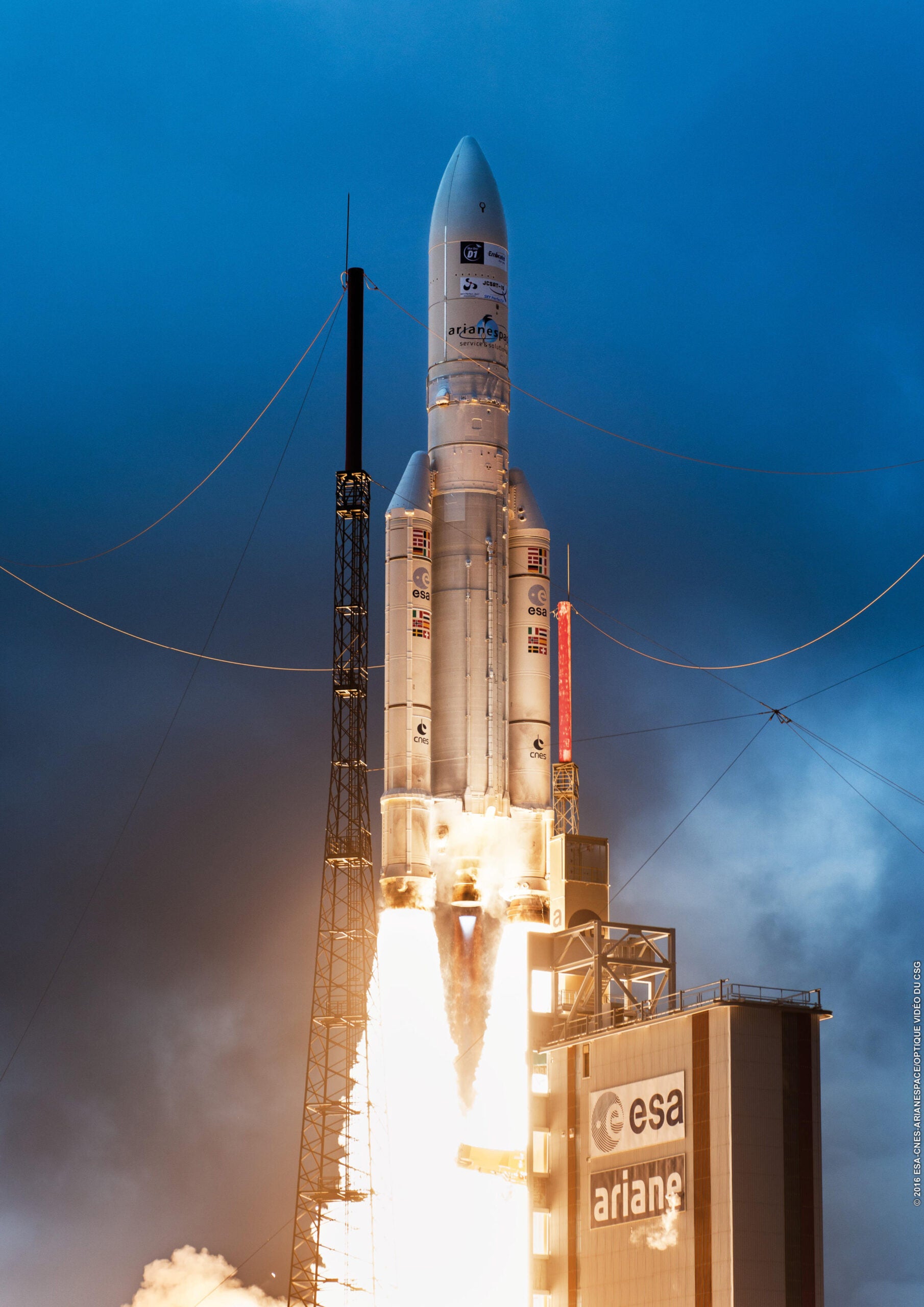
But beyond all that, the only way to be more cost-competitive was Ariane 6, and this is why it was the right choice. With this new launcher, you can increase the cadence, which reduces the unit costs. We needed a modular launcher that could do both commercial and institutional launches, which is what lead us to two variants: the Ariane 62 and Ariane 64. With this new launcher, you can design, manufacture, and operate it at great cost-savings. For instance, we are going to integrate Ariane 6 horizontally, rather than vertically, as we did with Ariane 5. So, it is absolutely clear that our next step would be made with a new launcher. Nevertheless, we had the feeling it was not impossible, in the meantime, to make the Ariane 5 more competitive, even if by just a few percentage points. All of our partners continue to introduce small efficiencies in the production and operation of Ariane 5 in the run up to the introduction of Ariane 6.
VIA SATELLITE: How important were contracts with the likes of OneWeb and Terra Bella in terms of getting business from these new entrants to the satellite industry? Are there any other contract wins you would highlight in 2015 and 2016 as being particularly significant?
Israël: In this business, it is a family. You have a limited number of players who are going to spend a lot of time together. You must never forget that. So, we have built relationships based on trust with our customers. It’s no accident that many of our clients have been with us since the creation of Arianespace. We have decided to be as transparent as possible. What I have chosen to do is to have personal links with the players and their CEOs, and to be as transparent as possible when we had to decide what launch slots were available and what final adjustments we could make in terms of price. I think this method has been quite successful, and it was key to facing increasing competition. I also think the fact we initiated this grand dialogue with our customers regarding the Ariane 6 has also helped strengthen ties. It was a way to speak to our customers without speaking about immediate business, and build a long-term relationship. We were asking them “what do you need in the next decade?” I think they appreciated the fact that Ariane 6 involved their inputs.
I can give you one example of this openness. I can remember being in Brussels in January 2014 at a dinner for ESOA. I told our customers that I was pretty sure that Ariane 6 would be tailored according to their expectations and recommendations. I followed with the example of the A350 aircraft, which had been redesigned by Airbus upon the request of the customers. The big players were around the table and it marked the beginning of a constant dialogue between Arianespace and its customers on Ariane 6. I will always remember this dinner.
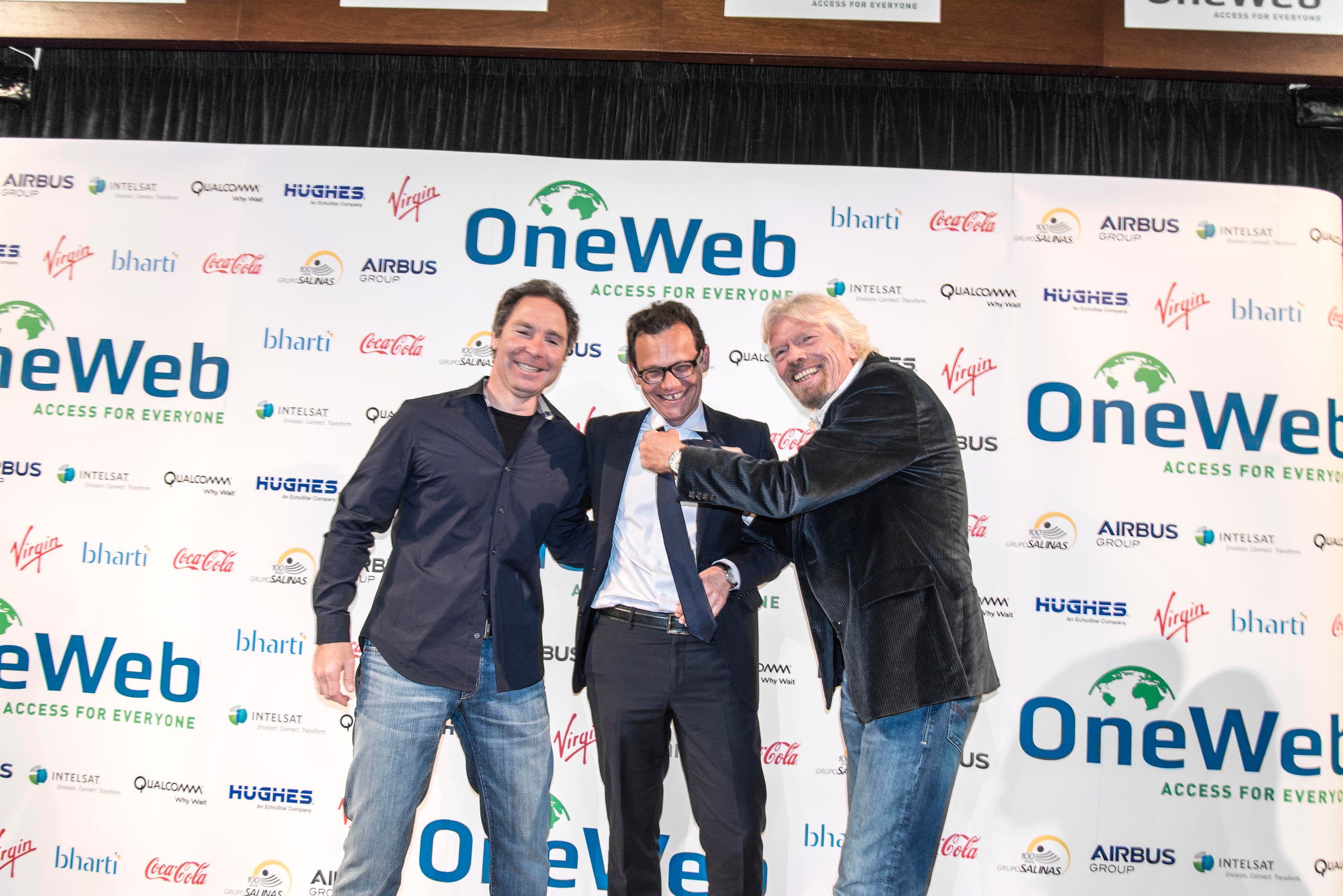
I will also always remember when Greg Wyler called me at the beginning of 2014; I was staying in Moscow and it was 1 a.m. in the morning. He asked me: “Do you want to launch a lot?” I said “yes.” This was the beginning of OneWeb.
I also remember the job we did for O3b and SES. It was critical to make the second launch on time, during the spring of 2014. It was a bit complex, because we had some conflicting launch slots. It was a time when Karim Michel Sabbagh came on board. We worked through this with Steve Collar and Karim and ultimately we made it happen for them.
Another example: at the beginning of 2016, we went for two “dedicated” launches on Ariane 5 for Intelsat and Eutelsat. This wasn’t easy, and would not have been possible if we had not explored all options for months with Steve Spengler and Thierry Guillemin at Intelsat, and Michel de Rosen and Yohann Leroy at Eutelsat. In the business, I always bet on dialogue and transparency. We are a small village, a small family: you can never forget this.
Last but not least, I want to mention the full confidence of ESA and the EC when we had to overcome the partial-failure of a Soyuz launch in August 2014. Together, we closely monitored the return to flight, and we were successful in March 2015. We enjoyed this same level of confidence when we made the first Ariane 5 ES for Galileo, in presence of Vice-President Sefkovic and Commissioner Bienkowska with us in French Guiana. The confidence of our institutional backers is crucial if we want to be successful.
VIA SATELLITE: Going back to that call with Greg, was there any doubt your mind that you could deliver those promises?
Israël: It was very preliminary. At that time, I could not imagine it would lead to a contract for 21 launches! This is huge for us. It was signed in the summer of 2015 in London with Greg and his shareholders. We pulled the deal together after we convinced our Russian partners to make sure that Soyuz would be ready to execute in a very short period of time all these launches from different launch pads.
But it is true that when I first came to my teams and told them that we might have to make a huge number of launches, there was some skepticism. Some people had in mind the failure of constellations at the beginning of the last decade. They were afraid that history would repeat itself. Now that OneWeb has gained more funding from the Softbank investment, these launches are closer to becoming reality.
Lesson learned: one should never look at the future through the lens of the past; and when a customer comes to you with an unconventional idea, it’s worth taking the time to look carefully into it!
VIA SATELLITE: How difficult has it been to get the Ariane 6 and Vega C projects to where they are at currently? How do you assess the challenges of bringing new rockets to market? What difference will these new rockets make?
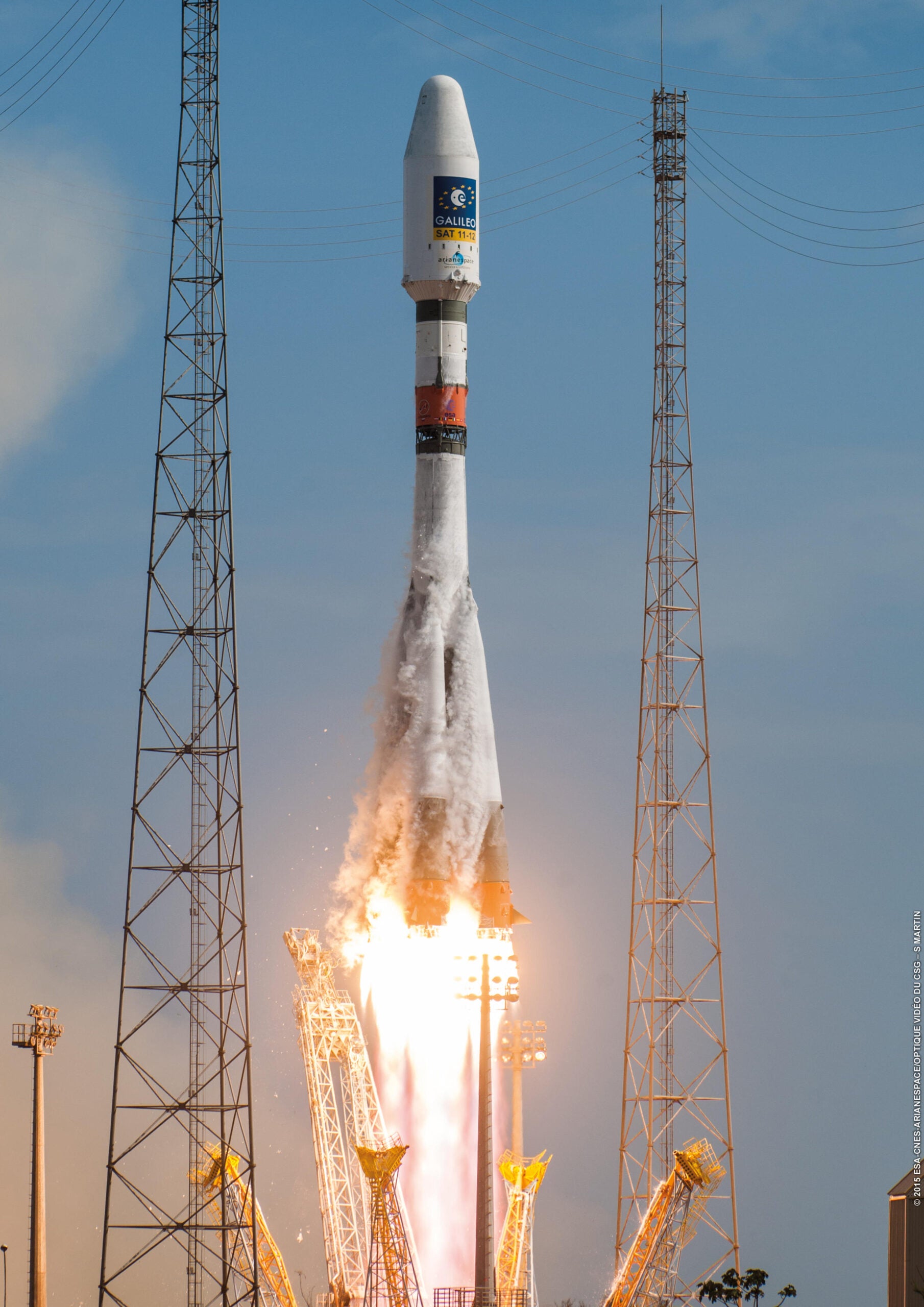
Israël: I think we have different challenges here. The schedule is very tight., we have to make the maiden flight of Vega C in 2019 and Ariane 6 in 2020. The final decision regarding Ariane 6 was only made in November 2016, and in less than four years we have to deliver. It’s going to be a great challenge to stay on track and hit these objectives.
I think the second challenge when it comes to innovation on Ariane 6 is the Vinci Upper Stage, and to make sure it will be successful from the very beginning. I am very confident, because the Vinci has been tested so many times.
After this, we want to reduce dramatically the costs for the design, the manufacturing, and the operations of Ariane 6; this is the third challenge. I have given the example of how we will operate Ariane 6 differently in Kourou, with horizontal integration, reducing by a factor of three the time of the campaign.
In this environment, the fact we have new governance will also help. We must realize what Europe has achieved in the last two years. Airbus and Safran have combined forces under a single company — Airbus Safran Launchers — dedicated to launch vehicles. They have the full responsibility of the design, whereas before it had been CNES, with whom they now work very efficiently. Last, but not least, we have a seamless relationship between industry and the market with a new shareholding structure of Arianespace. However, Arianespace remains an autonomous company working as the sole interface with all customers and all satellite manufacturers. We can’t have a new launcher without new corporate governance; this is totally linked.
We are confident we can deliver. But, we are only at the beginning of 2017, and the clock is already counting down for the first successful flight of Ariane 6. We have a big job ahead of us.
VIA SATELLITE: Arianespace seems to be launching at a furious pace. Was it a conscious effort to try and launch more satellites into orbit quicker?
Israël: I have been lucky to come at a period of time where Ariane 5 was mature and reliable, due to all the work that Arianespace, industry under the leadership of Airbus, and ESA and CNES performed on this system after the failure of December 2002. I have clearly benefited from the maturity and robustness of Ariane. This is also the case for Soyuz, which has flown so many times since1957. Regarding Vega, we have been in a position to make it robust very quickly. The first launch I managed as CEO of Arianespace was in May 2013, and it was the second Vega launch. Since then, we sustained the vehicle’s reliability with the help of AVIO and ESA, with eight successes for eight launches.
It is true that when I joined Arianespace, I gave the clear objective to launch on average six Ariane, three Vega and three Soyuz a year. I told our team we could do this. Moreover, we needed to balance our accounts. Naturally our customers are eager to be launched as quickly as possible and we must have this very strong cadence. We worked a lot with our partners in French Guiana to make this possible, starting with CNES, our daily partner at the Guiana Space Center.
We have really organized ourselves to be in a position to deliver, and have made a lot of key decisions to accomplish this. One of these key decisions I made was to have a building dedicated to the fuelling of the Fregat, the Soyuz Upper Stage. This additional building was important: It was a way to reduce the length of a Soyuz campaign and to decouple it from Ariane and Vega preparation activities. Previously, the Fregat was filled in the EPCU (the satellite filling facility) and after that, it was put separately in the Soyuz area. It was an example of how we have re-organized ourselves to accommodate 12 launches from the Guiana Space Center with minimum conflict between all the launch vehicles.
For our team, it is very exciting; it is in Arianespace’s DNA to do as many launches as possible. Our teams were united in their desire to see this through — without their full cooperation, this would have never happened.
VIA SATELLITE: Did your team immediately buy in to this aggressive plan to launch?
Israël: I think the team really bought into it straight away. At the time of Ariane 4, the teams were used to launching more than they did with Ariane 5. There was the feeling that Ariane 5 was mature so for this reason it would be possible. People working on Soyuz know that is possible to make between 10-20 Soyuz launches per year. Regarding Vega, we also thought it would be possible to increase the cadence even though the challenge could be bigger, given the fact that it is a younger vehicle. Our teams responded enthusiastically to this desire to increase our tempo, and I’m really grateful for this.
VIA SATELLITE: Do you think we will see a smallsat revolution in the industry? How will this impact traditional launch service providers such as Arianespace?
Israël: I can’t say if there will be a smallsat revolution just yet, but broadband will definitely be the engine of the satellite market over the next decade. There will be three different drivers here. The first will be for people in remote areas where terrestrial solutions are too expensive to have access to broadband. Secondly, you will have internet access related to mobility, especially in aviation. Thirdly, you will need it to participate in IoT. We will need more and more satellites — all kinds of satellites.
I also think we will see more and more Geostationary Earth Orbit (GEO) satellites. For example, we have launched satellites for NBN in Australia to give dedicated internet access to remote areas of that country. I think you will have Medium Earth Orbit (MEO) satellites such as our customer O3b. We will also have Low Earth Orbit (LEO) constellations. I think they could complement one another with interoperability between GEO and LEO.