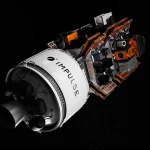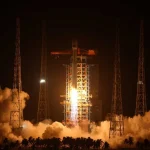

Kepler Communications Inc. announced it has selected Rocket Lab’s Neutron launch vehicle for its first dedicated launch mission, marking a significant milestone as the company prepares for its largest expansion to date. The mission, scheduled no earlier than 2028, will deploy next-generation satellites that will expand Kepler’s constellation with increased optical connectivity, on-orbit compute and hosted payload capacity.
“Securing our first dedicated launch reflects the next stage of growth for Kepler,” said Beau Jarvis, Chief Revenue Officer of Kepler. “As we continue expanding our constellation to keep pace with growing customer demand, multiple launches in 2028 will increase capacity, strengthen resilience, and enable new services for customers around the world. Rocket Lab is an outstanding partner for this important milestone.”
Also Read: What are the the Different Types of Launch Vehicles used in Space?
The announcement follows a transformational year for Kepler. In 2026, the company launched its first operational optical data relay constellation, bringing Tranche 1 into commercial service with optical connectivity, on-orbit compute, and hosted payload capabilities. The next-generation infrastructure is now supporting a growing customer base, achieving 10x year-over-year revenue growth, while serving as the foundation for future constellation expansion.
The next generation of satellites will build on that foundation with higher network capacity, support for data rates up to 100 Gbps, and continued compatibility with the existing constellation. The satellites will also support strategic customer programs, including the European Space Agency’s HydRON initiative, while expanding opportunities for hosted payload missions. The Rocket Lab mission is one of several launches planned for 2028 as Kepler scales its commercial optical data relay network to meet growing customer demand. Together, the planned launches will significantly expand network capacity, improve resiliency, and support a growing portfolio of commercial, civil and defense missions.