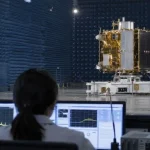
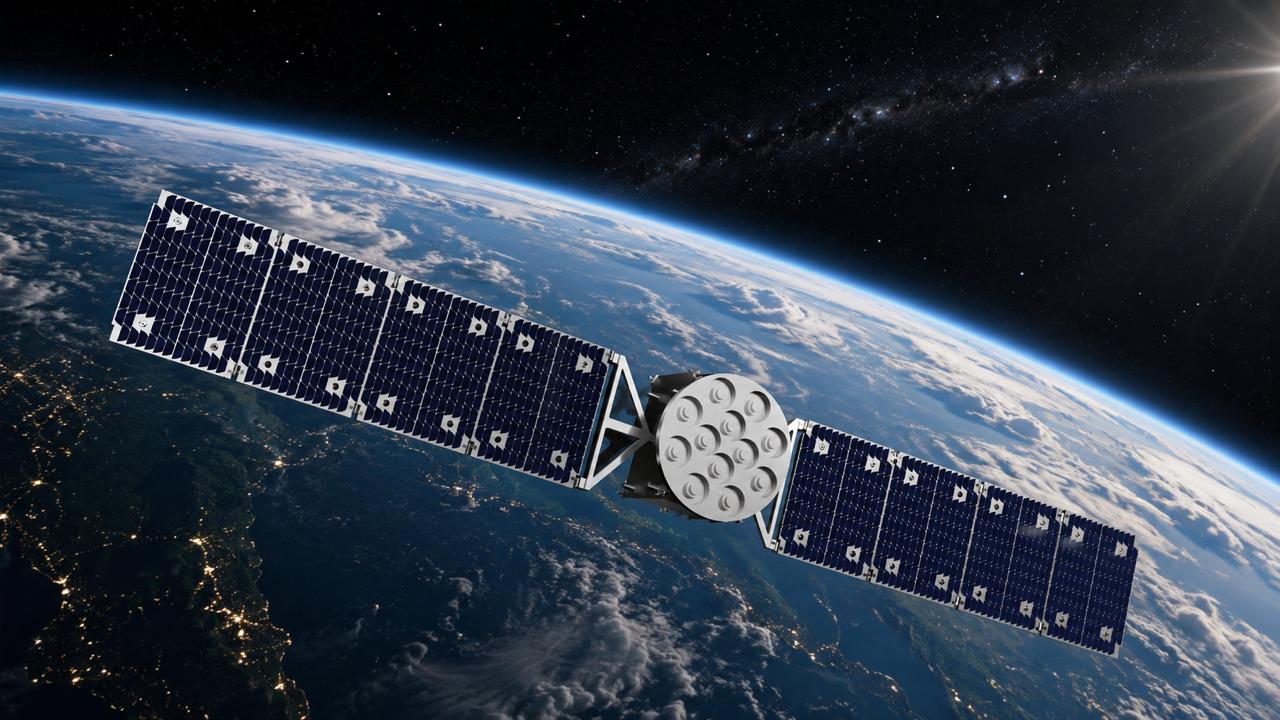
Astranis has built its business around microGEO satellites, small geostationary spacecraft weighing a few hundred kilograms, considerably lighter than traditional multi-ton communications satellites. The company has used the platform primarily to provide dedicated broadband capacity and has sought to adapt it for national security missions. Perceptor is built on that same platform and represents an effort to expand the company’s work into detecting, tracking and characterizing objects and activity in orbit.
Perceptor carries sensors to observe and inspect other satellites and uses electric propulsion to reposition itself across the geostationary belt. Astranis said the spacecraft will be able to conduct flybys of other satellites, and that multiple Perceptor satellites could operate together, allowing military operators to observe spacecraft from different locations and making it more difficult for a target to evade surveillance.
Geostationary orbit has become a growing focus for the Space Force as China and other countries develop spacecraft capable of maneuvering near the communications and missile-warning satellites that underpin U.S. military operations. “There are blind spots that will be used against us if not eliminated,” said Astranis co-founder and chief executive John Gedmark. He described Perceptor as a dual-use platform that could support both government and commercial reconnaissance and surveillance missions.
The announcement follows a $450 million funding round in May, when Astranis said it would use the capital to expand manufacturing capacity and prepare for U.S. government procurements. In April, the U.S. Space Force selected 14 companies, including Astranis, to compete for task orders under its Andromeda contract vehicle supporting RG-XX, a planned next-generation constellation of surveillance satellites in geostationary orbit.
According to Gedmark’s statements, Perceptor is intended to close surveillance gaps that adversaries could otherwise exploit, and its dual-use design positions it to serve both military operators tracking potential threats and commercial customers seeking reconnaissance capabilities in the geostationary belt.
Astranis is entering an increasingly competitive market alongside the other companies selected for the Andromeda contract vehicle. The task orders supporting the RG-XX constellation represent the next competitive milestone for the field of firms pursuing geostationary surveillance work.