
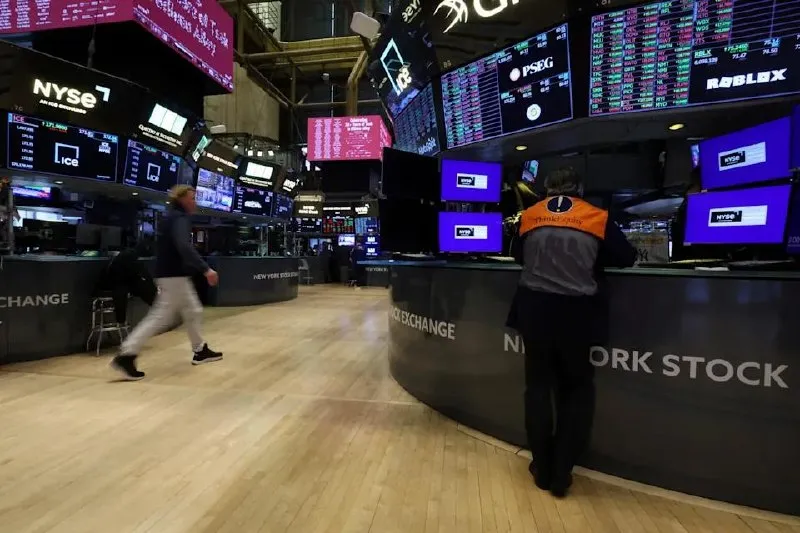
SpaceX shares came under renewed pressure on Aug. 20 as another major tranche of previously restricted stock became eligible for trading, adding billions of dollars’ worth of potential supply to a market already grappling with post-IPO volatility.
The latest lockup expiration released approximately 319 million additional shares for potential sale by eligible insiders and early investors, representing the second major unlock event since SpaceX’s record-breaking public debut in June 2026. While not all newly unlocked shares are expected to be sold immediately, the event has intensified concerns about continued selling pressure as multiple scheduled lockup expirations unfold through the remainder of the year.
The stock fell nearly 5% during trading following the latest unlock, briefly slipping below its $135 IPO price as investors weighed the impact of increased supply against the company’s long-term growth prospects.
Another Stage in SpaceX’s Unusual IPO Rollout
Unlike many large public offerings that release insider shares in a single event, SpaceX adopted a staggered lockup structure designed to gradually increase the number of tradable shares.
The company’s first major lockup expiration occurred on Aug. 6, when more than 911 million shares became eligible for trading. That event more than doubled the publicly tradable float and was widely viewed as the first major test of investor demand following the IPO. Surprisingly, the stock held up relatively well and even posted gains after the initial unlock despite widespread predictions of a sharp decline.
The Aug. 20 expiration represents the next phase of that process. Based on recent share prices, the newly available stock represents roughly $47 billion in potential selling pressure, although the actual amount that reaches the market depends entirely on insider behavior and investor sentiment.
Several additional lockup milestones remain scheduled throughout 2026, meaning investors are likely to continue monitoring supply dynamics for months. Analysts estimate that billions of additional shares could become tradable before year-end.
Why Lockup Expirations Matter
Lockup periods are a standard feature of initial public offerings. They prevent early investors, venture capital firms, company executives, and employees from immediately selling their holdings after a company goes public.
The restrictions are intended to reduce the risk of overwhelming the market with shares during the early stages of public trading. When lockups expire, however, investors gain the ability to monetize positions that may have been held for years.
For SpaceX, the stakes are particularly high because the company spent more than two decades as a private enterprise before launching what became the largest IPO in U.S. history. Over that period, numerous venture firms, institutional investors, employees, and early backers accumulated substantial ownership stakes.
Many of those investors are sitting on enormous paper gains despite the stock’s recent pullback from its post-IPO highs. That creates a natural incentive for at least some holders to lock in profits, diversify portfolios, or return capital to limited partners.
At the same time, many long-term investors remain deeply committed to SpaceX’s growth story and may choose to retain their positions despite gaining the ability to sell. This tension between profit-taking and long-term conviction has become one of the central themes of SpaceX’s first months as a public company.
From Historic IPO to Volatile Trading
SpaceX entered public markets amid extraordinary expectations.
The company had spent years building dominant positions in commercial launch services, satellite broadband through Starlink, government space contracts, and emerging deep-space transportation systems. Its IPO attracted massive retail and institutional demand and quickly propelled the company into the ranks of the world’s most valuable publicly traded firms.
Initial trading was explosive. Shares surged following the debut and eventually reached highs above $225 before reversing course as investors reassessed valuation levels, rising expenditures, and broader market conditions.
A major catalyst for the decline came after SpaceX reported its first earnings results as a public company. Although revenue growth remained strong, investors focused on elevated spending tied to artificial intelligence infrastructure, satellite expansion, and long-term development programs. The resulting selloff pushed shares significantly below their post-IPO peak.
Lockup expirations have since become an additional source of uncertainty layered on top of concerns about valuation, future profitability, and capital expenditures.
The Broader Business Behind the Stock
Despite the market’s focus on share unlocks, SpaceX’s underlying business remains one of the most diversified and influential in the global space sector.
The company dominates orbital launch activity through its Falcon 9 program and continues developing Starship, the fully reusable heavy-lift vehicle intended to support lunar missions, Mars exploration, and large-scale satellite deployment. The company also operates the Starlink broadband constellation, which has evolved into one of the world’s largest satellite networks and a major revenue driver.
In addition, SpaceX maintains extensive relationships with NASA, the U.S. Department of Defense, intelligence agencies, and commercial satellite operators. These revenue streams help distinguish the company from many newer space startups that remain dependent on venture funding or a single business line.
This diversified structure is one reason many institutional investors continue to view SpaceX as a long-term growth company despite near-term stock volatility.
How SpaceX Compares With Other Major Space Companies
The market’s reaction to SpaceX’s lockup expirations highlights a challenge common across the aerospace sector: balancing long-term technological investment with short-term shareholder expectations.
Traditional aerospace firms such as Boeing and Lockheed Martin typically generate revenue through established defense and commercial aviation programs. Their valuations tend to be tied to earnings, cash flow, and government contracts.
SpaceX occupies a different category. Investors are valuing not only current launch and satellite businesses but also future opportunities including Starship transportation services, global satellite connectivity, space-based AI infrastructure, and potential lunar and Martian markets.
This resembles the valuation debates that surrounded Tesla during its early public years, where investors struggled to determine whether the company should be priced as an automaker, a technology platform, or something entirely new.
The result is a stock that can experience substantial volatility as markets repeatedly reassess the balance between current performance and future potential.
What Investors Will Watch Next
The immediate question facing investors is whether newly eligible shareholders decide to sell in significant quantities.
The first major unlock on Aug. 6 did not trigger the wave of selling many analysts anticipated. If the same pattern repeats following the Aug. 20 expiration, it could strengthen confidence that long-term holders remain committed to the company’s future. Conversely, evidence of heavy insider selling could renew downward pressure on the stock.
Investors will also be watching upcoming Starship development milestones, future earnings reports, Starlink subscriber growth, and the company’s progress in expanding AI-related infrastructure initiatives. These factors are likely to have a greater long-term impact on SpaceX’s valuation than temporary fluctuations caused by lockup schedules.
Conclusion
The Aug. 20 share unlock marks another significant milestone in SpaceX’s transition from the world’s most valuable private space company to one of the market’s most closely watched public corporations. While the release of 319 million additional shares introduces fresh selling pressure and short-term uncertainty, it also represents a normal stage in the maturation of a newly public company.
With additional lockup expirations still ahead, volatility is likely to remain elevated. Yet the broader investment case continues to center on SpaceX’s leadership in launch services, satellite communications, and next-generation space transportation. The coming months will reveal whether investor confidence in those long-term ambitions is strong enough to absorb the steady flow of newly tradable shares entering the market.