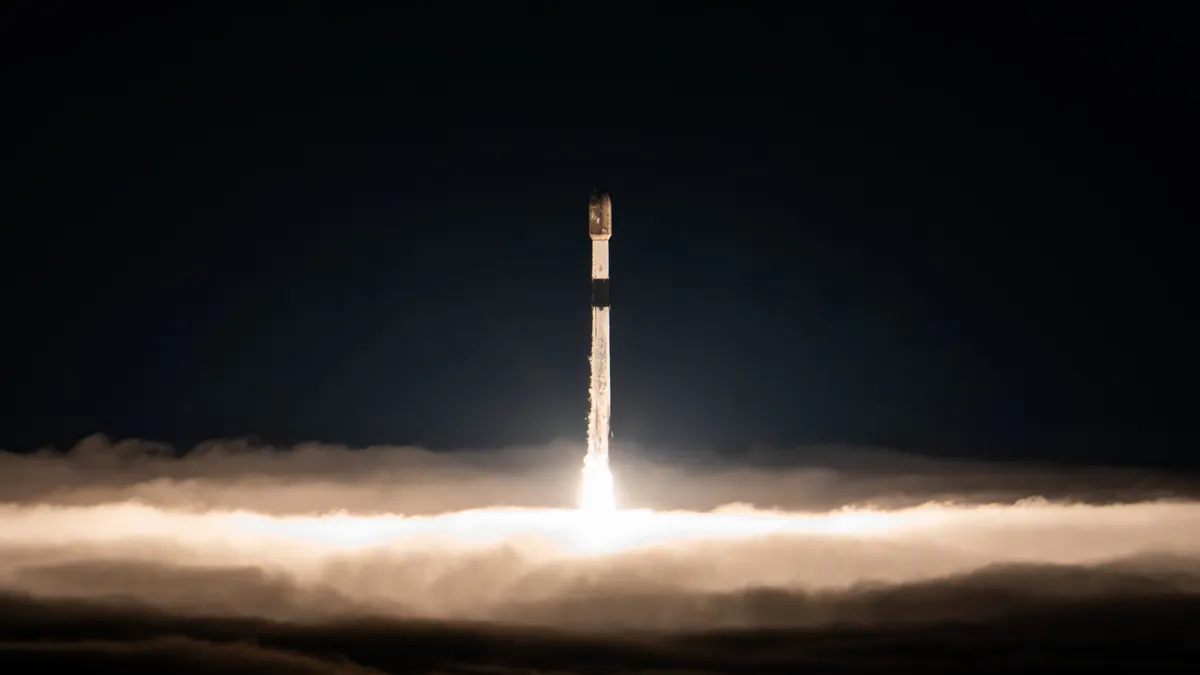
SpaceX continued its record-setting launch pace on Aug. 22, successfully deploying 27 Starlink internet satellites into low Earth orbit aboard a Falcon 9 rocket from Vandenberg Space Force Base in California. The mission, designated Starlink Group 15-20, represented the company’s 100th Falcon-family launch of 2026 and further expanded the world’s largest satellite constellation.
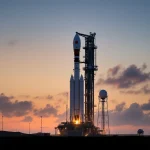
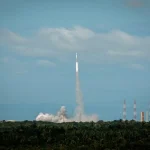
The Falcon 9 lifted off from Space Launch Complex 4 East at Vandenberg, carrying a new batch of Starlink satellites destined for low Earth orbit. Approximately 8.5 minutes after launch, the rocket’s first-stage booster successfully landed aboard the autonomous droneship Of Course I Still Love You in the Pacific Ocean, continuing SpaceX’s long-running streak of booster recoveries. The upper stage later deployed the 27 satellites roughly 62 minutes after liftoff.
A Milestone in SpaceX’s Busiest Year Yet
The mission underscored the extraordinary operational tempo SpaceX has established over the past several years. Of the company’s 100 Falcon launches completed so far in 2026, the overwhelming majority have supported Starlink deployment, demonstrating how closely SpaceX’s launch business and satellite broadband ambitions have become intertwined.
The 100-launch milestone is particularly notable considering that SpaceX completed 138 launches in 2024 and increased that figure to 170 missions in 2025. Reaching triple digits before the end of August places the company on track to set another annual launch record if the current cadence continues through the remainder of the year.
Such launch frequency would have been considered unattainable only a decade ago. The achievement reflects not only the maturity of Falcon 9 operations but also SpaceX’s increasingly efficient launch-site processing, rapid booster refurbishment, and reusable hardware strategy.
Booster Reuse Remains Central to Falcon 9 Economics
The first stage used on the Starlink Group 15-20 mission was booster B1100, which completed its ninth flight. After stage separation, the booster returned to Earth and landed successfully on the Pacific recovery vessel, adding another recovery to SpaceX’s growing tally of reusable rocket flights.
Reusable boosters have become the foundation of SpaceX’s launch economics. Falcon 9 first stages routinely fly more than a dozen missions, while some boosters have exceeded 30 flights. The company’s ability to rapidly inspect, refurbish, and relaunch hardware has dramatically reduced launch costs and enabled the high flight rates required to build and maintain the Starlink network.
Vandenberg Space Force Base has become an especially important hub for these operations. Missions launched from California typically support Starlink shells requiring higher-inclination or polar trajectories, complementing the large number of launches conducted from Florida’s Cape Canaveral facilities.
Starlink Continues Expansion Beyond 11,000 Satellites
With the deployment of the Group 15-20 satellites, SpaceX’s operational Starlink constellation surpassed 11,000 spacecraft in orbit, maintaining a substantial lead over all competing satellite broadband systems.
Starlink was originally conceived as a global low-latency internet network capable of serving customers in remote and underserved regions. Unlike traditional geostationary communications satellites positioned roughly 35,786 kilometers above Earth, Starlink satellites operate in low Earth orbit, reducing signal travel time and enabling broadband performance closer to terrestrial networks.
The system has expanded far beyond its initial consumer broadband mission. Today, Starlink supports maritime customers, airlines, government agencies, military users, emergency responders, and enterprise clients around the world. The network has also demonstrated value during natural disasters and communications outages where terrestrial infrastructure was unavailable.
The Road to Starlink V3 and Starship Deployment
Although Falcon 9 remains the workhorse of Starlink deployment, SpaceX’s long-term plans increasingly depend on Starship, the company’s fully reusable heavy-lift launch system currently undergoing flight testing in Texas.
SpaceX has already demonstrated Starlink Version 3 satellite deployment during Starship Flight 13, which carried 20 upgraded spacecraft in July 2026. The V3 generation is designed to deliver substantially greater network capacity and improved performance compared with current Starlink satellites.
Company leadership has outlined plans to deploy as many as 100,000 next-generation Starlink satellites using Starship, a scale impossible to achieve economically with Falcon 9 alone. Starship’s significantly larger payload volume and mass capacity are expected to transform constellation deployment once the vehicle reaches operational status.
SpaceX is currently preparing for additional Starship test flights, including its first orbital mission and future efforts to recover both the Super Heavy booster and Starship upper stage for full reuse. Achieving those goals is considered essential to supporting the company’s ambitious future launch cadence.
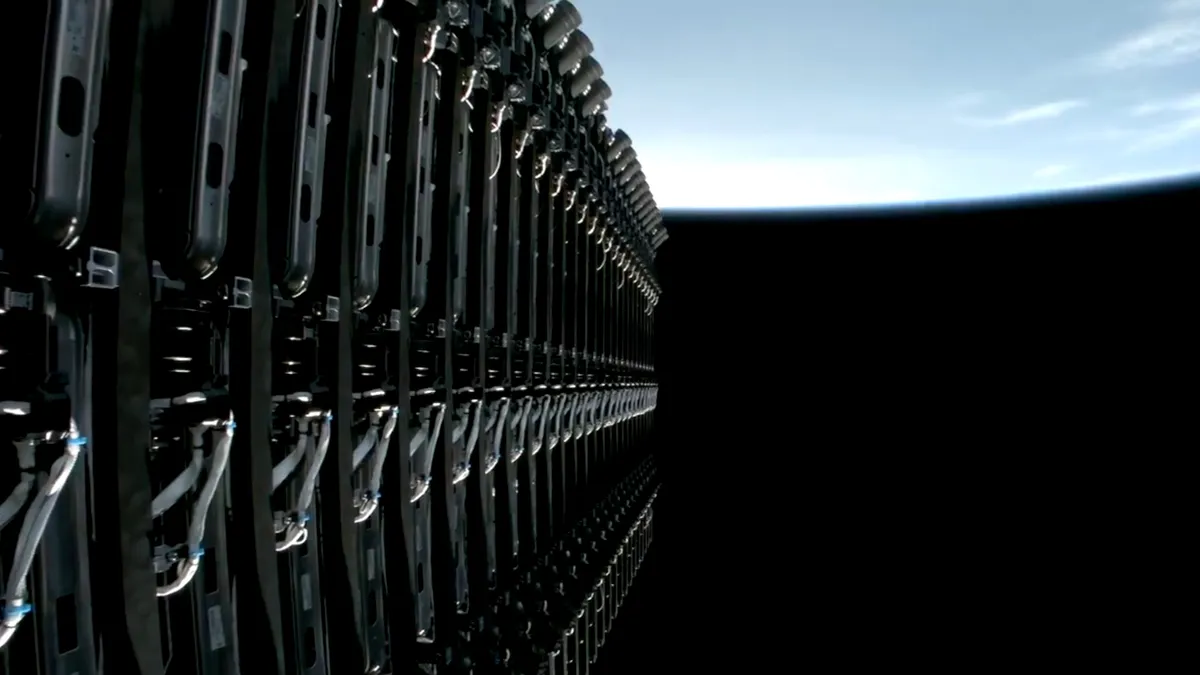
A stack of 27 SpaceX Starlink satellites are seen aboard the upper stage of their Falcon 9 rocket before deployment on Aug. 22, 2026. (Image credit: SpaceX)
Growing Competition in the Broadband Constellation Market
Despite Starlink’s dominant position, competition in low Earth orbit broadband services continues to intensify.
Amazon is developing Project Kuiper, a constellation intended to provide global internet coverage using thousands of satellites. Europe is advancing the IRIS² sovereign communications initiative, while several national programs are pursuing similar architectures.
China is also developing large-scale broadband constellations, including the Qianfan (Spacesail) network, which ultimately plans to deploy more than 15,000 satellites. The program has already begun launches and is widely viewed as one of the most significant challengers to SpaceX’s long-term leadership in the satellite internet sector.
While most competitors remain years behind Starlink in deployment scale, the emergence of multiple megaconstellations is expected to reshape both the global telecommunications industry and access to low Earth orbit throughout the coming decade.
Balancing Connectivity Growth and Orbital Sustainability
The rapid growth of Starlink has also intensified debate about orbital congestion and the environmental impact of megaconstellations. Astronomers have raised concerns regarding satellite brightness and interference with scientific observations, while researchers continue to study the implications of large numbers of spacecraft operating in low Earth orbit.
SpaceX has introduced design changes intended to reduce satellite visibility and improve orbital management, but discussions involving regulators, astronomers, and industry stakeholders are expected to continue as constellation sizes increase.
As the Starlink Group 15-20 mission demonstrated, SpaceX’s launch machine continues to operate at a pace unmatched in the commercial space industry. With Falcon 9 maintaining near-weekly flights and Starship moving toward operational service, the company is positioning itself for an even larger expansion of both launch activity and satellite infrastructure in the years ahead.