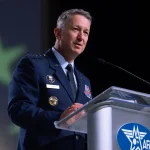
Purdue University presented its first Neil Armstrong Space Prize to SpaceX’s Falcon 9 Booster Landing Team on September 15, 2026, at the Cosmos Club in Washington, D.C. Announced in April, the award recognizes the team’s development of vertical booster landings, which made repeated first-stage reuse a routine part of orbital launches.
Five SpaceX employees accepted the prize on behalf of the larger team: Lars Blackmore, senior principal Mars landing engineer; Shana Diez, senior director of Starship reliability; Jon Edwards, senior vice president of Falcon and Dragon projects; Yoshiaki Kuwata, principal guidance, navigation and control engineer; and Eduardo Velazquez, director of Crew Starship engineering. Purdue selected the team in the prize’s innovation category, citing the effect of reusable boosters on launch costs and access to space.
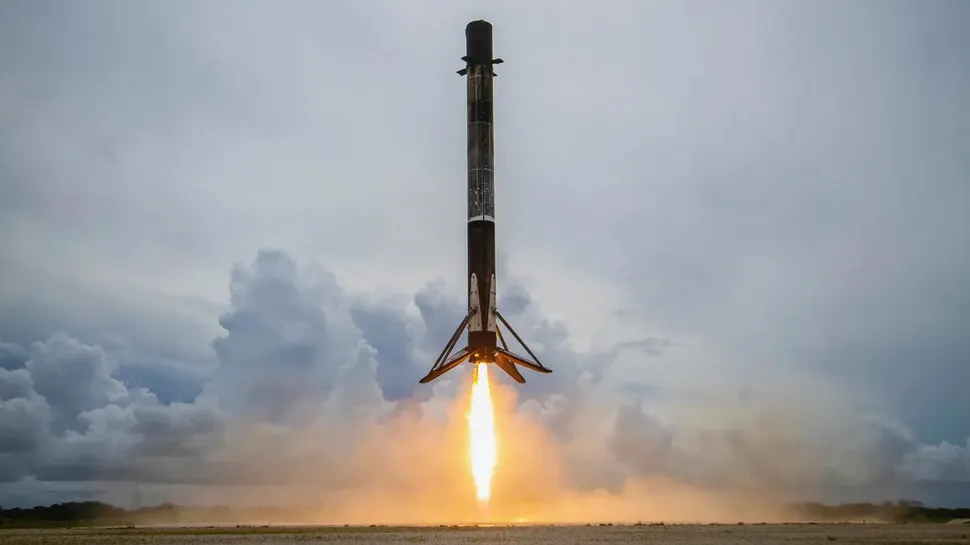
Falcon 9 made its debut in June 2010 with first-stage reuse as a design goal. Turning that goal into a reliable landing capability took years of flight testing. On December 21, 2015, during Falcon 9’s 20th flight, a first stage landed vertically at what is now Cape Canaveral Space Force Station after launching 11 Orbcomm satellites. SpaceX achieved its first landing on an Atlantic Ocean drone ship on April 8, 2016, giving missions without sufficient fuel for a return to shore another recovery option.
The landings have since become part of Falcon 9’s regular operating cycle. SpaceX has recovered boosters more than 650 times on orbital missions. Six first stages have each completed more than 30 launches and landings, with Booster 1067 leading at 37 flights. Falcon 9 flew 165 missions in 2025, according to the figures reported with the award, illustrating the launch cadence that recovery and reuse help support.
Recovery alone does not make a rocket reusable: each returned stage must be inspected, prepared and integrated for another mission. Falcon 9’s record shows how landing precision and repeatable post-flight operations can work together at scale. The approach has also influenced other launch developers pursuing recoverable first stages.
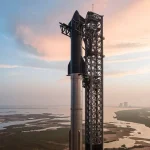
SpaceX is applying its recovery experience to Starship, which is being designed for reuse of both stages. Its Super Heavy booster has been caught by the launch tower at Starbase, Texas, on three occasions across 13 suborbital test flights. Reusing the upper stage, known as Ship, remains a separate challenge; Falcon 9 upper stages are expended. Kuwata identified Ship recovery as the larger step for Starship, saying flight testing will reveal issues beyond those captured in landing simulations.