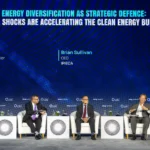
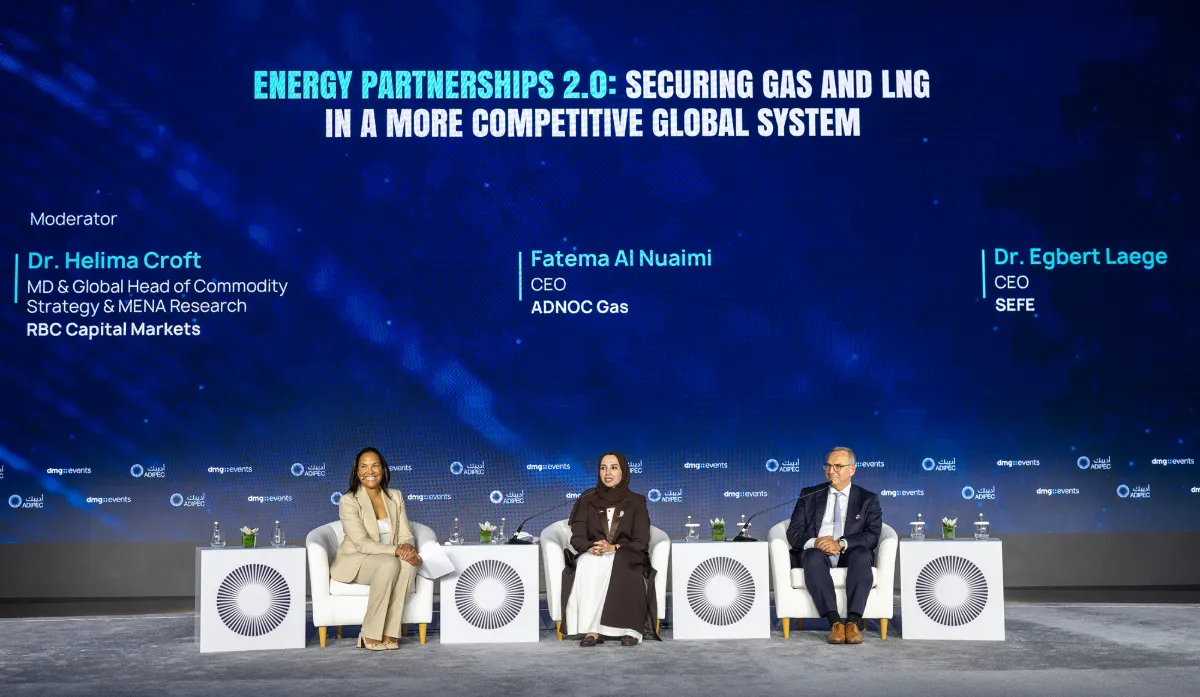
At ADIPEC 2026 in Abu Dhabi, ADNOC Gas CEO Fatema Mohamed Al Nuaimi said gas buyers are looking for more flexibility in how they secure supply. Long-term contracts remain an important part of that strategy, but buyers also want a wider choice of suppliers, contract lengths, and pricing mechanisms so they can adjust when demand shifts or a supply route is disrupted.
Speaking on the same panel, Egbert Laege, CEO of German energy company SEFE, explained how that shift looks from a buyer’s perspective. After disruptions to its Russian supply arrangements, SEFE rebalanced its procurement portfolio by combining pipeline gas with liquefied natural gas from a wider range of regions and suppliers. It also expanded its presence in Asia to reduce its exposure to demand fluctuations in any one market. Laege said long-term contracts help protect buyers from spot-market volatility and give infrastructure projects greater revenue certainty. Shorter-term arrangements give buyers room to adjust as market conditions change.
Al Nuaimi stressed the importance of keeping communication open when markets come under pressure. Producers need predictable demand, while buyers need to adapt their purchases as conditions change. Laege recalled that ADNOC stayed in contact with SEFE while the German company was rebuilding its business in 2022. That early engagement helped lay the groundwork for SEFE to become a partner in the Ruwais LNG project.
ADNOC Gas and EtihadWE Explore Supply to the Northern Emirates
On November 4, ADNOC Gas announced an agreement with Etihad Water and Electricity (EtihadWE) to explore supplying natural gas for new power generation capacity in the UAE’s Northern Emirates. Suhail Mohamed Faraj Faris Al Mazrouei, the UAE’s Minister of Energy and Infrastructure and chair of EtihadWE’s board, witnessed the signing.
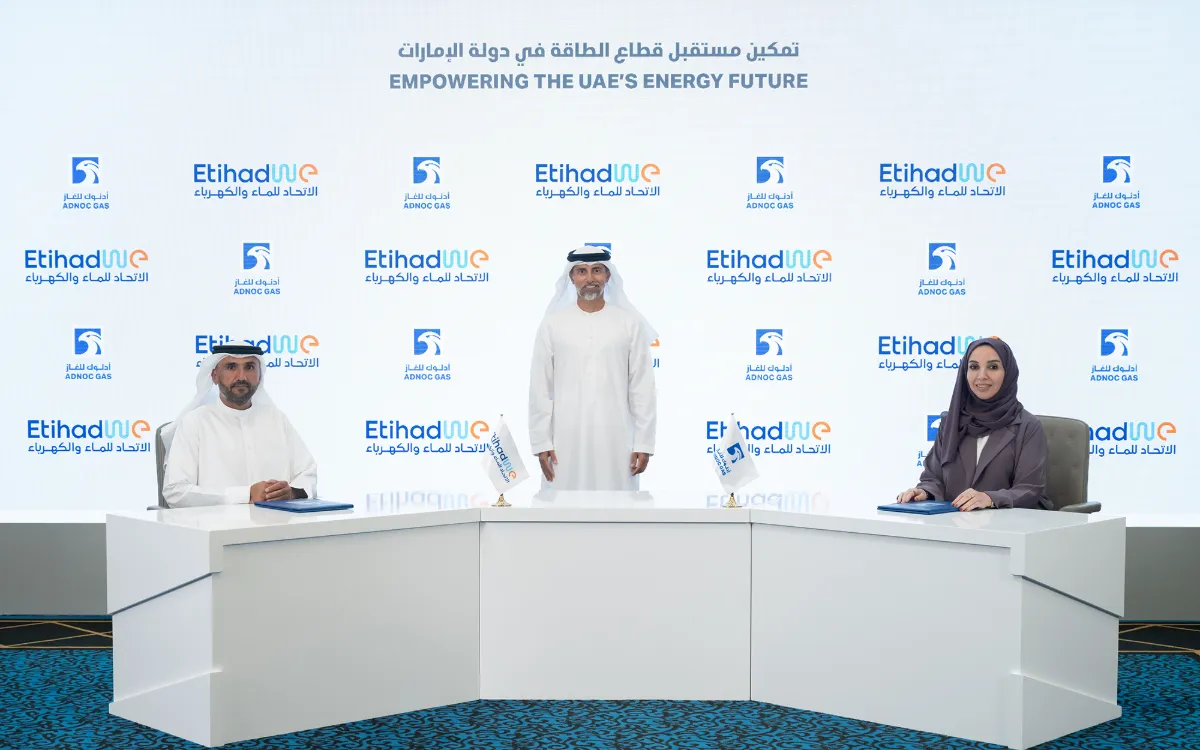
Image: ADNOC Gas and EtihadWE sign an agreement at ADIPEC 2026 to explore supplying natural gas for new power generation capacity in the UAE’s Northern Emirates.
Al Nuaimi said ADNOC Gas is expanding capacity and investing in infrastructure to bring additional gas to new customers and support the UAE’s future power needs. EtihadWE CEO Yousif Ahmed Al Ali said the utility is planning a mix of gas-fired and renewable generation. Access to additional domestic gas could give EtihadWE more options as it plans new generating capacity in the Northern Emirates.
While the two companies explore future supply arrangements, ADNOC Gas is advancing two projects that address different parts of the gas network. Rich Gas Development will expand processing capacity and make more gas available to domestic customers. Estidama will upgrade and modernize the UAE pipeline network so additional volumes can move from processing facilities to existing and future customers. Together, the projects address how much gas can enter the network and where it can be delivered.
Pipeline Upgrades Also Bring the Right-of-Way Into Focus
At the exhibition, Raymond International presented its work in pipeline lining, corrosion protection, and rehabilitation. Cement mortar lining can be applied to new or existing pipelines, with the choice of lining depending on the fluid being transported, operating pressure, and temperature. Right-of-way inspections raise a different set of questions. Where have new access roads, temporary stockpiles, or excavations appeared? How close are they to the pipeline? Do they match permitted work?
Operators can use historical satellite imagery to establish a baseline for the pipeline corridor, then compare high-resolution optical images collected over time to screen for new construction, possible encroachment, and changes in land use. In known subsidence zones and along slopes, time-series interferometric synthetic aperture radar (InSAR) can track ground movement where observation conditions are suitable. Comparing these findings with pipeline mileposts, work permits, and past inspection records helps teams prioritize field checks where activity is close to the line, changes persist, or the nature of the work remains unclear.
Operators planning a network expansion or updating an existing inspection program can contact STARPATH GLOBAL to define monitoring priorities based on pipeline length, nearby construction activity, and local ground conditions. The team can match image resolution and monitoring frequency to the changes each section needs to capture and deliver a prioritized list with coordinates and before-and-after imagery so field crews can locate and verify each finding.