
Taking place in Abu Dhabi from November 2 to 5, ADIPEC 2026 brings energy demand and infrastructure investment into the same conversation. During a panel on energy security and system resilience, bp CEO Meg O’Neill, RWE CEO Markus Krebber, and Oxy President and CEO Richard Jackson discussed how AI is reshaping both. As data centre construction accelerates, the availability of generation, transmission and grid connections is becoming a practical constraint on computing capacity expansion.
Energy Connects covered the discussion in AI Drives New Thinking on Energy Investment, Resilience and Growth. The executives described the relationship between AI and energy from different business perspectives: AI can improve production and facility operations, while its own development requires more reliable electricity and infrastructure capable of accommodating new demand.
Krebber highlighted the difference in development timelines. A new data centre investment typically takes three to four years to reach the market, whereas expanding the power system, including transmission and generation, often takes more than five years. That gap makes electricity supply a condition that data centre developers need to address early.
To respond, RWE is exploring the reuse of grid connections at decommissioned nuclear and coal plants, alongside dedicated power solutions for data centre campuses. Krebber also discussed smaller, decentralised data centres, which he considers easier to connect to the grid. These options illustrate why site selection and development must account for existing power infrastructure, connection capacity and construction schedules.
O’Neill focused on opportunities to apply AI within energy operations. She highlighted subsurface characterisation, seismic processing and reservoir management, alongside physical AI for facility operations. Her emphasis was on improving performance and controlling operating costs. For energy companies, meeting growing demand also involves making better use of existing assets.
Jackson explained that Oxy is exploring how natural gas, land and water resources can be combined with power generation and carbon capture technologies to support data centre development. The discussion connected several interdependent requirements: computing facilities need electricity, generation projects need resources and sites, and dependable delivery requires coordinated supporting infrastructure.
On the longer-term power mix, Krebber stressed that an around-the-clock, low-carbon system requires renewables, batteries and additional gas-fired generation. The executives also discussed investment certainty, technological progress and planning for volatility. With power infrastructure taking years to develop, meeting new demand requires coordinated decisions across technologies, assets and construction timelines.
From an infrastructure operations perspective, the discussion raises a further question: as new generation facilities, campuses and grid connection projects are built, how can changes around existing and new transmission lines feed into inspection and risk management?
Include Changes Along Transmission Corridors in Inspection Plans
Transmission lines cross urban outskirts, industrial areas, farmland and mountainous terrain. Each section faces different surrounding conditions. New roads, earthworks, construction sites, temporary storage areas and vegetation growth can all change the environment around a line.
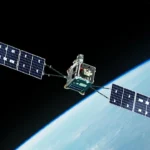
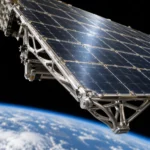
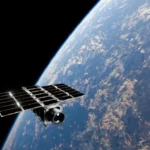
Operations teams first need to establish where a change has occurred, which line section it affects and whether further inspection is required. Satellite imagery collected over time can help screen transmission corridors and neighbouring areas for new construction, buildings and land-use changes, providing locations for inspection teams to investigate.
If a new construction site appears near a line, for example, its footprint can be mapped against towers, the line route and corridor boundaries. Teams can then check construction permits and previous inspection records before arranging further verification at locations close to critical assets or where conditions remain unclear.
This broad-area screening helps direct inspection resources toward sections where changes have occurred, while preserving a record of when those changes appeared and how they developed.
Use Close-Range Inspections to Verify Specific Risks
After a satellite observation identifies a change, field teams still need to answer more detailed questions. How far does construction machinery operate? Are lifting activities approaching the line? Do new structures or trees maintain sufficient clearance from conductors?
These assessments require drone surveys, LiDAR or ground measurements. Drones can provide close-range imagery of construction boundaries, machinery activity and corridor conditions. LiDAR can establish the three-dimensional relationship between conductors, towers, vegetation and buildings to support clearance analysis. Safety assessments must also consider line specifications, operating conditions and applicable requirements.

Image: Drone technology on display at ADIPEC 2026 in Abu Dhabi. Source: ADIPEC.
Utilities already use this combination of methods. In its vegetation management overview, Seattle City Light explains how airborne LiDAR creates point clouds of trees, towers, conductors and terrain. The data helps identify vegetation clearance concerns and supports work planning alongside ground inspections.
For priority sections with ongoing construction, fixed video monitoring may also be appropriate, depending on site conditions. Observed machinery movements or work activities can then be referred to operations personnel for verification.
Organise Verification and Follow-Up by Line Section
Similar construction activities can require different responses depending on their location. Excavation near a tower foundation, lifting work beneath a line and ground disturbance farther away should each be assessed in context.
Monitoring findings should therefore be linked to specific line sections and assets. Each item requiring verification should identify the detection time, location, type of change, supporting imagery and questions that need to be answered in the field. Following inspection, the record should state whether action is needed, whether monitoring should continue and who is responsible for follow-up.
For construction lasting several weeks or months, teams should retain successive observations and field findings. These records help establish whether the site has expanded, machinery activity has changed or a previously identified risk has been resolved.
Observation frequency should also reflect risk. Scheduled satellite screening can provide broad-area coverage, while priority construction sites may require more frequent drone inspections or video observation. Plans should account for image acquisition opportunities, weather, flight conditions and site access, with alternative arrangements when an inspection cannot be completed.
Bring Monitoring Results Into Existing Maintenance Workflows
For line managers, usable outputs should identify the affected line section, tower reference, risk type, verification priority and field findings. This information supports inspection work orders and helps teams track progress.
Through its oil, gas and power infrastructure monitoring solutions, STARPATH GLOBAL combines satellite change screening, close-range drone verification, LiDAR measurements and video observations at priority locations to support transmission corridor inspections and third-party damage risk monitoring. Projects can configure observation resources around line distribution and risk conditions, with results delivered through customers’ existing GIS or asset management workflows.
The ADIPEC discussion underscores the need to plan AI computing capacity alongside power infrastructure. For transmission operators, maintaining visibility of corridor conditions and promptly verifying new risks are practical parts of reliable electricity delivery. As new facilities and supporting projects are developed, that work must keep pace with changes along the network.
Featured image: Executives from bp, RWE and Oxy discuss energy security and resilience at ADIPEC 2026. Source: Energy Connects.