
Author: starpathwp-production
-

MIL-STD-981 Explained: Quality Standards for Electromagnetic Devices in Space Applications
MIL-STD-981, officially titled “Military Standard: Design, Construction, and Test Requirements for Custom Magnetics for Space Applications”, is a critical United States military standard that governs the design, construction, qualification, and quality assurance of electromagnetic components specifically custom magnetics such as inductors, transformers, chokes, and filters used in space systems and other high-reliability aerospace applications. Space…
-

Impulse Receives $300 Million Series C funding to Accelerate the Future of In-Space Mobility
Impulse Space, the in-space mobility leader, announced it has raised $300 million in a Series C funding round, one of the largest venture rounds in the history of the space industry. The round, led by Linse Capital, brings Impulse’s total capital raised to $525 million. The pre-emptive raise is both a positive signal about Impulse’s…
-
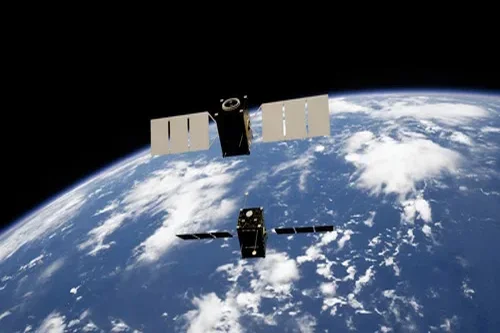
Eutelsat OneWeb LEO Services Receives South Korea Grant Backed by Intellian
Intellian Technologies, a global leader in satellite connectivity solutions headquartered in South Korea, and Eutelsat Group, the pioneering GEO-LEO satellite operator, announced a major milestone: the South Korean government has officially granted a Regulatory License for the deployment of Eutelsat OneWeb’s Low Earth Orbit (LEO) satellite services in Korea. In a first-of-its-kind decision, the Ministry…
-
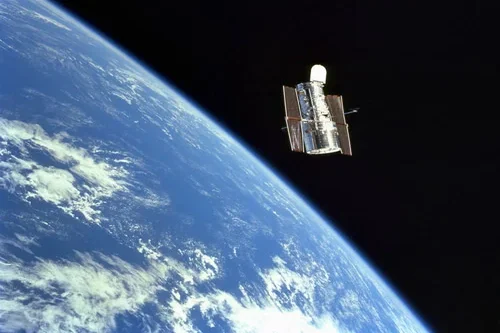
Space Norway Collaborates with Starlink for LEO Satellite Connectivity Services
Space Norway, Northern Europe’s leading satellite operator, is pleased to announce that it has signed an agreement with Starlink by SpaceX to provide Low Earth Orbit (LEO) satellite connectivity services starting with immediate effect. This contract further extends the company’s strategy of offering multi-orbit infrastructure combining geostationary (GEO), Highly Elliptical Orbit (HEO), and LEO satellites.…
-

SpaceX Falcon 9 Launches U.S. Military’s Latest GPS Satellite
A SpaceX Falcon 9 rocket successfully launched the U.S. military’s newest Global Positioning System (GPS) satellite on May 30, marking another step in modernizing the GPS constellation. The rocket lifted off from Cape Canaveral Space Force Station at 1:37 p.m. Eastern Time, carrying the GPS III SV-08 satellite, the eighth spacecraft in the U.S. Space…
-

Tuesday Telescope: A time-lapse from orbit reveals treasures below
Welcome to the Tuesday Telescope. There is a little too much darkness in this world and not enough light—a little too much pseudoscience and not enough science. We’ll let other publications offer you a daily horoscope. At Ars Technica, we’ll take a different route, finding inspiration from very real images of a universe that is…
-

NASA Proposes Deep Budget Cuts for 2026, Prioritizing Exploration Over Science Missions
NASA has unveiled detailed plans for its fiscal year 2026 budget, proposing significant cuts to science missions and workforce alongside new investments in human space exploration, according to documents released on May 30. The agency’s proposed budget request totals $18.8 billion, representing a nearly 25% decrease from the $24.9 billion NASA received in fiscal year…
-

China’s Astronstone Secures $14 Million to Develop Stainless Steel Reusable Rocket Modeled on SpaceX Starship
Astronstone, one of China’s newest commercial space startups, announced it has raised over 100 million yuan ($13.9 million) in early-stage funding to develop a stainless steel, reusable rocket inspired by SpaceX’s Starship system. Founded in mid-2024, Astronstone is developing its AS-1 launch vehicle, a 70-meter tall, 4.2-meter diameter rocket powered by a customized version of…
-

Northrop Grumman Invests $50 Million in Firefly Aerospace to Advance Medium-Lift Rocket Eclipse
Northrop Grumman announced on May 29 a $50 million investment in Firefly Aerospace, joining a $175 million Series D funding round for the company that values it at over $2 billion. The funding will support development of Firefly’s medium-lift launch vehicle, recently renamed Eclipse. Eclipse is designed to carry payloads up to 16,300 kilograms to…
-
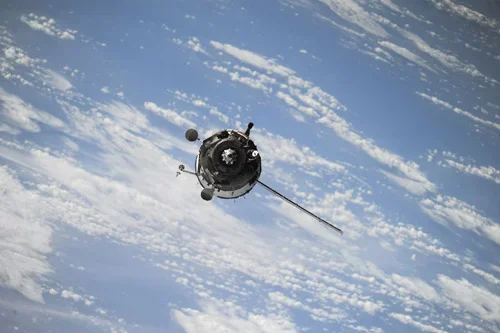
U.S. Space Force Orders Two Additional GPS IIIF Satellites from Lockheed Martin
The U.S. Space Force has awarded Lockheed Martin a $509.7 million contract for two more Global Positioning System (GPS) satellites, expanding the military’s investment in the advanced GPS III Follow-on (GPS IIIF) constellation aimed at bolstering both civilian and defense navigation services. The new satellites, GPS IIIF-21 and IIIF-22, are scheduled for delivery by 2031,…