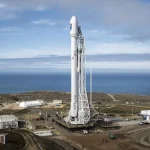
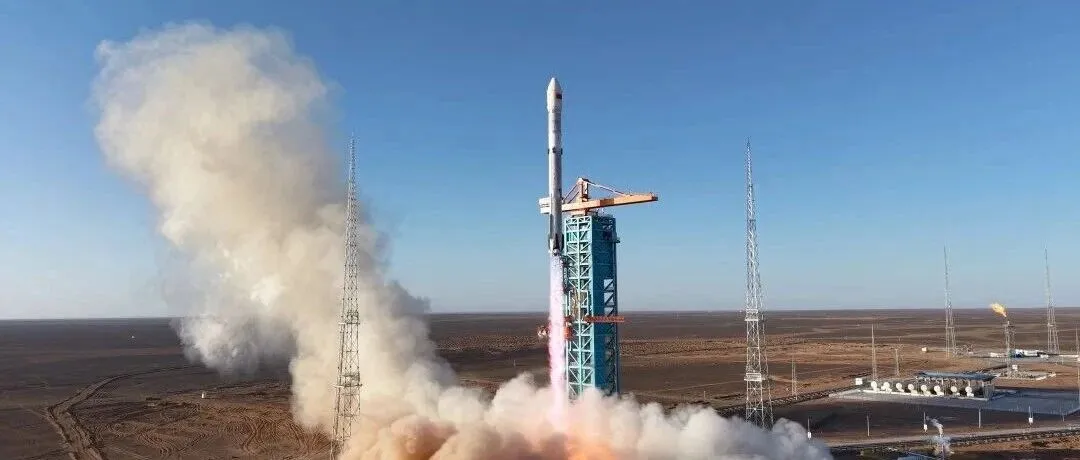
On September 1, PALLAS-1 Y1 lifted off from Jiuquan. Galactic Energy is no longer a company with only small solid-fueled rockets: its 52-meter-tall, medium-to-heavy liquid launch vehicle, powered by seven clustered liquid oxygen/kerosene engines, has now completed its first orbital flight.
PALLAS-1 Y1 lifts off. Image source: Galactic Energy website, September 2, 2026.
Less than two weeks earlier, ZQ-3 Y2 delivered its satellites into orbit before its first stage returned to Earth on landing legs in Minqin, Gansu Province. In July, Orienspace’s Gravity-1 completed its first launch from the open sea. In March, CAS Space’s Kinetica-2 reached orbit on its maiden flight. In 2026, China’s commercial rockets suddenly began to look as if they were lining up for their turn on the launchpad.
Yet the industry is not as crowded as the list might suggest. As of September 5, 2026, when privately founded launch startups, mixed-ownership companies spun out of research institutes and state-owned commercial launch providers are counted separately, five private companies have reached orbit as the primary developers of complete launch vehicles: i-Space, Galactic Energy, LandSpace, Space Pioneer and Orienspace.
CAS Space has placed both solid- and liquid-propellant rockets into orbit. Because it is a mixed-ownership commercial launch company incubated by the Institute of Mechanics under the Chinese Academy of Sciences, it is listed separately here and is not included among the “five private companies.”[1][2]
The bottom line: China’s private rocket industry has moved beyond the stage of asking whether any company can place a complete launch vehicle into orbit, but it remains far from the stage of making money easily. Solid rockets are competing on launch frequency, while liquid rockets are pursuing breakthroughs in payload capacity. First-stage recovery has crossed an important flight-validation threshold. The next challenge is to refly the same first stage, shorten turnaround times and turn isolated successes into reliable delivery.
Table 1. Five private rocket companies with a record of placing complete orbital launch vehicles into orbit.
1. Five Companies Have Reached Orbit, but They Took Different Paths
i-Space was the first to break through. In July 2019, Hyperbola-1 successfully reached orbit, becoming the first privately developed Chinese launch vehicle to do so. It is a small solid-propellant rocket that the company continues to position for commercial launch services at scale. Its next-generation flagship, Hyperbola-3, uses liquid oxygen and methane and is designed for first-stage recovery.[3]
Galactic Energy first built up a record of consecutive launches with CERES-1 before moving into liquid launch vehicles with PALLAS-1. According to the company, it had completed 22 orbital launches and placed 89 satellites into orbit by the time of PALLAS-1’s maiden flight. Those figures include missions flown by the CERES series. PALLAS-1 Y1 completed baseline orbital validation, with first-stage recovery scheduled to be introduced progressively on subsequent flights.[2]
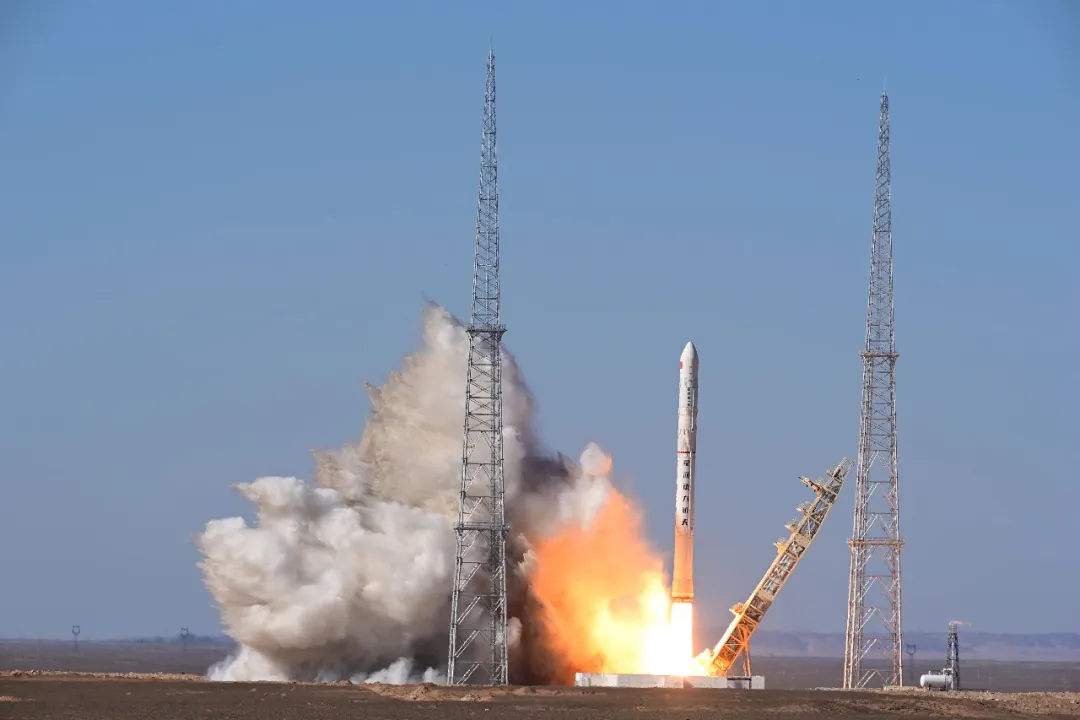
LandSpace has followed a more concentrated path. ZQ-2 achieved an orbital breakthrough for liquid oxygen/methane rockets in 2023, while ZQ-3 moved the competition into the recovery phase. On August 19, 2026, the second stage of ZQ-3 Y2 reached orbit. After reorienting for its return, slowing during reentry, gliding aerodynamically and igniting its landing engines, the first stage touched down at a land-based landing site.
The mission proved that the first stage could return intact. A genuine reusability record, however, will require the recovered vehicle to pass inspection and fly again.[4]
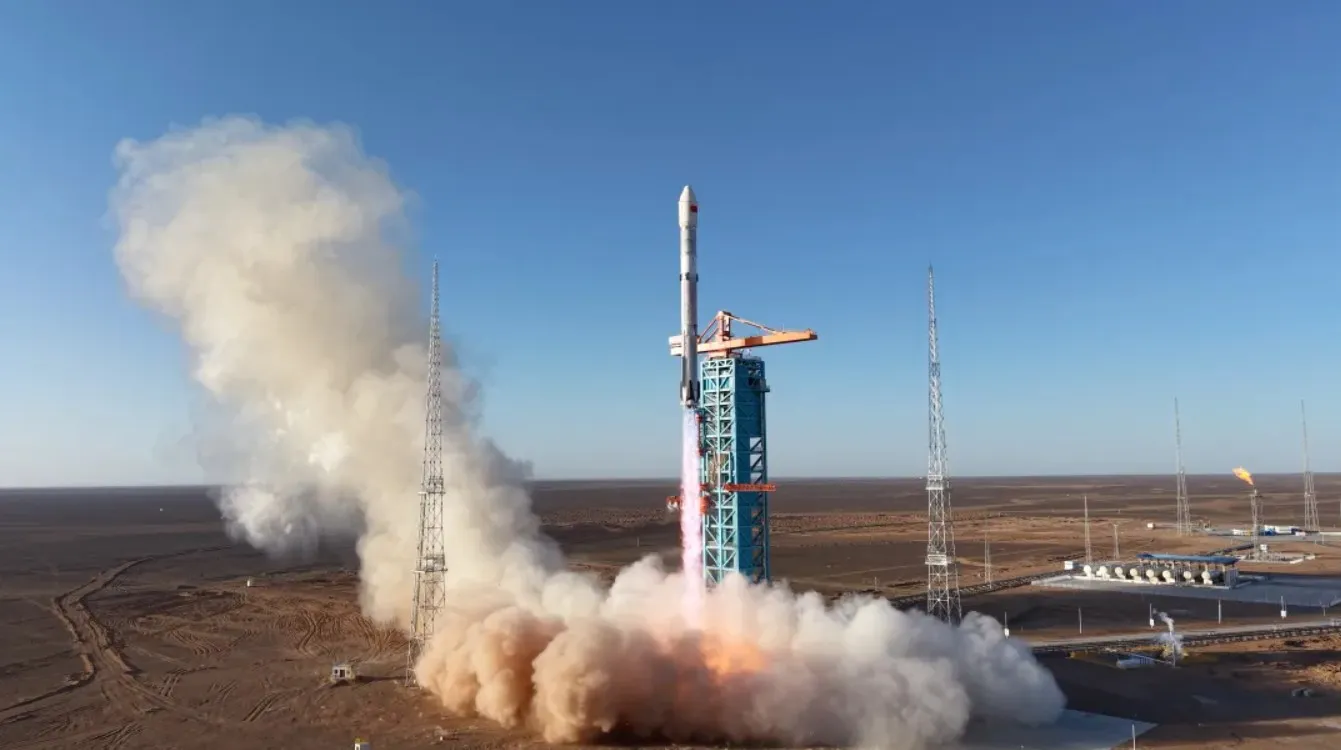
ZQ-3 Y2 lifts off. Image source: LandSpace website, August 19, 2026.
Space Pioneer completed the first orbital launch by a privately developed Chinese liquid-propellant rocket with Tianlong-2 in 2023. The rocket used liquid oxygen and coal-derived aerospace kerosene. The company subsequently redirected its resources toward the much larger Tianlong-3. The maiden flight of Tianlong-3 Y1 encountered an anomaly on April 3, 2026, and the mission failed. The company later announced a failure investigation and corrective measures. Space Pioneer retains its record of placing a complete liquid launch vehicle into orbit, but its heavy-lift model must now undergo renewed flight validation.[5]
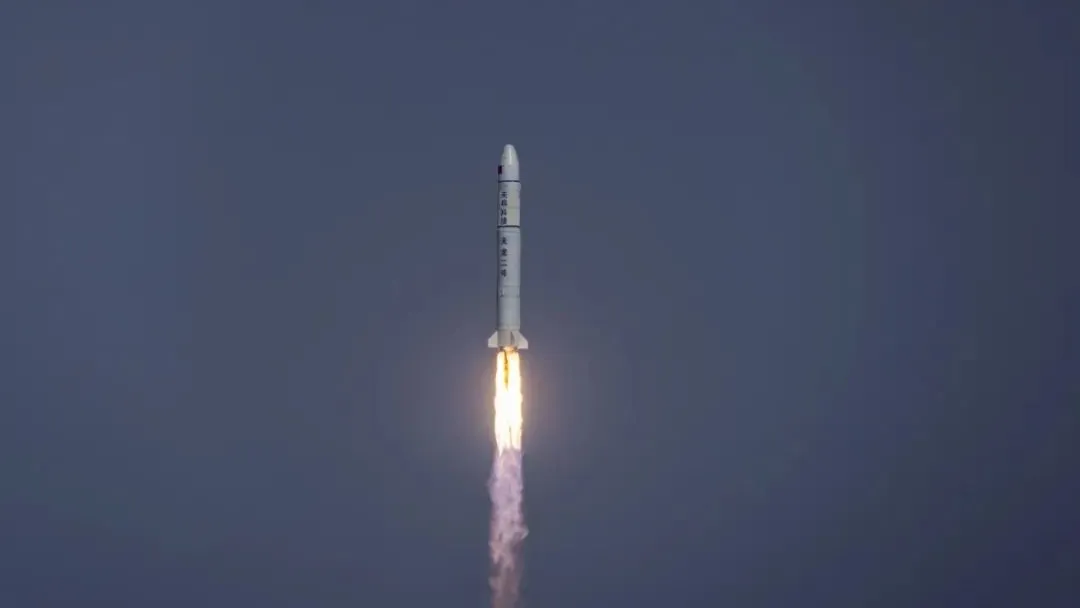
Tianlong-2 Y1 during launch. Image source: Space Pioneer website, April 2, 2023.
Orienspace chose the unusual configuration of a large solid-propellant core stage with strap-on solid boosters. Gravity-1 succeeded on its maiden flight in 2024. In July 2026, its Y4 mission launched nine satellites from the open sea off the coast of Shanghai. Published specifications give it a payload capacity of 6.5 metric tons to low Earth orbit and 4.2 metric tons to a 500-kilometer sun-synchronous orbit. Gravity-1 has expanded the role of solid rockets from rideshare missions carrying a few hundred kilograms to larger-scale constellation deployment.[6]
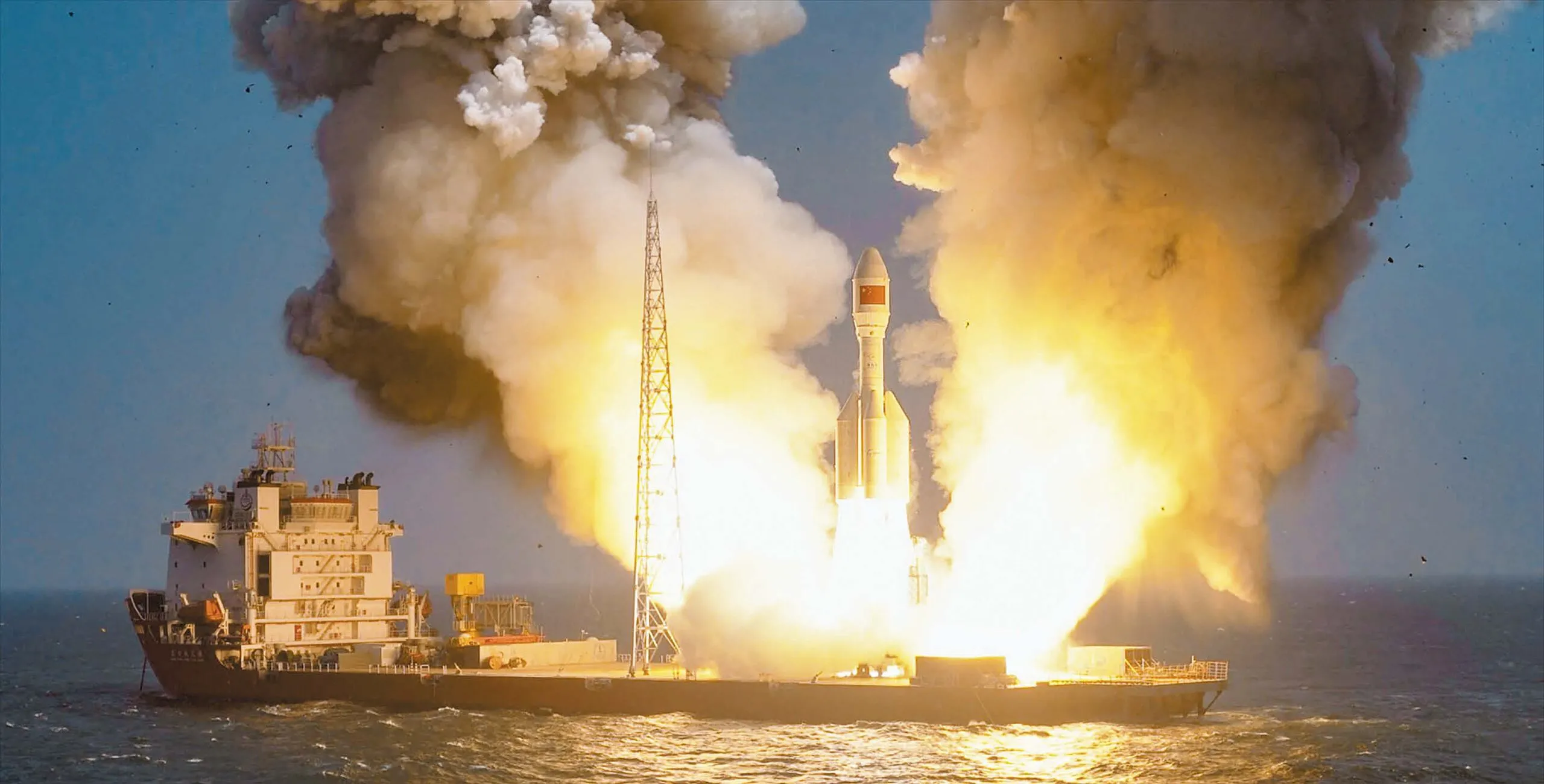
Gravity-1 Y4 launches from waters east of Shanghai. Image source: Orienspace website, July 22, 2026.
2. One More Company Should Not Be Overlooked Because It Is Not Entirely Private
CAS Space frequently appears alongside the companies above in commercial launch reports, but its ownership structure is different. It was incubated by the Institute of Mechanics under the Chinese Academy of Sciences and operates as a mixed-ownership commercial launch company.
Kinetica-1 has already established a solid-rocket launch service. On March 30, 2026, the liquid oxygen/kerosene-powered Kinetica-2 completed its maiden flight, placing the prototype Qingzhou cargo spacecraft and two satellites into orbit. As of the cutoff date for this article, Kinetica-1 had completed 15 flights and delivered 110 satellites to space. Including the maiden flight of Kinetica-2, the Kinetica family had completed 16 launches and placed 113 payloads into orbit.[7]
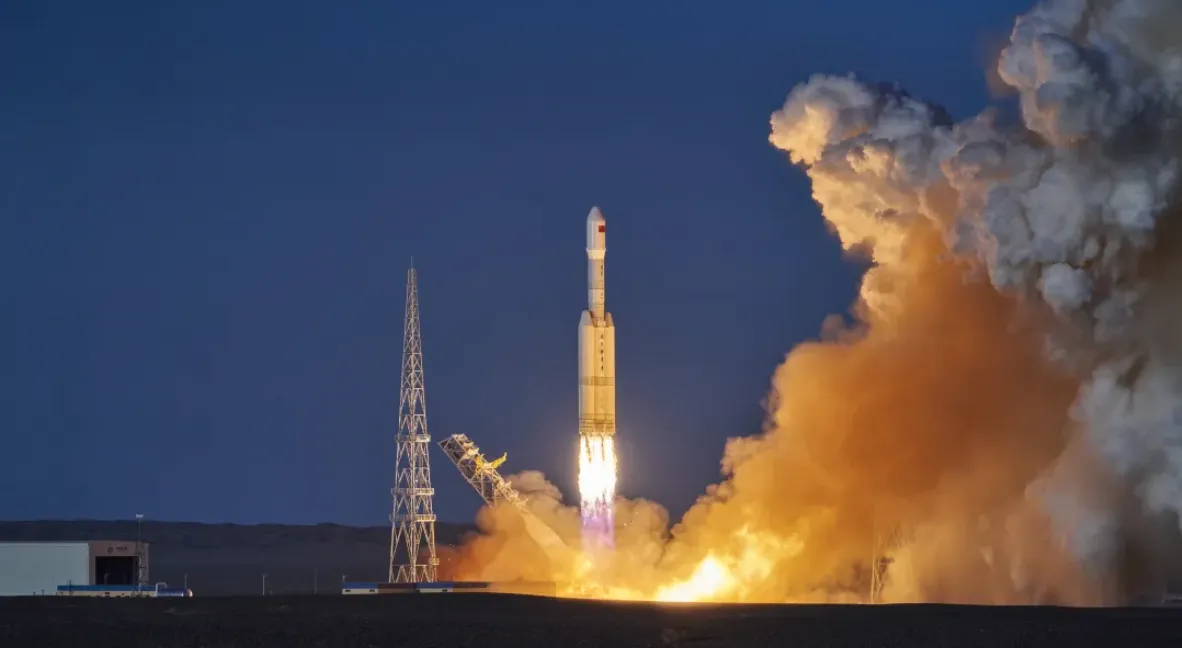
The maiden flight of Kinetica-2 Y1. Image source: CAS Space website, March 30, 2026.
This distinction helps clarify the structure of today’s commercial launch market. In addition to privately founded startups and mixed-ownership companies spun out of research institutes, China also has state-owned commercial vehicles, including China Rocket’s Smart Dragon series and ExPace’s Kuaizhou series. They serve similar satellite customers but operate with different capital structures, technology origins and mission mechanisms.
3. Why Did the Industry Start with Solid Rockets—and Why Is Everyone Now Pursuing Liquid Propulsion?
Solid rockets have relatively compact structures, can remain loaded with propellant for extended periods and require shorter launch-support procedures. They are well suited to rapid-response missions, small and medium payloads, and operations with relatively limited ground-support requirements. Hyperbola-1, CERES-1, Kinetica-1 and Gravity-1 constitute several of China’s principal commercial solid-rocket product lines.
Their limitations are equally clear. Once the propellant has been cast, a solid rocket motor cannot readily be shut down, restarted or throttled across a wide range like a liquid engine. As missions demand greater payload capacity, broader adaptability and reusable first stages, the advantages of liquid propulsion become more pronounced.
Liquid propulsion raises the technical threshold but also opens a much larger market. Representative liquid oxygen/kerosene vehicles include PALLAS-1, Tianlong-2 and Tianlong-3, Kinetica-2, NEBULA-1 and Gravity-2. Liquid oxygen/methane vehicles include ZQ-2, ZQ-3, Hyperbola-3 and Yuanxingzhe-1.
Kerosene offers high propellant density and a well-established engineering base. Methane produces relatively clean combustion products and is less prone to coking, potentially simplifying inspection and turnaround for reusable engines. The final choice must be based on the complete system, including the engine cycle, vehicle dimensions, payload capacity, recovery method and ground-support requirements.
4. How Far Have the Rockets Waiting in Line Progressed?
The first group has set clear maiden-flight targets for 2026. i-Space plans to conduct the first orbital flight of Hyperbola-3 and attempt recovery at sea. Orienspace expects Gravity-2 to be ready for its maiden flight in the fourth quarter. Space Epoch has scheduled the first flight and recovery mission of Yuanxingzhe-1 for around the end of the year. All three vehicles have entered intensive phases of final assembly, integrated testing or major qualification tests.[8]
A second group has moved beyond concept presentations and entered large-scale ground testing ahead of maiden flights. Zenk Space has completed a full-system firing test of the first stage of ZH-1. Deep Blue Aerospace continues to advance its liquid oxygen/kerosene-powered NEBULA series, although it has not announced a maiden-flight window as specific as those of the three vehicles above.[9][10]
ASTRONSTONE’s AS-1 was delivered as a complete vehicle in January 2026. It uses a stainless-steel airframe, liquid oxygen/methane propulsion and a catch-arm recovery system. The company is continuing propulsion-system and recovery validation.[11]
A third group remains in medium- to long-term engineering development. CosmoLeap’s Leap-1 has entered the engineering phase for its maiden flight and uses liquid oxygen/methane propulsion with a tower-catch recovery concept. Spark Space is approaching its Evolution-1 vehicle through the development of electric-pump-fed engines. Xiandeng Aerospace is advancing the small liquid-propellant XD-3, while Jiangsu Zhilin Space Equipment has launched construction of a manufacturing base for its Feiyan liquid rockets.
StarsLiner, Xingji Zhizhou, Yilong Aerospace and Dragon Aerospace have also disclosed launch-vehicle or propulsion plans.[11][12][13]
The companies at the end of the list are changing most rapidly. Qianyi Aerospace, FSTSPACE, Weiguang Qihang, Star Shuttle Technology and Zhiyu Aerospace appear more frequently in fundraising announcements, recruitment campaigns, local development projects and corporate releases, but their rocket configurations, test milestones and maiden-flight schedules are still taking shape.
OneSpace, LinkSpace and Rocket Pi entered the public eye relatively early, but have reported limited progress on complete launch vehicles in recent years. Space Transportation and Space Trek focus primarily on suborbital and high-speed flight tests. Their technologies are adjacent to orbital launch systems, but they should not be counted directly as orbital launch-service providers.
Table 2. Engineering-maturity map of launch vehicles under development in China.
When assessing rockets under development, engineering milestones are more informative than the length of the company list. Engine firing, full-system firing, factory rollout, maiden orbital flight, a second successful launch, first-stage recovery and the reflight of the same first stage each subject the vehicle’s technology and delivery capability to a new level of scrutiny.
5. First Stages Can Now Land, but the Industry Still Lacks a Reflight Record
In July 2026, Long March 10B completed a sea-based net-capture recovery. In August, ZQ-3 Y2 achieved the first land-based recovery on landing legs of an orbital-class first stage developed by a Chinese private rocket company. The former came from China’s state-owned space sector, while the latter was developed by LandSpace. The successive validation of two terminal recovery methods shows that China has acquired key capabilities for the controlled return of orbital-class rocket stages.[4][14]
Recovery is only the first hurdle. After landing, the vehicle must undergo inspections of its engines, propellant tanks, valves, welds and thermal-protection system, as well as an assessment of the effects of landing loads. Engineers must then complete life-cycle evaluations, repairs and flight-release procedures. Only when the same first stage is mated with another upper stage and payload and successfully completes another mission will the flight-data analysis, nondestructive inspection, maintenance processes and configuration management system have formed a closed loop.
The next question is performance over multiple cycles. Designing a stage for 10, 20 or 25 flights establishes a target. The number of flights achieved by an operational fleet, the average inspection time and the number of components requiring replacement will determine the actual economics. Recovery also consumes propellant and structural mass that would otherwise support payload capacity, while landing sites, recovery vessels, transportation and maintenance facilities all cost money. Whether reuse is truly cheaper can only be answered through a complete operational cost model.
6. With So Many Rockets Already in Development, Why Are New Companies Still Entering the Market?
The launch market has not settled on a single vehicle capable of serving every mission. Technology-demonstration satellites weighing tens of kilograms, remote-sensing satellites weighing hundreds of kilograms, batches of internet satellites and large spacecraft have different requirements for fairings, orbits, launch schedules and prices. Small solid rockets can compete for rapid-response missions. Medium-to-heavy liquid rockets target constellation deployment, while heavy-lift vehicles must wait for satellite production capacity and multi-satellite stacks to mature in parallel.
New teams also have opportunities to enter through specific technologies. Electric-pump-fed engines seek to reduce the complexity of turbopump systems. Stainless-steel airframes target lower manufacturing costs and reusability. Sea recovery and tower catching explore different approaches to turnaround. A novel architecture does not automatically become a product advantage. It must prove itself step by step through firing tests, flights, recovery operations and reflights.
Local industrial parks and private capital are interested in more than the rocket itself. Engine testing, final assembly, composite materials, valves, telemetry and control, launch-site support and insurance can form a long supply chain around a prime contractor. For a city, attracting a complete-vehicle company may bring manufacturing and testing platforms. For the company, however, the truly scarce resources remain steady missions, reliable suppliers and launchpads that are available on schedule.
7. Beyond the Investment Story, Four Factors Will Decide the Launch Business
First, reliability. Customers are buying an orbital delivery service that must be timely, accurate and dependable. A record of consecutive successes does more to improve how customers and insurers assess a vehicle’s risk than a one-off performance record. The quality of the failure investigation and the speed of a return to flight after a maiden-flight failure are also part of a company’s capabilities.
Second, whether real payloads can fill the available capacity. Rockets in the 10- or 20-ton class need either sufficiently large individual spacecraft or mature multi-satellite stacks. If satellite production, interface standardization, transportation and launch cadence cannot keep pace, even a large rocket may be left waiting for payloads.
Third, delivery cadence. The number of rockets a factory can produce each year is not necessarily the number it can launch. Engine production lines, final assembly and testing, launchpads, tracking and control, airspace and maritime coordination, and mission approvals all shape the flight schedule. China’s Action Plan for the High-Quality and Safe Development of Commercial Spaceflight (2025–2027) identifies pilot-scale production platforms, access to testing facilities, launch infrastructure and full-life-cycle safety supervision as priorities. Competition is expanding from individual launch vehicles to complete delivery systems.[15]
Fourth, whether reuse produces real savings. The most important data to watch next will be inspection results for recovered stages, reflights of the same vehicle, turnaround labor hours and cost per kilogram of useful payload. Bringing a rocket back will win headlines. Returning it with minimal repairs and flying it again—quickly and repeatedly—is what may win the market.
Conclusion: 2026 Is a Watershed Year for China’s Private Rocket Industry
Seven years ago, the industry was focused on which company would be the first to reach orbit. Today, five private companies have orbital records with complete launch vehicles. Small solid rockets, high-capacity solid rockets, liquid oxygen/kerosene vehicles and liquid oxygen/methane vehicles have all produced flight examples. Maiden-flight successes, launch failures and first-stage recoveries are now occurring in rapid succession within the same year.
The next rankings will not be decided at product launches or press conferences. CERES, Hyperbola, ZhuQue, Tianlong, Gravity and PALLAS—as well as NEBULA, Yuanxingzhe-1, Hyperbola-3, Gravity-2 and other vehicles still on the ground—must all prove themselves on real missions.
When this landscape is reviewed again a year from now, the most important changes should be concrete: which companies have added several reliable launches, which have progressed from maiden flight to repeat flights, which have sent a recovered first stage back into the sky, and which have converted planned production capacity into on-time delivery. China’s private rockets have taken flight. The industry’s real elimination round is only beginning.
References
[1] Public information from the Institute of Mechanics under the Chinese Academy of Sciences and CAS Space concerning CAS Space’s ownership structure and development history, accessed September 5, 2026.
[2] Galactic Energy, “PALLAS-1 (Y1) Launch Vehicle Successfully Completes Maiden Orbital Flight, Opening a New Chapter in Galactic Energy’s Dual Solid-and-Liquid Strategy,” September 2, 2026.
[3] i-Space product information on Hyperbola-1, the Hyperbola-2 verification vehicle and Hyperbola-3, accessed September 5, 2026.
[4] China National Space Administration and LandSpace, “China Successfully Conducts Its First Land Recovery of a Reusable Launch Vehicle” and “ZQ-3 Reusable Y2 Launch Vehicle Successfully Reaches Orbit and Completes Recovery,” August 19, 2026.
[5] Space Pioneer, “Successful Maiden Flight of the Tianlong-2 Launch Vehicle” and “Statement on the Maiden Flight Test of the Tianlong-3 (Y1) Launch Vehicle,” April 2023 and April 2026.
[6] Xinhua News Agency, “Gravity-1 Rocket Successfully Completes Its First Open-Sea Launch Mission,” July 22, 2026.
[7] CAS Space, “Kinetica-2 Launch Vehicle Successfully Completes Maiden Flight” and “Kinetica-1 Y15 Successfully Completes Five-Satellite Launch,” together with launch records from the company’s website, March 30 and July 24, 2026; accessed September 5, 2026.
[8] Beijing Municipal People’s Government, “Building a Regular Earth-to-Space Transport Service: Multiple Beijing Rockets Target Maiden Flights This Year,” August 6, 2026.
[9] Deep Blue Aerospace materials on the NEBULA launch-vehicle family and corporate progress, accessed September 5, 2026.
[10] Public information from Beijing Economic-Technological Development Area, the Yantai Municipal Government and other sources concerning tests and projects involving Zenk Space’s ZH-1 and Space Epoch’s Yuanxingzhe-1, 2025–2026.
[11] Hunan Provincial People’s Government, public information on ASTRONSTONE’s reusable liquid launch-vehicle project, January 2026.
[12] Xinhua News Agency and Beijing Economic-Technological Development Area, public information on Spark Space’s electric-pump-fed liquid rocket and engine testing, March–June 2026.
[13] Jiangyin Municipal Government in Jiangsu Province, an investor in Xiandeng Aerospace, and relevant corporate websites: information on the Feiyan and XD-3 projects, accessed September 5, 2026.
[14] State-owned Assets Supervision and Administration Commission of the State Council, citing China Aerospace Science and Technology Corporation, “Successful Maiden Flight of Long March 10B Marks China’s First Controlled Launch-Vehicle Recovery,” July 13, 2026.
[15] China National Space Administration, Action Plan for the High-Quality and Safe Development of Commercial Spaceflight (2025–2027), November 2025.
Note: This article classifies companies according to publicly verifiable engineering milestones, with data current as of September 5, 2026. Launch totals, payload capacities and future plans are subject to formal announcements by the relevant authorities and developers. Early-stage projects can change rapidly. This article does not constitute investment advice. Publicly available news images are used solely to illustrate the events described; copyright remains with their original creators and publishing organizations.