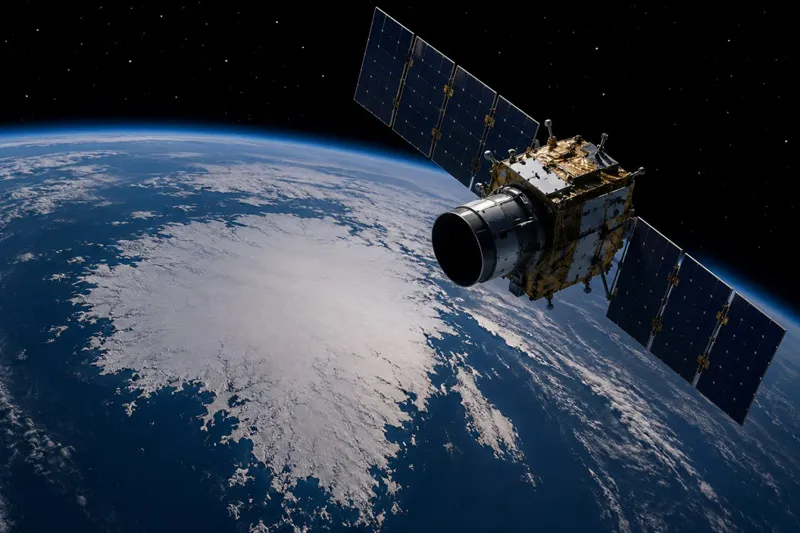
The frequency with which satellite imagery is updated depends on several factors, including satellite orbit design, constellation size, geographic location, sensor type, and imaging priorities. This frequency is commonly referred to as revisit rate or revisit cycle and represents how often a satellite can observe the same location on Earth.
Historically, individual satellites could revisit a location every several days or even weeks. Modern Earth observation systems have significantly improved revisit performance through the deployment of satellite constellations consisting of multiple coordinated spacecraft operating in similar or complementary orbits.
Today, some commercial and governmental constellations can provide observations of certain locations multiple times per day. The exact frequency varies depending on latitude, target area, and available satellite resources. Regions closer to the poles often experience more frequent observation opportunities due to orbital convergence, while equatorial regions may have different revisit characteristics.
Revisit frequency also depends on the type of imagery being requested. Standard archive imagery relies on previously collected observations and may be available immediately if suitable data already exists. For newly tasked acquisitions, scheduling depends on future satellite passes and operational priorities.
Weather conditions can influence update frequency for optical imagery. Even when a satellite passes over a target area, cloud cover may prevent the acquisition of usable imagery. In such cases, additional passes may be required before a cloud-free image becomes available. SAR satellites are less affected by weather conditions and can often provide more consistent monitoring schedules.
Different industries have varying revisit requirements. Agricultural monitoring may require weekly or biweekly observations to track crop development. Urban development projects may benefit from monthly updates. Disaster response operations often require near-real-time monitoring with the highest possible observation frequency. Infrastructure and asset monitoring programs frequently use scheduled revisits to detect changes over time.
Advances in satellite technology continue to improve temporal coverage. Larger constellations, improved tasking systems, and enhanced data processing capabilities are reducing acquisition latency and increasing monitoring frequency across a wide range of applications.
Ultimately, the optimal revisit rate depends on project objectives, geographic location, and analytical requirements. Organizations should evaluate both temporal resolution and image quality when selecting satellite imagery services to ensure data supports their operational decision-making needs.