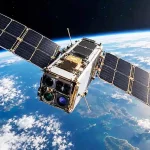
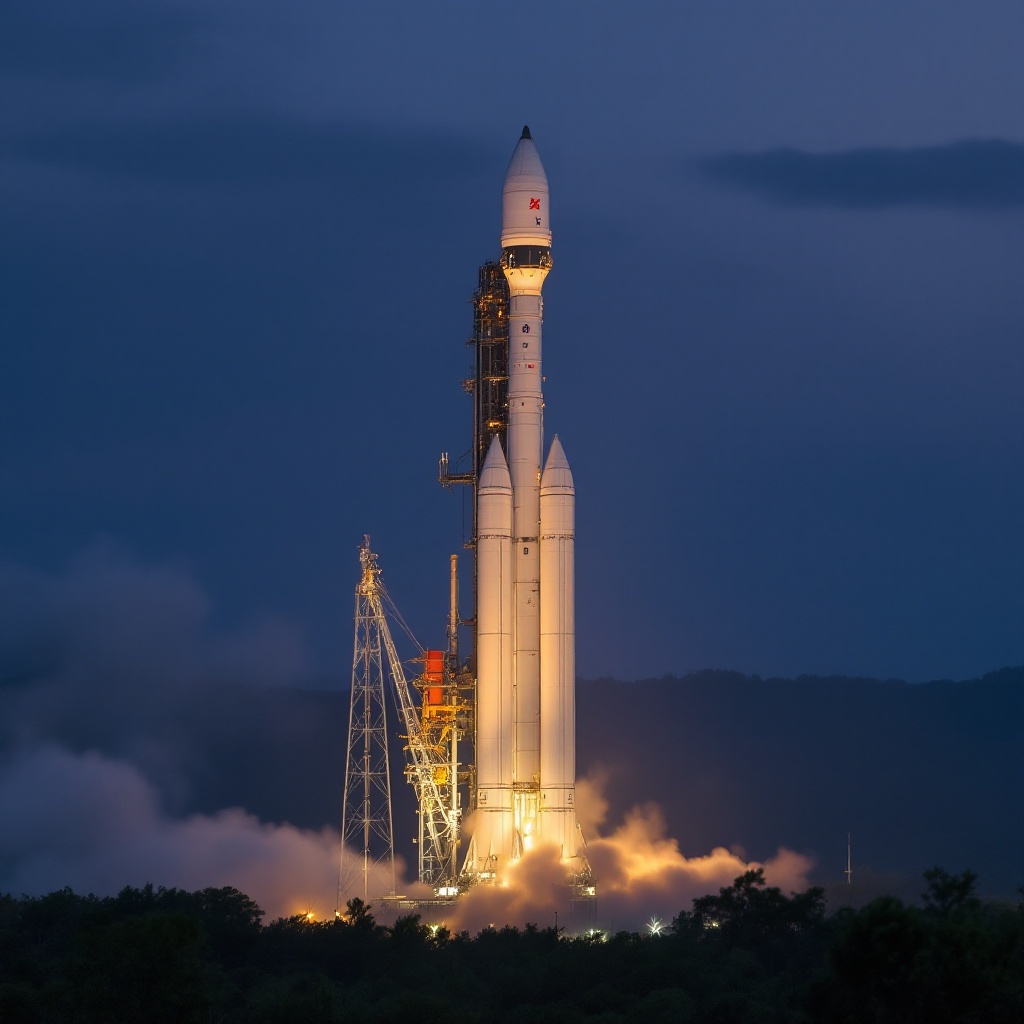
The flight was the third of 18 Ariane 6 launches booked by Amazon Leo to deploy its constellation, following successful missions in February and April. The Union of Guyanese Workers filed a strike notice on June 14, but Arianespace CEO David Cavaillolès publicly confirmed the launch would proceed. While all three Amazon Leo missions have used the Ariane 64 configuration with four solid rocket boosters, this flight debuted the upgraded P160C variant.
Liftoff occurred at 9:21 a.m. Kourou time. Compared to the predecessor P120C design, the P160C is a meter longer and holds about 156 tons of solid propellant, roughly 14 more tons, allowing a 10 to 15 percent increase in launcher performance. Each P160C booster produces 3,800 kN of thrust at liftoff, compared to 3,700 kN from the P120C. That additional capability allowed the rocket to carry 36 satellites, four more than previously.
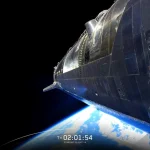
The four boosters separated less than 2.5 minutes after liftoff, followed by fairing jettison. The first and second stages separated nearly eight minutes into flight, and the Vinci engine began the first of two pre-deployment burns. Satellite deployment began about an hour and a half into the mission and concluded around one hour and 51 minutes post-liftoff. Arianespace confirmed deployment of all satellites at 1520 UTC.
“We have both institutional and commercial clients and our main and biggest client today is Amazon,” Cavaillolès said during a pre-launch briefing. “For me, it’s much more than a contract. It’s really a partnership.” He described the launch as a major milestone. “The more we launch, the better we know the launcher. We are already looking at further improvements.”
With this mission complete, Arianespace has launched 100 Amazon satellites, three missions in less than five months. Steven Metayer, vice president of Production Operations at Amazon, said the company is manufacturing several satellites per day at its facilities in Washington State and integrating them into dispensers in about a week at Kennedy Space Center. “We’re comfortable right now building ahead of where we need to be,” he said. Prior to this launch, Amazon had deployed 331 satellites on 12 missions across Arianespace, SpaceX, and United Launch Alliance.
Metayer praised Arianespace’s reliability. “They’re very reliable on their manifest dates, they’re very reliable and safe on their insertions in orbit,” he said, adding that Amazon looks forward to the next 16 launches under the existing contract and sees Arianespace as a long-term player.
Amazon plans about six more launches this year across multiple vehicles. The next is the Leo Atlas 08 mission on July 3, the final non-government launch of an Atlas 5 rocket. One more Ariane 64 launch is scheduled for this year, though no date was specified. ULA’s Vulcan is expected to fly its first Amazon mission near the end of the third quarter, with a wet dress rehearsal planned this summer. Blue Origin CEO Dave Limp reaffirmed a goal of resuming New Glenn launches from Cape Canaveral by year’s end.