
BAE Systems’ Space & Mission Systems division delivers a comprehensive range of technologies and services supporting scientific research, national security, Earth observation and commercial space operations. The division designs, develops and integrates spacecraft, sensors, payloads, electronics and ground-based systems that enable reliable access to space and the effective use of space-derived data. The Space & Mission Systems division plays a central role in supporting both civil and national programs contributing to missions led by NASA, NOAA and the US Department of Defense, as well as commercial satellite operators and international research agencies.
Core Space and Mission Domains
Astrophysics

Within the Astrophysics domain, BAE Systems designs and manufactures advanced instruments, sensors and spacecraft systems that support the scientific study of the universe. These technologies are used in missions that investigate cosmic phenomena such as black holes, exoplanets, the cosmic microwave background, interstellar dust and high-energy astrophysical processes. The division’s work focuses on developing high-sensitivity optical and infrared detectors, precision pointing mechanisms and stable spacecraft platforms that can operate reliably over long-duration missions in deep space. Many of the astrophysics instruments produced by BAE Systems have contributed to NASA and ESA-led observatories, providing measurement accuracy and stability essential for studying faint and distant cosmic sources. The company’s engineering teams collaborate closely with the scientific community and national laboratories to translate mission science requirements into flight-qualified hardware that can withstand radiation, temperature extremes and years of continuous operation in orbit or deep space. By combining expertise in optical engineering, cryogenic systems and radiation-tolerant electronics, BAE Systems enables missions that seek to answer foundational questions about the structure, origin and evolution of the universe.
Planetary & Heliophysics
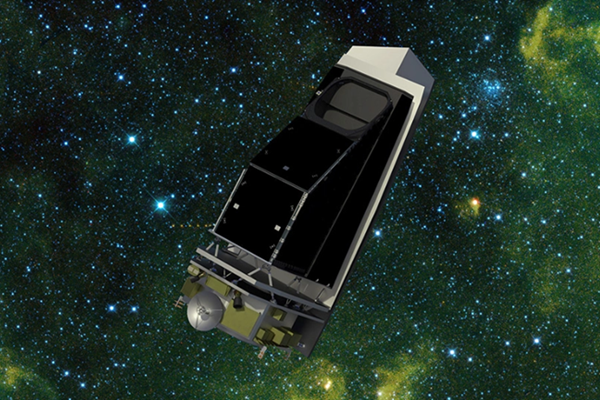
The Planetary and Heliophysics portfolio, BAE Systems develops spacecraft systems, scientific instruments and mission subsystems that support the exploration of the solar system and the near-Sun environment. This work encompasses technologies used in planetary orbiters, surface landers, heliophysics observatories and deep-space probes, platforms designed to operate in some of the most challenging conditions encountered in space exploration. The engineering teams contribute to missions that study planetary atmospheres, magnetospheres and surface geology, as well as solar activity, solar wind interactions and the dynamics of space weather. These investigations help scientists understand how solar radiation and energetic particles affect both the planetary environments within our solar system and the Earth’s upper atmosphere. To support such missions, BAE Systems designs radiation-hardened avionics, thermal control systems, autonomous guidance software and high-reliability communication electronics. These systems are built to withstand intense radiation fields, extreme thermal cycling and long communication delays that are inherent to deep-space operations. The company also provides instrument payloads and data-processing electronics that allow spacecraft to measure magnetic fields, plasma properties and energetic particles with high precision.
Earth Science & Weather
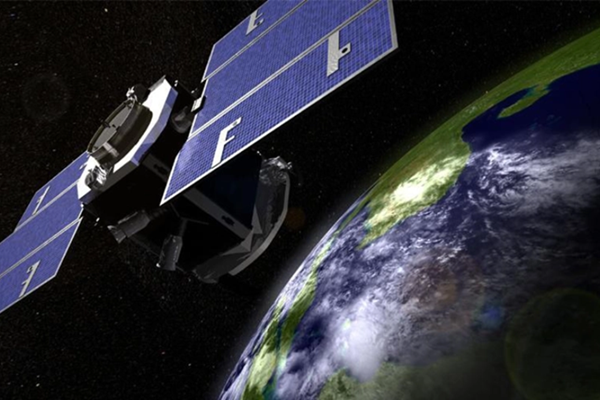
In the Earth Science and Weather domain, BAE Systems develops and supplies satellites, instruments and ground-based data systems that provide continuous observation and measurement of Earth’s dynamic environment. These systems are designed to monitor the atmosphere, oceans, land surfaces, cryosphere and climate systems, providing essential data for weather prediction, environmental assessment and long-term climate research. The technologies are used in meteorological satellites, Earth-observation missions and atmospheric monitoring programs operated by organizations such as NASA, NOAA and other international agencies. BAE Systems’ contributions include radiometers, spectrometers, optical sensors and radar-based instruments capable of measuring parameters such as temperature, humidity, cloud composition, ocean surface winds and atmospheric trace gases. These instruments are integrated into both geostationary and polar-orbiting satellites, ensuring global and near-continuous coverage. BAE Systems provides data-processing and ground-segment solutions that transform raw observation data into usable products for forecasters, researchers and policymakers. The integration of real-time data analytics, hyperspectral imaging and radar altimetry allows for high-resolution mapping of weather systems, storm formation and oceanic dynamics critical for early warning of severe weather events, disaster response and environmental management. By ensuring precise and reliable measurements, BAE Systems’ Earth Science and Weather solutions contribute to improved understanding of global climate processes and help agencies make informed decisions regarding resource management, public safety and mitigation of climate-related risks.
National Security Space
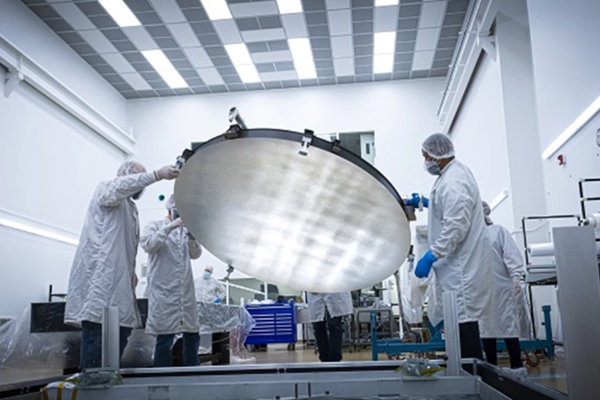
The National Security Space segment, BAE Systems develops spacecraft, payloads and mission systems that support the defense, intelligence and national security objectives of government and allied organizations. This division provides end-to-end space capabilities, ranging from satellite platforms and communications systems to sensor payloads, mission planning and data exploitation tools, ensuring that critical information and communications are available in real time for operational decision-making. These technologies are applied across key national security domains, including satellite-based intelligence, surveillance, and reconnaissance (ISR), signals intelligence (SIGINT) and secure satellite communications (SATCOM). These systems are designed to function in contested, denied and degraded environments, where electronic interference, signal jamming, or cyber threats may compromise mission performance. To mitigate these challenges, BAE Systems integrates encryption, frequency agility and secure network architectures to maintain data integrity and transmission reliability under operational stress. The spaceborne sensors and data-processing platforms provide defense operators with persistent situational awareness—collecting, processing and disseminating information from multiple orbital assets. This capability supports a range of missions from early-warning and threat detection to battlefield communications, navigation support and global monitoring. By coupling these satellite-based systems with ground control infrastructure and advanced data analytics, BAE Systems enables faster, more informed command and control (C2) across the defense enterprise. BAE Systems contributes to resilient space architectures, working with partners and government agencies to develop systems that can reconfigure, recover and continue operations even under hostile conditions. BAE Systems provides governments and allied defense organizations with the technological foundation required for secure communications, operational readiness and strategic decision support, reinforcing the role of space as a critical enabler of modern defense and intelligence operations.
Data Analysis & Cyber

The Data Analysis and Cyber division of BAE Systems focuses on transforming the large volumes of information generated by space missions and defense systems into actionable intelligence through advanced analytics, automation and secure data management frameworks. Modern space and defense networks continuously produce vast quantities of telemetry, sensor readings, imagery, and communication data which ensures that such information is efficiently processed, protected and utilized for real-time decision-making. BAE Systems provides a suite of software, artificial intelligence (AI) and machine learning (ML) tools that enable data fusion, predictive analytics and mission optimization. These tools integrate information from multiple sources including satellites, ground systems, and other operational networks to provide operators with a unified and accurate picture of mission status and environmental conditions. Such integration enhances situational awareness, supports autonomous operations and enables system operators to anticipate anomalies or threats before they occur. BAE Systems designs and implements cyber-resilient architectures that protect mission data, command links and infrastructure against intrusion, jamming or manipulation. The cybersecurity solutions encompass encryption technologies, threat detection systems and network-hardening measures designed for space and defense-grade environments. These measures are particularly critical for satellite constellations, ground control systems, and data relay networks, which must remain operational under conditions of both cyber and physical stress. The division also supports cloud-based processing and data management frameworks that allow distributed teams to access mission data securely and efficiently, promoting collaboration across agencies and international partners. By combining high-assurance cyber defense systems with scalable cloud analytics, BAE Systems enables operators to derive meaningful insights from complex data environments while maintaining information integrity and operational continuity. BAE Systems ensures that the full informational value of the space and mission systems is realized by supporting secure data-driven decision-making, autonomous mission control, and continuous system optimization across commercial, civil and defense applications.
Tactical Mission Systems

The Tactical Mission Systems division of BAE Systems focuses on integrating space-based capabilities with terrestrial, maritime and airborne operations to enhance real-time situational awareness and command effectiveness in the field. The domain plays a key role in connecting satellite-derived intelligence, secure communications networks and tactical platforms, ensuring that deployed forces and mobile assets have continuous access to mission-critical data in any environment. BAE Systems develops and delivers integrated command, control, communications, computers, intelligence, surveillance and reconnaissance (C4ISR) solutions that bridge the gap between orbital assets and tactical users. These systems combine space-based sensing, precision navigation and communication services with ground and platform-level hardware, enabling effective coordination across dispersed operational units. The technology portfolio includes transportable ground terminals, airborne relay systems, maritime communication nodes and mission-planning software, each designed to maintain connectivity and data flow under demanding operational conditions. The central goal of this division is to provide interoperable and resilient network architectures that ensure continuity of operations in contested, remote, or communication-limited environments. BAE Systems employs multi-domain integration frameworks, allowing space-based data streams to be fused with inputs from terrestrial sensors, unmanned systems and command centers. The Tactical Mission Systems domain also supports battle management and mission control solutions, enabling users to plan, monitor and adapt missions in real time based on satellite and sensor inputs. This includes the integration of geospatial intelligence, targeting data, and environmental information directly into field-level operations. The Tactical Mission Systems ensure that information collected in orbit can be rapidly transformed into actionable intelligence and reliable communication links for users on the ground. This capability strengthens the operational link between strategic space infrastructure and tactical decision-making, supporting both national defense missions and civil emergency operations with timely, accurate and secure information delivery.
Commercial Space Solutions

Within the Commercial Space Solutions segment, BAE Systems provides technologies and services that enable private-sector organizations and international partners to develop and operate a wide range of space-based systems and infrastructure. The division supports commercial satellite operators, launch vehicle manufacturers and data service providers across markets such as telecommunications, Earth observation and in-orbit servicing. The mission is to deliver dependable, scalable and cost-efficient space solutions that meet the growing needs of the global commercial space economy. The commercial offerings encompass satellite platforms, sensor payloads, electronics and subsystem components designed for integration into both large constellations and small-satellite missions. The company’s engineering expertise covers mission design, systems integration, manufacturing and operational support, ensuring compatibility across various launch vehicles and orbital environments. These platforms are built for modularity and mass production, allowing commercial operators to scale quickly and deploy constellations with shorter development cycles. The division also contributes to launch-vehicle technologies and in-orbit servicing systems, providing avionics, guidance units, communications components and power systems used in commercial and hybrid missions. BAE Systems supplies high-precision optical instruments, imaging sensors and data-processing software that allow commercial and civil users to capture and analyze detailed imagery for applications such as agriculture, resource management, urban planning and climate monitoring. The company also supports broadband and Internet of Things (IoT) satellite networks through the advanced communication payloads, which are designed to improve coverage and data throughput in both low Earth orbit (LEO) and geostationary orbit (GEO).
Resilient Communications & Network Operations
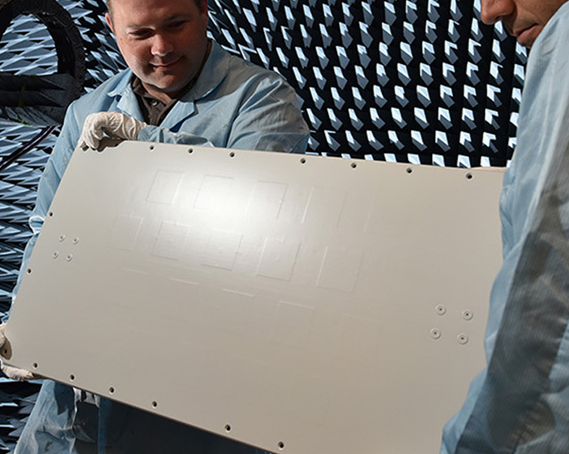
In the Resilient Communications and Network Operations domain, BAE Systems develops and manages secure communication systems and network architectures designed to maintain operational continuity in contested, remote or disrupted environments. These solutions provide the backbone for mission-critical connectivity across space, air, land and maritime domains, ensuring that defense, intelligence and commercial operators retain access to secure data links and real-time information exchange under all operational conditions. BAE Systems’ portfolio in this area includes secure satellite communication (SATCOM) networks, ground-station infrastructure, gateway systems and hybrid satellite–terrestrial architectures. These technologies support redundant and adaptive communication pathways, enabling seamless data transmission even when individual links or nodes experience interference or degradation. The company’s systems are engineered with high availability, automatic failover and multi-path routing, providing robust and continuous communication for both tactical and strategic missions. The division’s network operations capabilities integrate advanced monitoring, control and analytics tools that enable operators to assess network performance in real time. These systems can identify anomalies, reroute traffic and adjust bandwidth dynamically to maintain stable connectivity and optimal system efficiency. Such capabilities are particularly critical for defense and national security networks, where maintaining secure and uninterrupted communications is essential for command, control and situational awareness. BAE Systems also contributes to the development of resilient ground systems and cross-domain network interfaces, which allow interoperability between different communication layers including satellite constellations, terrestrial fiber networks and tactical radio systems. This multi-network integration supports hybrid mission architectures, enabling users to switch seamlessly between communication modes depending on mission requirements or environmental conditions.
Satellites and Spacecrafts
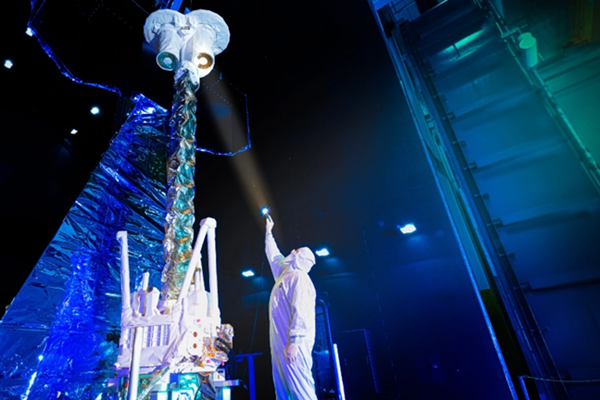
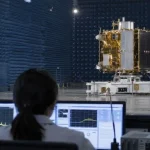
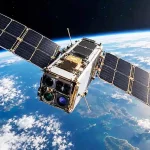
The Satellites and Spacecraft domain, BAE Systems designs, develops and integrates complete satellite platforms and spacecraft systems that support a wide range of civil, commercial, scientific and defense missions. The company provides end-to-end capabilities covering spacecraft bus design, payload integration, environmental testing and mission operations support, ensuring that each system meets the specific technical and operational requirements of the intended mission. BAE Systems’ spacecraft are based on modular and scalable bus architectures, allowing for flexible adaptation to mission objectives such as Earth observation, communications, scientific research, space situational awareness and defense surveillance. This modular approach enables the company to configure each platform’s power systems, propulsion units, communications links and payload interfaces according to the size, weight and environmental conditions of the mission. The company’s heritage in spacecraft engineering and systems integration supports missions that operate in diverse orbital regimes, including low Earth orbit (LEO), geostationary orbit (GEO) and cislunar or deep-space environments. The spacecraft platforms are used for weather monitoring, environmental data collection, scientific observation, defense communications and intelligence applications, contributing to both national and international space programs. To ensure mission readiness, BAE Systems provides comprehensive integration and test services, including vibration, thermal vacuum and electromagnetic compatibility testing. These processes validate that spacecraft can withstand the mechanical and environmental stresses of launch and long-term space operation. BAE Systems develops mission-specific subsystems and payload interfaces, including onboard data processors, attitude control systems and high-precision pointing mechanisms. These technologies enhance spacecraft functionality, allowing for improved imaging accuracy, higher data throughput and optimized system health management. BAE Systems provides customers with flight-proven, adaptable platforms that serve critical roles across scientific, commercial and defense applications. Each spacecraft is engineered to deliver dependable performance, maximize payload capacity and maintain operational efficiency over long-duration missions, ensuring that agencies and operators can conduct complex missions with confidence and sustained reliability.
Real-Time ISR

Within the Real-Time Intelligence, Surveillance, and Reconnaissance (ISR) domain, BAE Systems develops and integrates advanced systems that enable the collection, processing and distribution of actionable intelligence directly from space-based assets. These capabilities are designed to support defense, intelligence and civil operations that require continuous situational awareness and rapid decision-making. The Real-Time ISR solutions combine satellite platforms, sensor payloads, ground data-processing systems and communication networks into a unified architecture that delivers intelligence products to users with minimal latency. The Real-Time ISR framework is structured around persistent observation and data fusion, enabling operators to monitor areas of interest continuously and respond to emerging threats or environmental changes in near real time. BAE Systems develops optical, infrared and radar sensor payloads capable of capturing high-resolution imagery and motion data, as well as electronic intelligence (ELINT) and signals intelligence (SIGINT) systems for monitoring electromagnetic activity. These sensors feed data into automated ground-processing and analytics platforms that perform tasks such as target detection, object tracking and activity recognition using advanced algorithms and artificial intelligence. The Real-Time ISR ecosystem is designed for multi-domain interoperability, enabling data integration across airborne, maritime and ground-based sensors. This approach ensures a comprehensive operational picture that enhances mission planning, threat assessment and tactical coordination across different theaters of operation. BAE Systems also provides analytics software and visualization tools that transform large volumes of sensor data into accessible, mission-relevant information. These tools support automated alerting, geospatial visualization and predictive modeling, enabling defense and security organizations to identify patterns of interest and anticipate potential developments. By integrating sensing, communication and data-processing technologies, the company enables operators to maintain persistent awareness, rapid response capability, and reliable information flow in support of national security, disaster response and civil monitoring missions.
Space Antennas
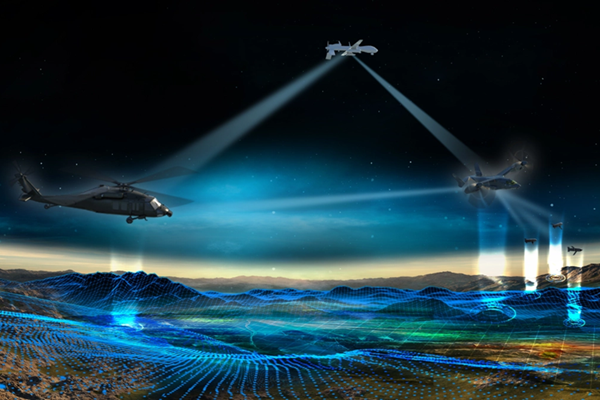
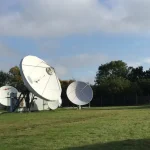
The Space Antennas domain, BAE Systems designs and manufactures a range of radio-frequency (RF) communication and data-transmission systems that support spacecraft, satellite constellations and ground networks used in both commercial and government missions. These antenna systems are critical components of the company’s broader space communications portfolio, enabling high-throughput data transfer, Earth observation downlink, inter-satellite connectivity and direct-to-user broadband services across multiple frequency bands. The antenna technologies include high-gain deployable reflectors, steerable antennas, phased-array apertures and compact ground-station subsystems. Each type is designed to meet specific mission requirements, whether for geostationary satellites that demand high precision and continuous coverage, or for low Earth orbit (LEO) constellations that require lightweight, rapidly steerable solutions. The company’s phased-array and electronically steerable antennas, allow for beamforming and rapid retargeting, improving communication efficiency and link reliability without requiring mechanical motion. These antenna systems operate across a wide range of frequency bands, supporting diverse applications such as satellite communications (SATCOM), Earth observation data downlink, scientific telemetry, and deep-space communication. The designs prioritize low mass, high efficiency, and compact stowage volume, allowing for integration into small-satellite buses and launch vehicle fairings while maintaining high performance once deployed in orbit. For inter-satellite links and high-data-rate applications, BAE Systems develops antennas with precise pointing accuracy, high isolation, and low sidelobe levels, ensuring minimal interference and maximum throughput. These systems are optimized for use in mesh-network architectures and crosslink communication systems, which are increasingly important for distributed satellite constellations and defense missions requiring secure, low-latency connectivity between orbital assets. On the ground, BAE Systems provides ground-station antenna subsystems and tracking systems that form part of its satellite ground infrastructure offerings. These systems facilitate telemetry, tracking, and command (TT&C) operations, as well as data reception for Earth-observation and communications satellites. The integration between spaceborne and terrestrial antenna systems allows for end-to-end connectivity, ensuring reliable data relay between satellites, control centers and end users.
Innovation
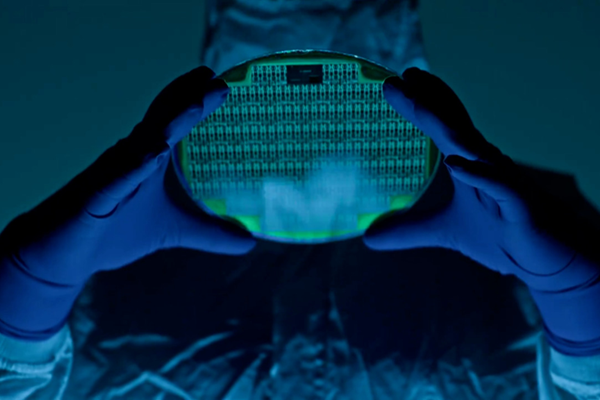
Innovation forms a central element of BAE Systems’ space and mission strategy, guiding the development of new technologies that enhance performance, efficiency and resilience across the global space portfolio. The company maintains a strong focus on research and development (R&D), investing in emerging technologies and engineering approaches that address evolving challenges in space exploration, communications, Earth observation and national security missions. BAE Systems’ innovation efforts are directed toward several key technology areas, including advanced materials and manufacturing, autonomous systems, software-defined spacecraft and next-generation propulsion and power systems. These developments aim to improve spacecraft adaptability, reduce production cycles, and enable more flexible operations in orbit.
The company also conducts extensive research in AI-enabled autonomy and data analytics, applying machine learning algorithms to mission planning, onboard fault detection and intelligent sensor calibration. BAE Systems continues to advance radiation-hardened electronics and lightweight composite materials, which are critical for long-duration missions in harsh orbital and deep-space environments. Collaboration is a key component of BAE Systems’ innovation framework. The company works closely with universities, research institutes, and space agencies to prototype and validate emerging concepts through joint programs and demonstration missions. These partnerships help accelerate the transition of new technologies from laboratory environments into operational systems. Through the commitment to continuous innovation, BAE Systems supports the development of technologies that will shape the future of space exploration, secure communications and orbital infrastructure.
Satellite Ground Systems

In the Satellite Ground Systems domain, BAE Systems develops and delivers the infrastructure, software and network systems that form the essential link between spaceborne assets and terrestrial operations. These systems serve as the command, control, and data backbone for a wide range of civil, commercial and defense missions, ensuring that spacecraft are effectively managed, mission data is securely processed and end-users receive timely and reliable information services. BAE Systems’ ground system portfolio includes ground stations, mission operations centers, satellite control networks, data-processing facilities and user terminals. These components work together to support the telemetry, tracking, and command (TT&C) functions necessary for satellite health monitoring, orbit maintenance and payload operation. The systems are designed to handle data from diverse spacecraft types and orbital regimes including low Earth orbit (LEO), medium Earth orbit (MEO) and geostationary orbit (GEO) offering operators the flexibility to manage multiple missions from a centralized or distributed architecture. The key focus of this domain is on automation, security and scalability. BAE Systems integrates advanced network management tools, data routing software and cybersecurity frameworks to ensure that ground systems operate efficiently and remain protected from unauthorized access or signal interference. Automated scheduling and control capabilities allow for continuous spacecraft monitoring with minimal operator input, improving responsiveness and reducing operational overhead. The data management and downlink facilities process and distribute mission data to government agencies, research institutions, and commercial clients in standardized formats for rapid use in applications such as Earth observation, communications and weather monitoring. BAE Systems also designs ground terminals and gateway systems for integration with resilient communications networks, supporting high-throughput downlinks, inter-network connectivity and direct-to-user communication services. The interoperability ensures smooth coordination between space segment operations, terrestrial infrastructure and end-user applications, closing the operational loop between orbit and ground. BAE Systems provides the foundation that enables the continuous control, monitoring and utilization of space assets. By combining secure communication architectures, automated operations, and scalable data management.
About BAE Systems Space & Mission Systems
BAE Systems Space & Mission Systems, a division of BAE Systems, provides a broad portfolio of space infrastructure, mission systems and advanced data services that support scientific research, national security, commercial operations and global connectivity. Headquartered in the United States, the operations draw on decades of engineering heritage including the acquisition of Ball Aerospace, a company founded in 1956 that built one of NASA’s early spacecraft. Within this division, BAE Systems develops spacecraft platforms, mission-specific sensors, ground systems, data analytics and complete mission support services. The modular spacecraft and ground systems are designed for mission lifetimes of five years or more, with scalability and customization built into the architecture. The company’s Space & Mission Systems business serves customers in civil space (weather, Earth observation, astrophysics), com