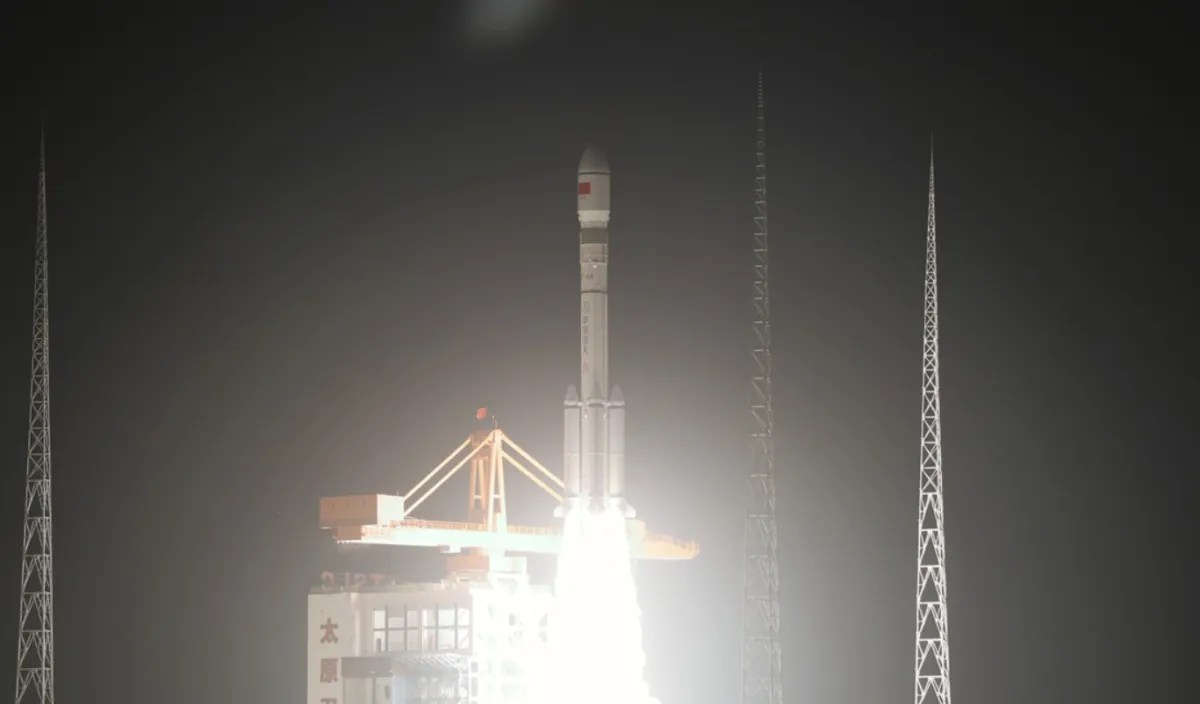
China successfully launched a remote-sensing satellite into orbit on Tuesday, deploying the Yaogan-47 spacecraft aboard a Long March 4B carrier rocket, according to the China Aerospace Science and Technology Corp (CASC).
The state-owned aerospace contractor said the rocket lifted off at 11:41 a.m. from the Jiuquan Space Launch Center in the Inner Mongolia autonomous region and placed the satellite into its preset orbit. “The rocket blasted off at 11:41 am … and transported the Yaogan 47 satellite into its preset orbit,” CASC said in a news release.
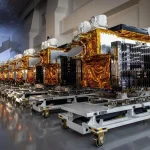
Yaogan-47 was built by the China Academy of Space Technology and will be used for surveying land resources, urban mapping, agricultural yield monitoring, and supporting environmental protection as well as disaster prevention and mitigation efforts, the company said.
Remote-sensing satellites are designed to detect and monitor physical characteristics of objects on land and at sea by measuring reflected and emitted radiation. Data from China’s Yaogan satellite family—one of the country’s main series of remote-sensing spacecraft—has been widely used by both government agencies and commercial users.
The Long March 4B rocket, developed by the Shanghai Academy of Spaceflight Technology, is capable of carrying multiple satellites with a combined payload of up to 2.5 metric tons into a sun-synchronous orbit at an altitude of about 700 kilometers.
Tuesday’s launch marked China’s 82nd space mission and the 614th flight of a rocket from the Long March launch vehicle family, CASC said.