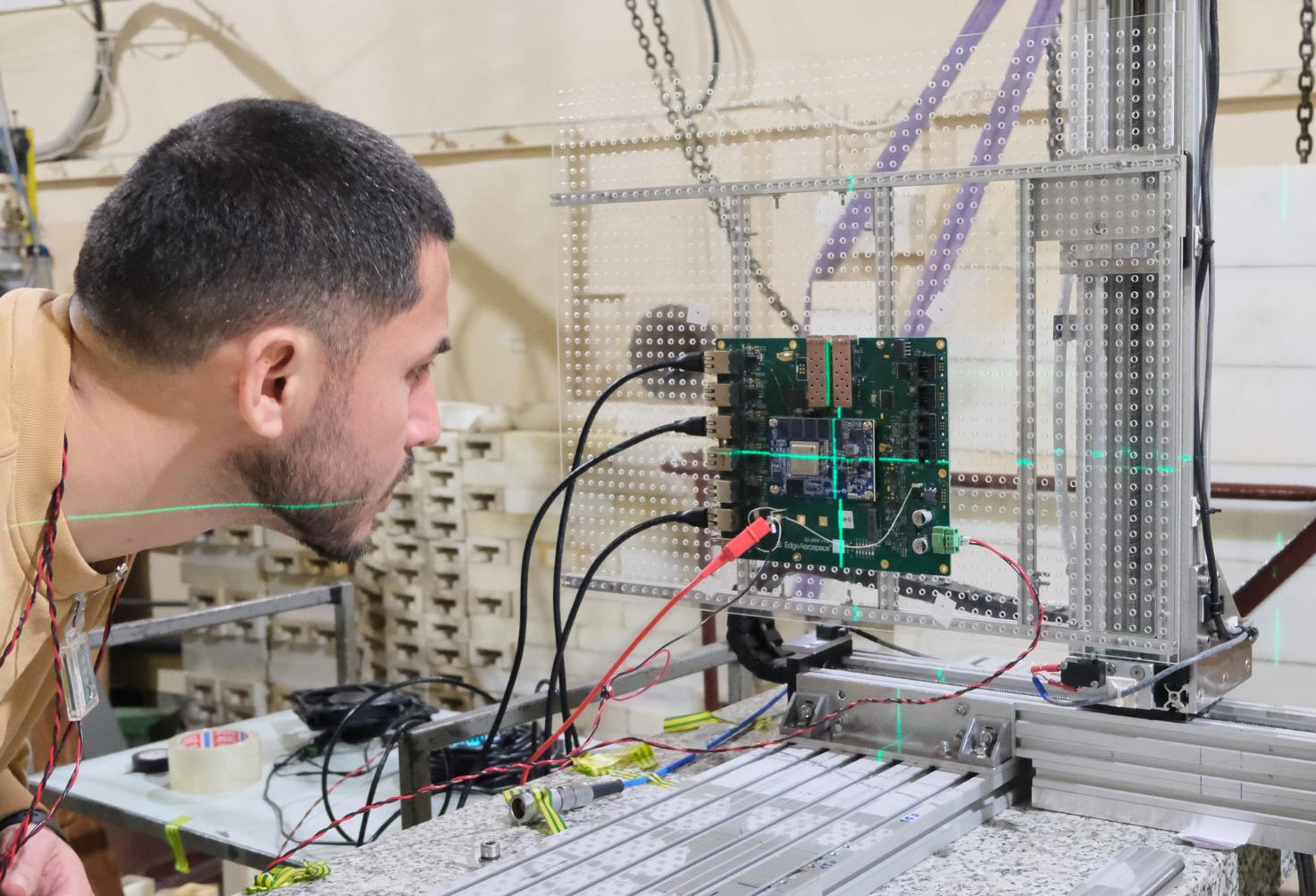
Luxembourg-based startup Edge Aerospace has secured a contract under the European Space Agency’s Space Cloud program to examine the feasibility of orbital data centers, as Europe explores new approaches to in-space computing.
Under the agreement, Edge Aerospace will develop an architectural framework and use-case roadmap for orbital computing platforms. The study will evaluate the commercial potential of in-space data processing and identify how such capabilities could be applied across civil, commercial and defense sectors in Europe.
“The first goal of ESA—and also our goal—is to find out in a structured, very analytical way if [orbital data centers] make sense, and if so, in what way it could be useful and how it could be commercial,” Chief Executive Jarosław Jaworski said. He added that Europe aims to accelerate development in this area, noting, “Europe was very often late with reusable launchers or telecom constellations… one of our goals is that when it comes to orbital data centers, Europe will also be moving fast.”
Founded in September 2024, Edge Aerospace has expanded its activities over the past 18 months, securing additional agreements with organizations including the European Defence Fund, the Luxembourg Space Agency and the Luxembourg Ministry of Defence. The company also carried out its first demonstration mission in March aboard SpaceX’s Transporter-16 rideshare launch, validating its in-orbit data-processing capabilities.
Edge recently established a U.S. subsidiary and plans to open a facility there in June, as it targets a market where it says the majority of its commercial contracts are currently based.
The company is taking a measured view of orbital data centers compared with some industry peers, focusing on near-term use cases such as processing data directly in orbit to reduce constraints associated with transmitting large volumes of data back to Earth.
Jaworski said the company is prioritizing distributed orbital computing networks to provide faster access and global coverage for customers. “We think that only SpaceX, through its extreme vertical integration, would be able to do what most of the folks from ODC claim—which is to move part of AI training to space,” he said. “We rather think that the power of orbital data centers lies in location—being above everything, or being very close to the rest of the satellite infrastructure.”