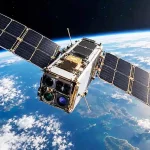
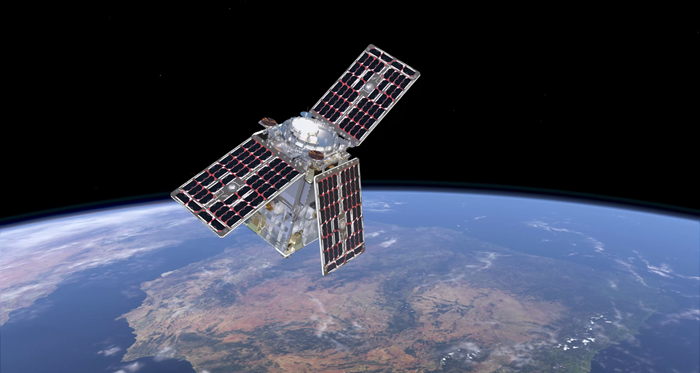
The European Space Agency (ESA) is preparing to launch HydroGNSS, its first Scout mission, designed to track Earth’s water cycle and climate variables using innovative satellite technology. Scheduled for launch in November 2025 from Vandenberg, California aboard a Falcon 9 rocket, the mission will deploy two identical microsatellites into orbit at 550 km altitude. HydroGNSS embraces the “New Space” approach, focusing on rapid, cost-effective science missions that complement ESA’s larger Earth Explorer projects.
HydroGNSS will employ Global Navigation Satellite System Reflectometry (GNSS-R), a technique that uses reflected signals from navigation satellites such as GPS and Galileo to measure hydrological climate variables. The mission will provide critical data on soil moisture, wetlands, freeze–thaw states in permafrost, and above-ground biomass, while also monitoring ocean wind speeds and sea-ice extent. These measurements will support climate monitoring, agriculture, meteorology, and disaster mitigation planning, offering continuity with ESA’s SMOS mission and complementing the upcoming Biomass mission.
By delivering open and free data products, HydroGNSS aims to strengthen global efforts to track Essential Climate Variables (ECVs) defined by the Global Climate Observing System. The mission’s near-continuous coverage will provide scientists and policymakers with valuable insights into water-related climate processes, helping to address challenges such as droughts, floods, and long-term climate change. As ESA’s first Scout mission, HydroGNSS represents a bold step toward agile, small-satellite innovation in Earth observation.