
Eutelsat has selected French in-orbit servicing company Infinite Orbits to extend the operational life of at least one satellite in its geostationary fleet, the companies announced September 10 during the International Space Summit in Paris. The agreement gives Infinite Orbits its third commercial life-extension customer and expands the order book for its Endurance servicing spacecraft.
The contract follows an agreement with Hispasat announced in 2024 and a subsequent order from SES. Financial terms, the identity of the Eutelsat satellite and the planned mission date were not disclosed. Infinite Orbits said the Eutelsat mission will take place after its first Endurance flight for SES, currently scheduled for 2027.
Eutelsat operates 31 satellites in geostationary orbit, including spacecraft approaching the end of their planned service lives. Communications satellites in GEO commonly operate for approximately 15 years, with retirement often determined by the amount of propellant remaining for station-keeping and attitude control rather than by the condition of their communications payloads.
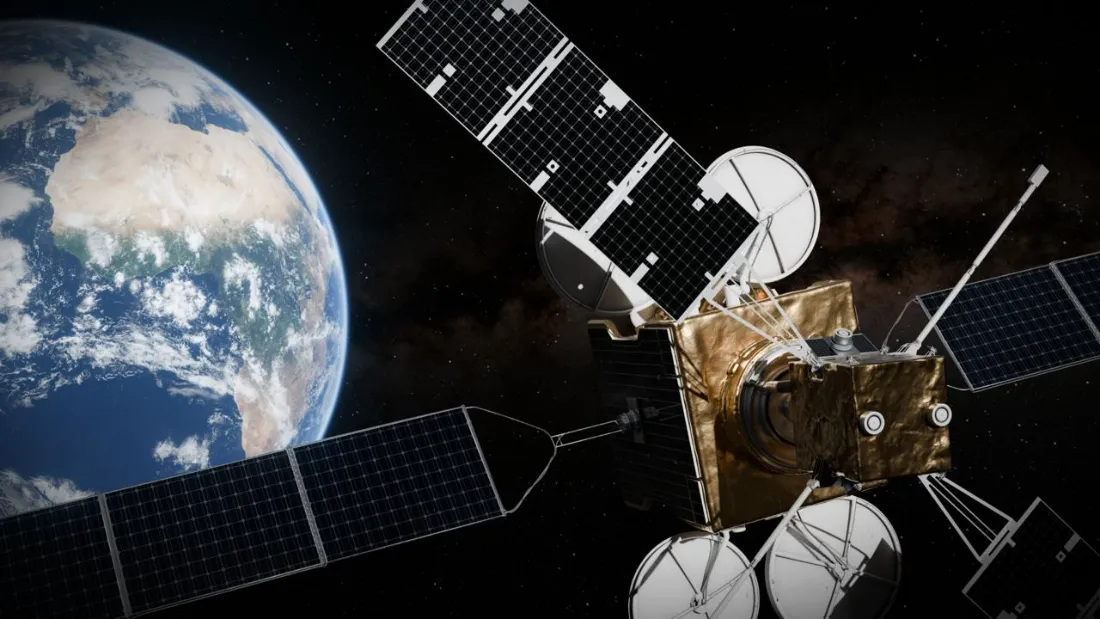
Endurance is designed to rendezvous with and dock to satellites that were not originally equipped for servicing. After attachment, the spacecraft can provide the propulsion and orbital-control functions needed to keep the client satellite operating for about five additional years.
That extension can allow an operator to continue generating revenue from an existing payload, defer the cost of deploying a replacement and preserve service continuity at an established orbital position. At the end of operations, GEO satellites are normally transferred to a disposal orbit above the operational belt.
Infinite Orbits Chief Executive Adel Haddoud said satellite operators increasingly understand the economics of life extension. Although the company has not disclosed the price of individual missions, Haddoud said the expected revenue from keeping the Eutelsat spacecraft in service exceeds the cost of the servicing mission.
The commercial calculation depends on several factors, including the client satellite’s remaining payload performance, customer contracts, orbital-slot value and expected demand for its capacity. A life-extension mission is most attractive when the communications payload remains productive but the spacecraft bus is running short of station-keeping propellant.
For Infinite Orbits, the order adds another major GEO fleet operator to its customer base and provides further evidence that satellite life extension is moving beyond isolated demonstrations. The market has developed slowly because servicing companies must finance and qualify complex rendezvous-and-docking systems before operators can commit valuable operational spacecraft to them.
Approaching an unprepared satellite in GEO requires precise relative navigation, autonomous guidance and collision-avoidance capabilities. The servicer must identify the client spacecraft, match its orbit, conduct controlled proximity operations and attach without damaging antennas, solar arrays or other structures. Demonstrating those capabilities is therefore central to securing additional commercial orders.
Toulouse Facility Supports Production Expansion
Infinite Orbits this week opened a 1,000-square-meter satellite assembly, integration and testing facility in Toulouse. Built in six months, the site will support production of both Endurance life-extension vehicles and the company’s Orbit Guard inspection spacecraft.
The new facility is intended to give Infinite Orbits the industrial capacity to respond as more GEO satellites reach the end of their original design lives. However, the company has not disclosed a target annual production rate or the number of Endurance spacecraft it expects to manufacture.
Orbit Guard and Endurance address related but distinct missions. Orbit Guard is designed to approach and inspect spacecraft, providing close-range imagery and space situational awareness. Endurance adds docking and long-duration life-extension capabilities.
The company has already conducted one Orbit Guard demonstration and plans at least three additional flights in 2027. It is also preparing a mission under a surveillance contract awarded by the French Ministry of Defense.
Another demonstration, being developed with Open Cosmos, will use two small satellites named Tom and Jerry to test autonomous rendezvous and close-proximity operations in low Earth orbit. Open Cosmos is responsible for spacecraft and mission infrastructure, while Infinite Orbits will contribute its navigation and proximity-operations technologies. The satellites are scheduled to launch aboard an Isar Aerospace Spectrum rocket.
These missions are intended to reduce technical risk before Infinite Orbits conducts commercial docking operations around operational GEO satellites. The first Endurance life-extension mission is planned for SES in 2027, followed by the newly contracted Eutelsat mission.