European space logistics startup The Exploration Company has completed a controlled splashdown test of a scaled prototype of its Nyx reusable spacecraft, marking a key step toward its planned cargo missions to low Earth orbit.
Founded in 2021, the company is developing Nyx as a reusable capsule designed initially to transport cargo to and from orbital destinations such as the International Space Station. Future versions are intended to support missions to lunar orbit and the Moon’s surface, while a potential crewed variant could follow later, subject to political approval.
The latest milestone supports the company’s goal of conducting an inaugural flight to the ISS in 2028 under the European Space Agency’s LEO Cargo Return Services programme. Demonstrating safe water landing capabilities is considered essential for recovering cargo and spacecraft after re-entry.
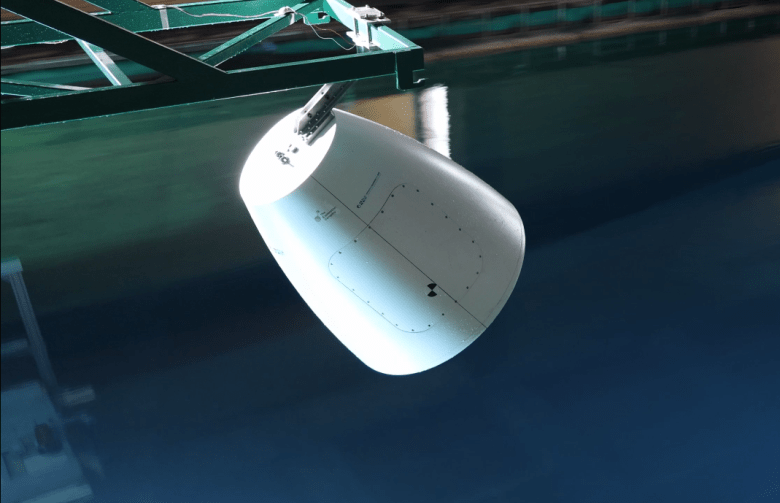
On Feb. 5, the company said it had successfully completed a splashdown test campaign at the National Research Council’s Institute of Marine Engineering (CNR-INM) in Rome using a 1:4-scale mockup of the capsule.
The prototype, weighing about 135 kilograms, was built by Turin-based model manufacturer Poli Model. While the full-scale Nyx vehicle is expected to measure roughly 4 meters in diameter and 7 meters in height, the test article was instrumented with pressure sensors, accelerometers, and a gyroscope to capture detailed performance data during impact.
Testing took place in the facility’s Umberto Pugliese towing tank, a 470-meter-long basin designed for hydrodynamic research. Between Jan. 13 and Jan. 28, engineers conducted 20 controlled drops from varying heights and velocities into calm water conditions to ensure consistent results.
According to the company, the data collected are already being used to improve hydrodynamic modeling and structural safety margins for the full-scale spacecraft.
The Exploration Company said the results will help refine recovery procedures and support the capsule’s design as development continues toward operational missions later this decade.