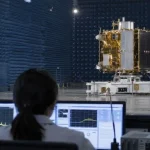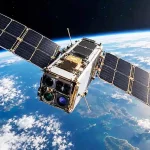
Impulse Space has inaugurated a new 20,000-square-foot manufacturing facility outside Boulder, Colorado, marking a significant expansion of the company’s operations in the region. The new site supports the company’s growing portfolio of spacecraft programs and contracts across commercial, civil and government sectors. The Colorado facility will serve as a central hub for the company’s Guidance, Navigation, and Control (GNC) program, which is responsible for developing how spacecraft sense, orient and maneuver while in orbit.
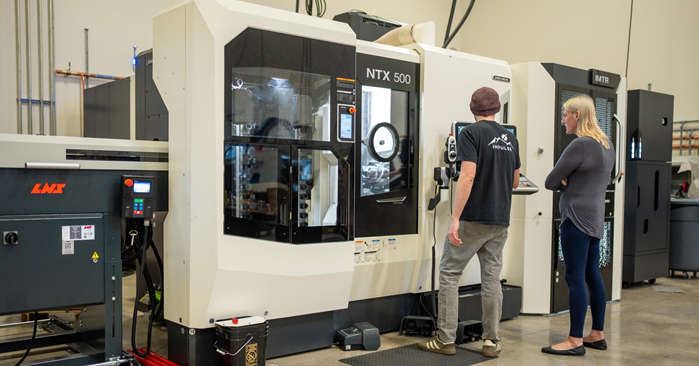
The team at the facility is leading GNC development for Impulse Space’s Mira and Helios spacecraft platforms, guiding systems from initial design decisions through to flight operations. In addition to engineering work, the facility significantly expands Impulse Space’s manufacturing capabilities. The site features advanced multi-axis CNC machines and precision mill-turn equipment that will support in-house production of valves and other critical flight hardware components used in spacecraft propulsion systems.
The company has also established new GNC laboratories and integrated testing environments at the site. These facilities will allow engineers to simulate spacecraft behavior during complex maneuvers, including precision navigation, close-proximity operations, and future landing and robotic mobility systems. The new expansion builds on the achievements of Impulse Space’s Colorado engineering team, which was formed three years ago. The team previously developed key technologies such as the sun sensor algorithm used in spacecraft Safe Mode operations, star tracker algorithms for early hardware generations, and the attitude and delta-V control systems that enable precise maneuvering capabilities. These technologies are currently in operation on the LEO Express 1, 2 and 3 missions.
Manufacturing operations at the facility include machining and assembly of propulsion components and high-reliability valves that enable orbital burns and trajectory corrections. These components are being produced for the Helios spacecraft as well as future missions destined for geostationary orbit and beyond.
“Since moving into the new facility, we have manufactured components for Deneb pumps and Helios valves, installed six CNC machines, and built the support infrastructure and clean room to enable flight hardware production,” said Kevin Arruda, Impulse’s Manufacturing Lead and Colorado Site Lead. “We are now scaling in-house valve manufacturing, inspection, assembly, and testing.”
The facility is designed as a vertically integrated engineering and manufacturing hub where spacecraft hardware development and autonomous on-orbit technologies are developed together. “Space has become central to daily life, from communications and navigation to security and exploration,” said Eric Romo, President and COO of Impulse Space. “Getting to orbit is only part of the challenge. Operators still need to move quickly, reliably, and affordably after the rocket drops them off. At Impulse, we’re building the in-space mobility infrastructure that allows spacecraft to do this. The work our team is doing in Colorado is foundational to making that possible.”
He noted that while rockets provide access to orbit, spacecraft operators still require reliable and affordable mobility once in space. Impulse Space is focused on building infrastructure that enables spacecraft to maneuver efficiently after launch, supporting a wide range of missions across the space economy. With the new Colorado facility now operational, the company aims to strengthen the link between spacecraft development and mission execution while continuing to scale its in-space mobility technologies.