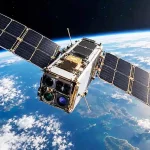
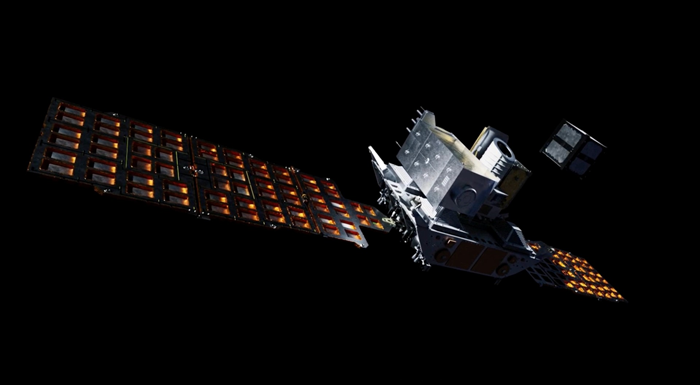
Impulse Space is preparing to launch its third Mira spacecraft mission, LEO Express 3, aboard SpaceX’s Transporter-15 from Vandenberg Space Force Base, California. Celebrating the first flight of Mira’s upgraded design, this mission builds on the success of LEO Express 1 and 2, aiming to validate improved systems for upcoming operations, including GEO flights starting in 2026. The mission also develops flight heritage for avionics components intended for Helios missions and meets various customer goals.
Mission Objectives Include:
- Deploy Payloads: Deliver CubeSats from returning customer FOSSA Systems, using partner Exolaunch’s EXOpod Nova deployment system, to designated orbital targets.
- Host Payloads: Support long-term NEI operations by returning customer HEO’s Holmes Mk2 NEI camera, along with demonstrations from Samara Aerospace (the Cicada hardware, to test MSAC technology) and Zenno Astronautics (the Supertorquer, a superconducting actuator producing strong magnetic fields).
- Deploy and Actuate Gimbaled Solar Arrays: Operate Mira’s new deployable, gimbaled solar arrays, which boost available onboard power for hosted missions.
- Operate Reaction Wheels: Conduct precise attitude control with Mira’s new onboard reaction wheels.
- Validate Helios Avionics Components: Perform flight testing for future Helios subsystems, including IMU, batteries, and radios.
- Demonstrate Upgraded Propulsion Capabilities: Test the upper limits of the performance of Mira’s enhanced propulsion systems, offering a 25% increase in delta-v over previous versions.
The official mission patch for LEO Express 3 emphasizes Mira’s new design, showcasing deployable solar arrays and a CubeSat in release. Its symbolic elements include three orbital arcs representing LEO, MEO, and GEO, highlighting the mission’s role in connecting low-Earth operations with future high-energy flights. A dot-work graphic outlines California, paying tribute to Impulse’s headquarters and origins.