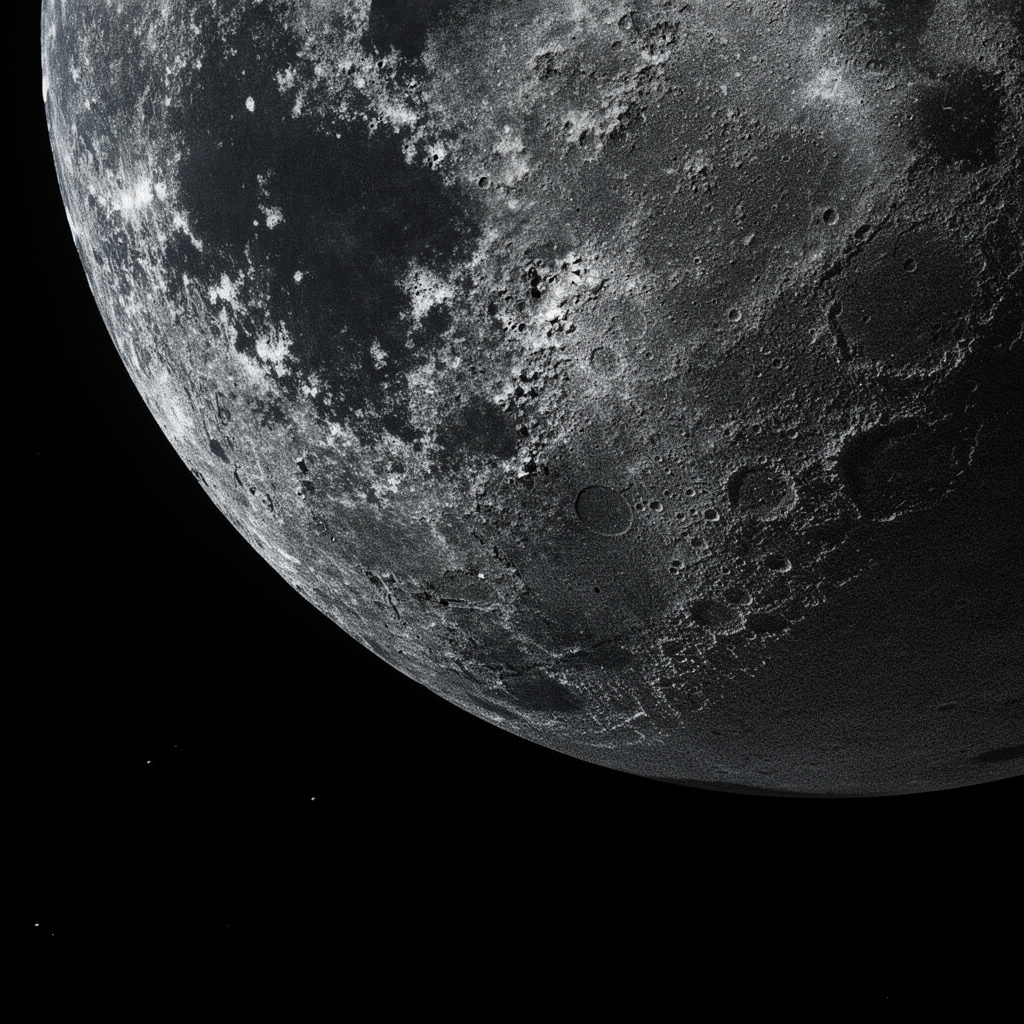
The challenge stems from the lunar environment itself. A single lunar day lasts about 14 Earth days and is followed by an equally long lunar night. During daylight, spacecraft can generate power from solar panels, but once darkness sets in, solar generation halts entirely and temperatures in some regions can fall to as low as minus 180 degrees Celsius.
This was the limitation faced by Chandrayaan-3’s Vikram lander, which made history on August 23, 2023, by becoming the first spacecraft to land successfully near the Moon’s South Pole. Although the mission exceeded expectations during the lunar daytime, the onset of the lunar night led to a loss of power and ended surface operations.
To address this, ISRO and the Department of Atomic Energy are developing artificial heating systems intended to keep electronics, batteries and scientific instruments warm enough to survive the extreme cold. “We are going to develop artificial heaters. If we succeed, such landers can survive for 100 to 200 days instead of only 14 days,” Narayanan said.
Narayanan said scientists are working on technologies that would allow future Indian landers to continue functioning through multiple lunar day-night cycles. The development comes as India continues to expand its space exploration ambitions, including the Chandrayaan-4 mission, which is expected to become India’s first mission designed to collect lunar samples and return them to Earth.
According to Narayanan, the ability to survive multiple lunar nights would be a major milestone for India’s space programme. It would allow landers and rovers to collect far more scientific data, monitor long-term environmental changes and conduct extended experiments in the Moon’s harsh environment. He said that if successful, the breakthrough could significantly enhance India’s scientific capabilities on the lunar surface and pave the way for more complex missions in the future.
The source does not cite a launch date or mission name for the planned lander. India is already developing the Chandrayaan-4 sample-return mission, a step beyond the soft-landing success of Chandrayaan-3 in 2023.