Hongqing describes itself as a provider of full-chain services for low-Earth orbit constellation projects. In May 2024 it filed the Honghu-3 constellation with the ITU, planning 10,000 satellites across 160 orbital planes. That filing made it China’s third 10,000-plus constellation filing after the national Guowang program and the Shanghai-led Qianfan, or Thousand Sails, program.
The round was jointly led by investment arms of China Construction Bank and ICBC alongside Jinpu Capital. Other participants include Bank of China, Bank of Communications, Agricultural Bank and CITIC-linked vehicles, plus regional state funds from Sichuan, Chengdu, Xiamen and Hunan, along with Beijing Advanced Manufacturing Fund and E-Town Capital. The participants include investment arms of all five big state banks, including several of their financial asset investment companies, which have been empowered since late 2024 to directly invest in strategic technology. That policy has helped power a surge of investment in commercial space and a growing number of IPOs.
The financing will be used mainly for company operations, research and development, and team building, to further enhance Hongqing’s core capabilities in satellite networking services, the company stated. Founded in 2017 with Landspace as its largest shareholder, Hongqing describes itself as China’s only integrated satellite constellation solution provider with synergistic rocket-satellite capabilities. Landspace flies the methane-fueled Zhuque-2E and is working to bring its reusable, stainless-steel Zhuque-3, designed for megaconstellation launches, into regular service. The company performed a static fire of the Zhuque-3 Y2 on June 29.
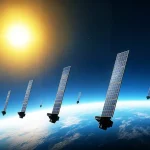
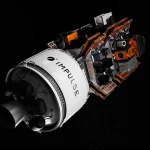
Headquartered in Beijing E-Town’s aerospace district, Hongqing produces flat-panel stackable satellites and uses in-house subsystems including the Jinwu-200 krypton Hall thrusters, tested on a Honghu satellite launched by a Landspace Zhuque-2 rocket in December 2023. The company operates a Shanghai testing and development base and the Xiong’an intelligent satellite manufacturing base, aiming to produce between 100 and 500 satellites annually by 2026. Hongqing built one of four direct-to-device satellite internet technology test satellites launched May 31 on a Long March 2D rocket, and stated afterward that it continues to secure complete satellite orders from core domestic constellation operators.
The large funding round shows state investors willing to bet on the Landspace-Hongqing vertically integrated approach, which echoes SpaceX-Starlink and the recent move by Rocket Lab to acquire satellite operator Iridium. The financing also follows Chinese efforts to establish a broad, diverse satellite manufacturing base capable of producing thousands of spacecraft annually.
It is not clear that the 2024 Honghu-3 filing has received project approval from China’s National Development and Reform Commission, nor has Hongqing demonstrated deployment progress. The company’s targeted production capacity of 100 to 500 satellites annually is set to be reached in 2026, and Landspace continues work toward regular service of the Zhuque-3, following its June 29 static fire of the Zhuque-3 Y2.