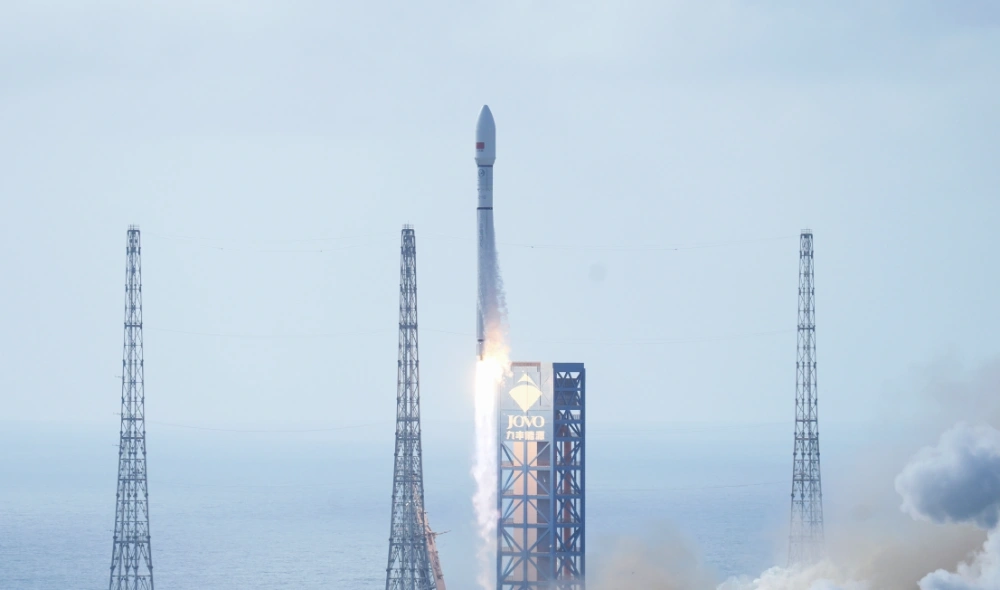
At 8:32 a.m. Beijing time on September 17, 2026, China launched the 25th group of low Earth orbit satellite internet spacecraft aboard a Long March 12 rocket from the Hainan Commercial Space Launch Site. The satellites entered their planned orbit, completing the mission successfully.
The Long March 12 uses a preparation process based on horizontal assembly, testing and transport. Rocket assembly and satellite integration take place with the vehicle horizontal inside a processing building. The integrated rocket is then transported horizontally to the launch pad, raised and launched. This approach substantially shortens the launch preparation cycle and supports frequent commercial launches.
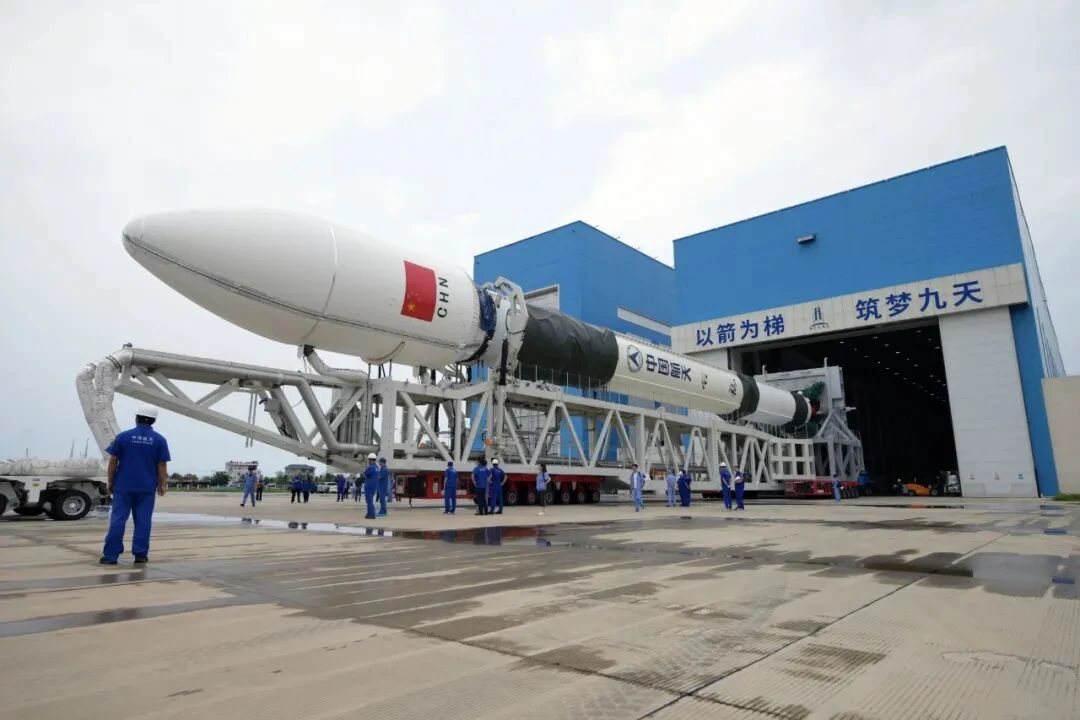
Long March 12 Rocket During Horizontal Transport
CASC’s China Commercial Rocket Company served as the prime contractor for launch services. The mission was the 667th launch in the Long March rocket series.
It was another constellation deployment mission for the Long March 12 from Hainan. On August 16, the rocket launched the 24th group of low Earth orbit satellite internet spacecraft from the same site. For that mission, the site’s second launch pad completed its first system-wide changeover from a configuration for a 5-meter-class rocket to one for a 4-meter-class rocket. The changeover demonstrated the site’s ability to accommodate different launch vehicles and support rapid turnaround and a higher launch cadence.
China’s low Earth orbit satellite internet projects are moving toward large-scale deployment. The Qianfan constellation had launched 256 satellites by September 16 and plans to reach 324 by the end of 2026, when it aims to begin providing regional service. Privately developed commercial rockets are also taking on launches of satellite batches. On September 15 and 16, they launched a total of 18 constellation satellites across two missions. As a mainstay medium-lift rocket in China’s state-owned launch fleet, the Long March 12 is becoming a core launch vehicle supporting the large-scale development of China’s low Earth orbit constellations through its reliable payload capacity and efficient launch preparation process.
For international customers planning satellite deployments, China’s growing space industry offers additional options for payloads and satellite assembly, integration and testing. Teams can discuss their requirements with STARPATH GLOBAL to explore competitively priced solutions suited to their missions.