The confirmation followed a trademark filing by xAI that surfaced earlier this week. Starmind and Starlink are built on the same orbital infrastructure concept but serve different purposes. Starlink functions as a connectivity network, with satellites receiving and relaying data between points on Earth and operating as a high-speed internet backbone in space. Those satellites do not process or think, performing the same function a fiber cable performs underground.
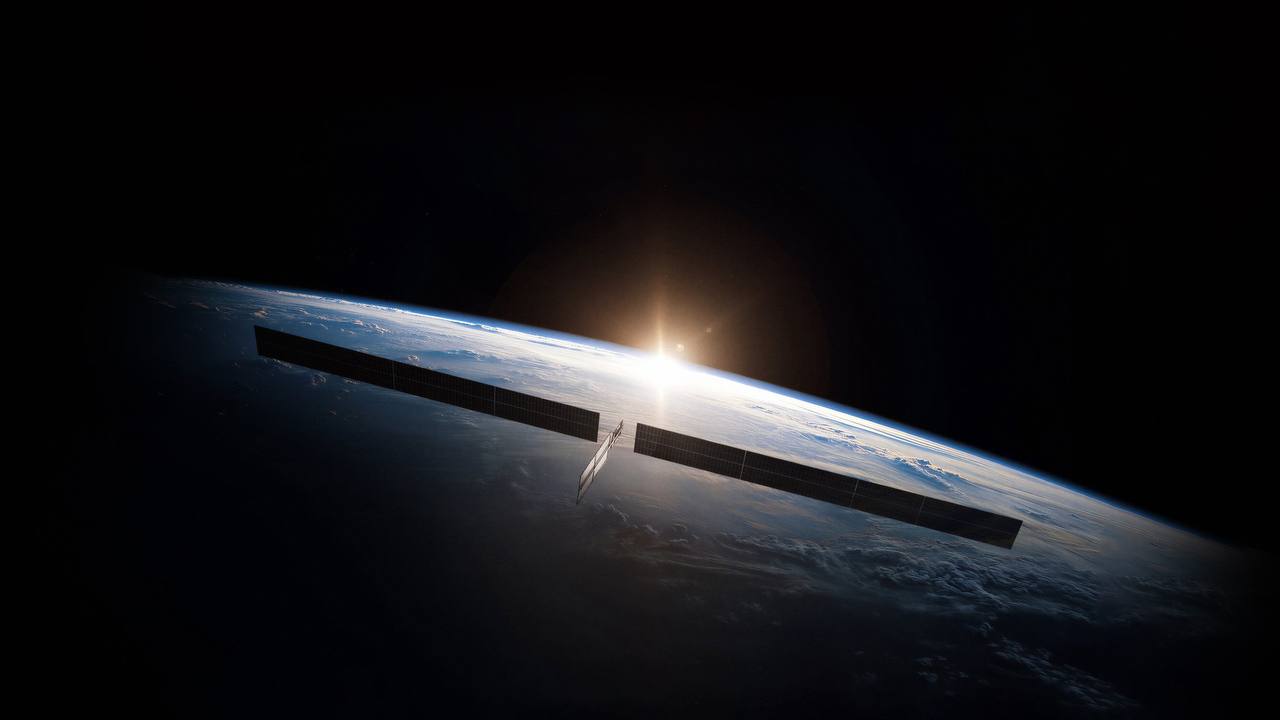
Starmind satellites, by contrast, would compute data through artificial intelligence directly in orbit using onboard processors powered by large solar arrays. Where a Starlink satellite is essentially a very fast pipe, a Starmind satellite is a server. The practical implication is that Starmind would allow AI models to run inference, process queries, and generate outputs from space, then beam results to users anywhere on Earth within milliseconds, without the data traveling to a terrestrial data center.
Starship will be able to carry 30 to 50 AI1 satellites per launch, delivering the equivalent of dozens of server racks per flight, with no land acquisition, no power grid approval, and no cooling infrastructure required on the ground. SpaceX is pursuing the technology as terrestrial data centers run into hard limits including lack of physical space, community opposition, and power and water consumption at a scale that is increasingly difficult to permit. Space offers solar power, vacuum cooling, and no zoning boards.
Musk said in a June 8 video presentation that he expects space to become the lowest-cost location to deploy AI compute within two to three years. Two AI1 prototypes are scheduled to launch in early 2027, with volume production targeted for the end of that year at a new facility called Gigasat.
The applications Starmind enables extend beyond powering Grok. A constellation of orbiting AI processors could run inference workloads for any paying customer, anywhere on Earth, with latency measured in milliseconds rather than the seconds associated with ground-based cloud routing across continents. As described, Starmind would make SpaceX the landlord of AI compute the same way Starlink made it the landlord of satellite internet.
The next confirmed milestones are the launch of two AI1 prototypes in early 2027 and the start of volume production at Gigasat targeted for the end of that year.