STORY WRITTEN FOR CBS NEWS & USED WITH PERMISSION
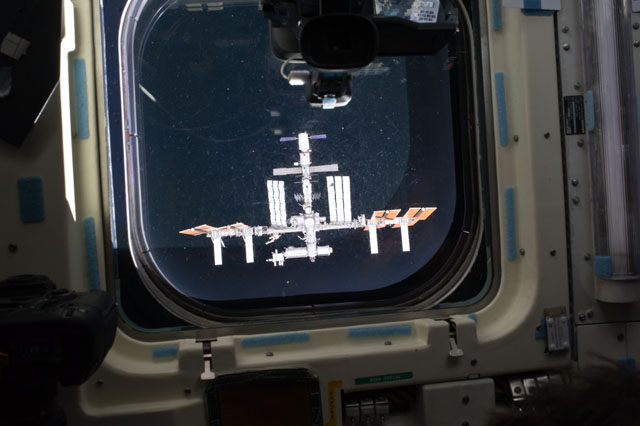
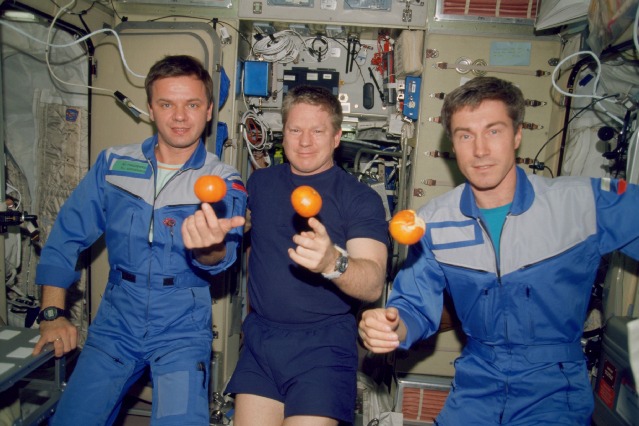
The International Space Station’s first three-man crew moved in on Nov. 2, 2000, 15 years ago Monday, the first of 45 expeditions to date that have logged a decade and a half of continuous human presence in low-Earth orbit.
Some 220 individuals have visited or lived aboard the sprawling laboratory complex to date, building the outpost piece by piece, working through complex research, enduring tragedies on Earth and celebrating hard-earned triumphs, all in the vacuum of space at an altitude of 250 miles and a velocity of 5 miles — more than 80 football fields — per second.
The numbers boggle the mind.
Building the station required 37 dedicated space shuttle flights to deliver the lab’s solar arrays and truss segments, nine U.S., Japanese and European pressurized modules, the station’s Canadian-built robot arm, science racks, experiment hardware, spare parts and myriad other components.
Russia launched two heavy-lift Proton rockets to deliver the Russian-built, NASA-financed Zarya storage and propulsion module and the Zvezda command module, launched a pair of airlock/docking modules aboard Soyuz boosters and built a third that was delivered aboard a space shuttle.
Equally important if not more so, the Russians have launched 44 Soyuz crew ferry craft to date, carrying 131 cosmonauts, astronauts and space tourists to the space station.
The steady stream of Soyuz spacecraft provided the transportation backbone that kept the outpost operational when the shuttle was grounded after the 2003 Columbia disaster. And in the wake of the shuttle fleet’s retirement in 2011, the Soyuz is the only vehicle currently able to carry crew members to and from the station, serving as a lifeboat between dockings and departures.
A cadre of 122 astronauts and cosmonauts representing nine nations has carried out 189 spacewalks to build and maintain the space station, logging 1,184 hours — 49.3 days — of EVA time. Another spacewalk, the 190th, is on tap Nov. 6. All told, station spacewalkers have logged seven times more than the 166 hours of spacewalk/moonwalk time spent by the Apollo astronauts during orbital test flights and moon missions.
To deliver the supplies, equipment and research gear needed to support station operations, Russia has launched 61 robotic Progress supply ships to date, including two launch failures. Japan has launched five of its large HTV supply ships and two U.S. companies, SpaceX and Orbital Sciences Corp., have launched 12 supply spacecraft, including two failures.
The European Space Agency contributed five Automated Transfer Vehicle — ATV — cargo ships before the program was phased out last year.
The resulting space station, after a final shuttle visit in 2011, has a mass of nearly 925,000 pounds, roughly equivalent to 320 automobiles, a spine of pressurized modules stretching 167 feet and a huge solar array truss mounted at right angles that extends 375 feet, longer than a U.S. football field.
The NASA-supplied solar arrays have a surface area of 38,400 square feet, enough to cover eight basketball courts, generate 84 kilowatts of power and are tied into more than 8 miles of wiring threaded throughout the complex. More than 350,000 sensors feed data to scores of computers running millions of lines of code.
The station has a total pressurized volume equal to a 747 jumbo jet and a useable volume roughly equal to a five-bedroom house.
Depending on how one does the math, the International Space Station cost U.S. taxpayers more than $100 billion over three decades, including shuttle assembly flights, making it one of the most expensive engineering and science projects in human history.
NASA now spends about $3 billion a year to operate and maintain the complex, and the agency wants to keep the station going through 2024 and possibly longer.
Has it been worth the extraordinary price tag?
To Bill Shepherd, a three-flight shuttle veteran who served as NASA’s first space station program manager and then commander of the lab’s first crew, the tools and techniques that were used to build and operate the outpost provide a roadmap for how future deep space missions to Mars and beyond will be managed.
“I always had in the back of my mind, what would this mean to space efforts 20, 30, 50 years in the future? What were we doing that would affect these future outcomes?” he said in an interview.
Multiple trips to low-Earth orbit will be required, he said, along with “substantial EVA, very complex, very well choreographed, we’d have to have a multi-national effort that brought together the best things the different countries could offer in terms of resources and capabilities.”
“If you look at space station, it’s a blueprint for the future,” he added. “All of those questions are behind us. Space station is just that, and that’s why it’s important.”
Astronaut Terry Virts, who returned to Earth in June after 200 days aboard the station, agreed, saying the lab will be remembered for centuries to come for laying the groundwork for future exploration.
“I think from an international relations point of view, the space station has been the most successful American foreign policy initiative since the Marshall Plan,” he said. “I think 500 years from now, people are going to remember that this was our first step into space.”
But John Logsdon, a noted author and space historian, said the jury’s still out on the project’s ultimate value. Learning how to build a large space vehicle may, indeed, inform plans for future missions. But if that’s the only objective, it’s already been accomplished.
The question now, with the space station essentially complete, is whether it will generate the science needed to justify continued operations.
“I think we don’t know yet,” Logsdon said in an interview. “After all, the research really started in earnest only after assembly complete (in 2011), and the nature of research is it takes some time before you can get a sense of the quality of the results. There haven’t been any spectacular research breakthroughs that I’m aware of.”
But, he added, there has been “a lot of peer-reviewed published papers coming out of space station research so there’s good quality science being done.”
“But I think its a fair question whether good quality science is worth the annual cost of getting it,” he said. “It probably makes sense to give that test the 10-plus years to 2024. But by that time … somebody else should either assume the major responsibility or it’s time to quit.”
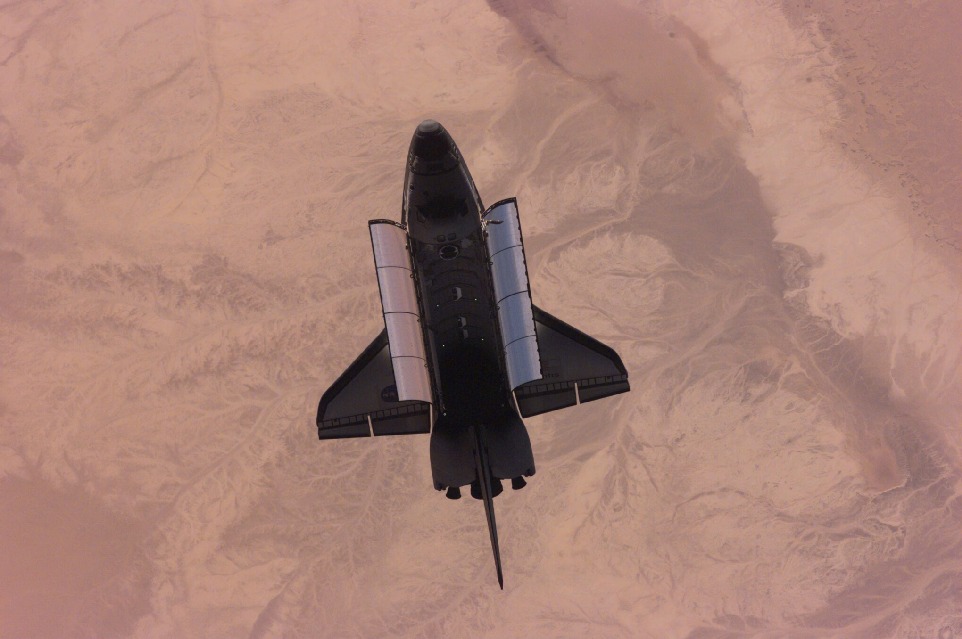
From a purely technical standpoint, the space station should remain viable at least through 2024, the U.S. government’s current goal, as long as NASA has the resources to build spare parts, pay for cargo launches and provide transportation for U.S. and partner astronauts, either aboard U.S. commercial spacecraft or Russian Soyuz capsules.
The station’s long-term survival also assumes Russia stays the course, continuing to supply a steady stream of Soyuz spacecraft and crews, along with Progress cargo ships.
And it’s important to remember that neither nation can operate the station on its own. Russian modules and cargo ships provide the propellant and rocket power needed to maintain the lab’s orbit while stabilizing gyroscopes provided by NASA, along with most of the station’s electrical generation capability, are operated by the United States.
Michael Suffredini, who retired as NASA’s space station program manager in September, said a recent analysis by Boeing, NASA’s prime contractor, shows the complex is structurally sound and, barring a catastrophic failure of some sort, should remain so through 2028, the 30th anniversary of the Zarya module’s launch.
In an interview before he stepped down, he said the space station “is designed in a modular fashion meant for repair. So as long as you have spares for all the things that can break, you can last as long as the structure will let you last. Within reason.”
Getting to 2024, the currently approved objective, should be relatively straight forward. Getting to 2028 or beyond, even with political support, will be more problematic.
“When we get to 2028, the solar arrays are going to be struggling, I’m probably going to have a handful of radiator (coolant) lines that have been isolated,” Suffredini said. “2028 might be possible, but it also might be very challenging because then you’re talking about the cost of replacing big things that may be prohibitive.
“All our analysis kind of says we think we can get to 2028. As we start getting beyond 2028, if it makes sense, and things aren’t failing at a rate that makes it difficult for us to keep up, and the country thinks it’s the right thing to do, then we can look at going beyond that.
“But 2028’s kind of where we’re drawing our line today based on the original design of the structure.”
A LONG AND TORTURED HISTORY
U.S. President Ronald Reagan directed NASA to build a permanently manned space station in low-Earth orbit during his 1984 State of the Union address to Congress:
“America has always been greatest when we dared to be great,” he said. “We can reach for greatness again. We can follow our dreams to distant stars, living and working in space for peaceful, economic and scientific gain. Tonight, I am directing NASA to develop a permanently manned space station and to do it within a decade.”
Telling the nation a space station would enable “quantum leaps” in research and low-gravity manufacturing, Reagan added “we want our friends to help us meet these challenges and share in their benefits.”
“NASA will invite other countries to participate so we can strengthen peace, build prosperity and expand freedom for all who share our goals,” he said.
The project was projected to cost $8 billion. But that was before engineers began mapping out various design options.
Engineers at NASA’s Marshall Space Flight Center in Huntsville, Ala., envisioned an orbital research laboratory with state-of-the-art materials science, biological and medical facilities, including a large centrifuge, while planners at the Johnson Space Center in Houston envisioned a more operational station, with hangar-like enclosures for satellite servicing and spacecraft assembly.
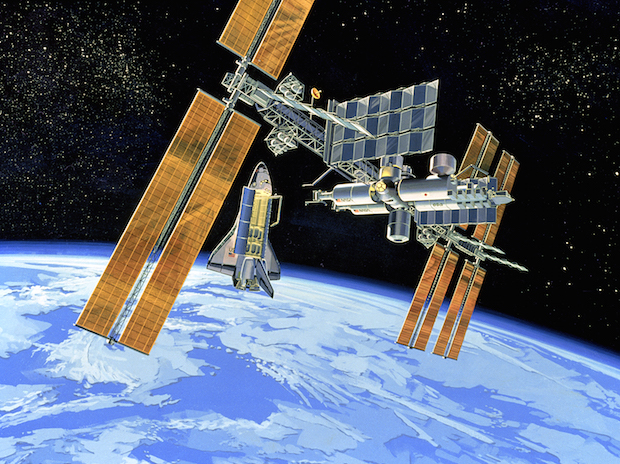
What became the space station Freedom program quickly ballooned in complexity and cost. Over the next eight years, NASA spent $11.4 billion on Freedom “and hadn’t built a piece of hardware,” Logsdon said.
In 1993 when President Bill Clinton took office, NASA projected another billion-dollar overrun. Leon Panetta, director of the White House Office of Management and Budget, recommended canceling the station outright. But Vice President Al Gore and Treasury Secretary Lloyd Bentsen supported the station and instead of shutting the project down, the administration ordered a redesign.
NASA was told to develop options costing $5 billion, $7 billion and $9 billion over the next five years.
The agency came up with Option A, calling for a smaller, stripped-down version of Freedom with much less power that could be expanded if desired; Option B, a more capable station retaining many of Freedom’s major elements; and Option C, a completely new design using a space shuttle external tank-like structure to build a vehicle more reminiscent of Skylab, NASA’s first space station.
None of the options came in under $9 billion and the Clinton administration eventually requested $10.5 billion over the next five years to continue the program, according to Marcia Smith, founder and editor of SpacePolicyOnline, an expert on Russian space systems and a former space policy analyst at the Congressional Research Service.
With the redesign pending, Congress came within one vote of canceling the station that spring.
“The unspoken message there from Congress to NASA was you guys need to get your act together on this quickly or this is going to be killed,” Shepherd said. “That was the situation.”
About one month after Clinton took office, Yuri Koptev, head of the Russian federal space agency, and Yuri Semenov, leader of RSC Energia, a major Russian space contractor, had sent NASA Administrator Daniel Goldin a letter suggesting the two countries pool their resources.
An earlier cooperative astronaut-cosmonaut exchange agreement was already in place between President George H.W. Bush and Russian President Boris Yeltsin calling for a U.S. astronaut to fly aboard Mir and for Russian cosmonauts to fly aboard NASA’s space shuttle.
But the demise of the Soviet Union had sent shock waves through the state-controlled Russian space program, resulting in sharply reduced funding and fears in the West that Russian rocket scientists might provide their services to the highest bidder, including unfriendly states or possibly even terrorists.
How bad was it for the vaunted Russian space program? Cosmonaut Sergei Krikalev was caught in orbit aboard the Mir space station in late 1991 when the Soviet Union fell apart. His stay in space had to be extended six months because of a cash shortage that led to cancellation of a Soyuz flight.
The Russians, needless to say, could benefit from working with NASA. And given increasing political resistance to its own space station, NASA could clearly benefit from Russian rockets and modules to lower costs.
More important to the Clinton administration, Smith said, was a strong desire to ensure Russia’s adhered to the Missile Technology Control Regime, a multi-nation partnership aimed at preventing the spread of high-power missile technology, and not sell advanced rocket engines to India.
“When Goldin got this letter from the Russians, he took it to Al Gore and Gore took it to Clinton,” Logsdon said. “There was a recognition that this was a great idea for a variety of geopolitical purposes. And so Clinton suggested it to (Russian President Boris) Yeltsin in April of ’93 and Yeltsin said yes, let’s see whether that could work.”
Over the summer of 1993, NASA engineers studying the redesign options already under discussion determined the Russians could, in fact, be pulled into the program with benefits to both sides. Gore and Russian Prime Minister Viktor Chernomyrdin announced in September the two nations would work together on the space station project
Smith said the United States eventually paid Russia $400 million to compensate it for cancelling the rocket engine contract with India. The money was paid through NASA as part of the U.S.-Russia space station initiative.
The already existing shuttle-Mir program was expanded, becoming Phase One of the new International Space Station project. Phase Two was the actual assembly of the initial U.S.-Russian space complex, with Phase Three expanding the station to include international modules and partners.
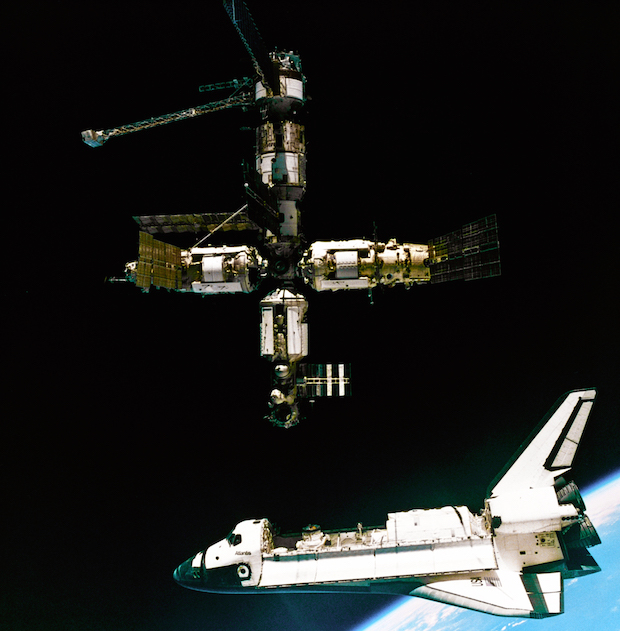
As the revamped program picked up speed, Goldin named Shepherd to serve as NASA’s first space station program manager. In an interview with the author, Shepherd recalled a visit to Moscow with the administrator to work out the details of Russian participation in the station program.
While they were there, a constitutional crisis erupted when Yeltsin attempted to dissolve the country’s legislature, which in turn impeached him. The Russian military ultimately sided with Yeltsin, ending the crisis with tanks in the streets of Moscow.
“We were in Moscow, and we were several miles from the Kremlin, but this was the day when tanks rolled out and they shelled the building,” Shepherd recalled. “We were eating breakfast and watching CNN coverage of the tanks rolling down the street. They swung around and the barrels pointed up a little bit. Ka-boom! The shell went right in the side of the parliament building.
“We finished breakfast and went across the street to the Russian space agency and sat down with our counterparts and they said, ‘ah, this is no big deal. We’re going to get past this, don’t worry about it.’ Which turned out to be the case, but it was an interesting day.”
And an interesting few years for the space station program.
The former space rivals were faced with working out the details of an expanded shuttle-Mir program, now seen as a critical step toward joint operations, refining the design of the International Space Station, determining how to integrate their flight control systems, working out training details and dealing with a difficult language barrier.
Perhaps more important, deep cultural differences, seasoned by resentment and mistrust in some quarters, had to be confronted and dealt with, or at least managed.
From the perspective of many at NASA, the United States had clearly won the race to the moon. NASA was just as clearly more technically advanced than Russia, had more money to spend and was the natural leader of the station project.
Not surprisingly, the Russians had a different interpretation of space history and their role in it.
“If you were a Russian, how would you see things?” Shepherd asked. “They put the first artificial satellite in orbit, they put the first man in space, the first woman in space, did the first EVA, were first to fly around the back of the moon and take pictures, on and on and on.
“So they see themselves, and this may not be totally accurate but this is how they view their history, as the pioneers, the risk takers, the ground breakers and very much the case that the Americans rode their coattails to glory and they really didn’t get the credit they should have for all these firsts.”
Whether that is an accurate interpretation is almost beside the point, Shepherd said. “That’s the way they see it. And there’s merit to what they say in that the Russians on a technical level have done some very inventive things. Their approach to problems is effective and often very pragmatic, different from how we do things. But at the end of the day, it’s been successful. We have to recognize that.”
Some of that animosity lingers today at the higher levels of management, some say, but at the level of working engineers, astronauts, cosmonauts and flight controllers, mutual respect and cooperation were the norm.
“Engineer to engineer, they’re as good as NASA,” Shepherd said. “But their integration, if you will, discipline to discipline, is not as strong. What got us to the moon was our ability to integrate, successfully, a large technical effort across lots of different domains. The Saturn program, the Apollo program, they’re models even today for how to do this. The Russians never really got their arms around that, and I think it’s a cultural thing.”
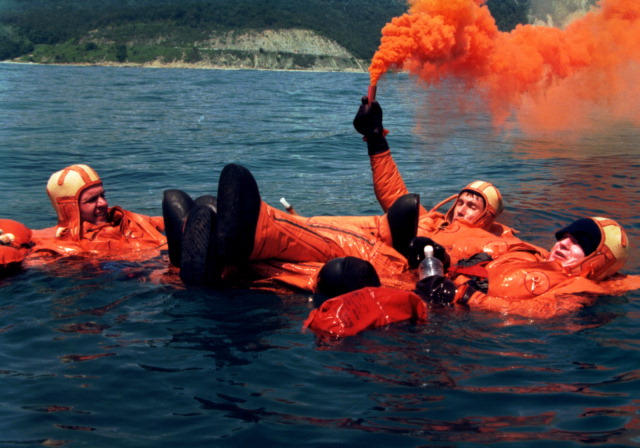
One major problem early on was the Russian space program’s ongoing cash shortage, which Smith said contributed to delays building the Zvezda command module. That, in turn, delayed ISS construction and the arrival of its first crew. NASA paid for Zarya module, but Zvezda was Russia’s responsibility.
“It was a huge issue in Congress,” Smith said.
Politics and funding aside, Russian technical expertise, and a philosophy that embraces simple, robust designs over high-tech complexity, has won praise over the years.
Consider for a moment how one might design a toilet for use in microgravity. NASA had developed a very high-tech toilet for the space shuttle and initially planned an equally complex version for the station.
“The Russian toilet (is) almost an agricultural piece of equipment,” Shepherd said. “But it’s made to be sanitary. It’s also made so you can totally tear the thing down in space, put new parts in it, put it back together again, you can do it almost without instructions in about an hour. It has very minimal electronics in it and it’s a robust piece of kit. It works.
“When space station was looking at trying to develop a unique commode for ISS, the U.S. side wanted to have a device with multiple computers in it. Eventually they said, ‘let’s just use the Russian toilet.’ It works, and it’s robust. And if you’re a long way from home and you need something that absolutely will work when you turn it on, maybe it’s a better design.
“I think in a sense, the U.S. needs to go back and re-think some of this,” Shepherd said. “That’s the way the Russians build stuff, and that’s one of the bigger differences.”
PUTTING IT ALL TOGETHER
During the ramp-up to launching the first station modules, it quickly became apparent that a crew needed to be named as early as possible to help with critical design questions, ensure that crew concerns were addressed and to give engineers a reminder that lives were on the line.
Russian cosmonauts had vastly more experience with long-duration space flight than NASA’s shuttle cadre and the Russians believed, with some reason, that one of their own should command the first space station crew. But NASA balked. The station project was an American initiative, they believed, and a U.S. commander for the first flight was non-negotiable.
By this point, Shepherd had given up his program manager duties to focus on the technical side of station development, turning the management reins over to Randy Brinkley, a former Marine pilot who oversaw NASA’s successful repair of the Hubble Space Telescope.
A veteran of three space shuttle missions and a former Navy SEAL, Shepherd was NASA’s choice to command the first crew. The Russians eventually agreed, assigning Krikalev and fellow Mir veteran Anatoly Solovyev to the Expedition 1 crew. But Solovyev refused the assignment when it became clear Shepherd would be the commander. He was replaced by Yuri Gidzenko, another Mir veteran.
“It was very contentious,” Shepherd said. “At that point, I had three shuttle flights, my total time in space was a little over two weeks and the Russians saw me as a guy who really didn’t have a lot of space experience, who didn’t understand their technology, had really no history working with their hardware and who was this guy to be in charge of anything? There were some valid concerns there.”
But Shepherd and Krikalev, one of the most experienced space fliers in the world, hit it off, smoothing over any remaining rough spots.
“Krikalev was an extremely experienced guy, very astute technically,” Shepherd said. “I think if you ask almost any knowledgeable American astronaut who is the best person on the planet in terms of space operations experience and capability, they’d say Sergei. He’s just an outstanding guy. He had previously been in space over a year. He was the cosmonaut who was trapped in orbit on the Mir when the wall came down.”
Krikalev, like Shepherd, enjoyed “digging into the technical nuts and bolts of everything. Yuri and I got along great, but he did not have the same technical passion for what was behind the panel. Sergei had that, and he and I really hit it off.”
“The Russians pushed the button and off we went.”
The Russian-built Zarya module, paid for and owned by NASA, was launched atop a Proton rocket on Nov. 20, 1998. NASA followed suit one month later, launching the Unity module aboard the shuttle Endeavour on Dec. 4, along with two pressurized mating adapters, tunnel-like extensions, to connect Unity and Zarya and to provide a shuttle docking port.
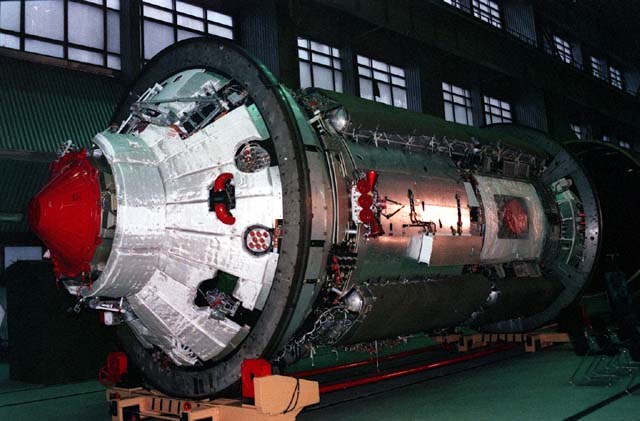
Two shuttle flights then were launched to deliver supplies and equipment followed by launch of Russia’s Zvezda module atop a Proton rocket on July 12, 2000. A Progress supply ship went up one month later that was unloaded by a visiting shuttle crew.
Two more shuttle flights then delivered more supplies, a pressurized mating adapter, a KU-band antenna and a short truss segment housing four stabilizing gyroscopes that was attached to Unity’s upper port. The gyroscopes can maintain or change the station’s orientation without the use of costly rocket propellant.
Finally, on Oct. 31, 2000, the stage was set for Shepherd’s crew to blast off aboard a Soyuz ferry craft.
“We launched on a late fall day out in the desert in Kazakhstan,” he recalled. “This was a day that had about 300-foot overcast (at the Baikonur Cosmodrome). There was no way that the U.S. would have launched a manned shuttle that day. But the Russians pushed the button and off we went.”
Two days later, the Soyuz TM-31 ferry craft docked at Zvezda’s aft port. Zvezda, also known as the service module, was packed with boxes and supplies. The crew could not immediately enter the Unity module because of a power configuration issue. The quarters were cramped, and the crew had its hands full activating various systems and deploying needed equipment.
“For the first week, we were really camping out,” Shepherd recalled. “We were having some issues with the management of the humidity and the temperature. The most problematic thing was the CO2 absorption, because we did not have the CO2 scrubber on line. We had to find the boxes, put everything together and make that thing work. But we worked our way through it.”
The crew quickly settled into a routine, getting up around 6:30 in the morning, cleaning up, eating breakfast, reviewing notes radioed up overnight from the Russian mission control center and participating in a daily planning conference, or DPC. Then they would get to work, unpacking stowed gear, troubleshooting problems and generally maintaining the station.
“We’d go till maybe 4 in the afternoon, knock off for a little bit, get some more exercise, take some time off looking through the window. It was very common that we’d work after dinner on stuff that we didn’t get done during the day. … I can remember some nights we were up until 3 in the morning when something wen