NASA has selected three American astronauts and one European astronaut to fly on Artemis III, a landmark mission scheduled for late 2027 that will conduct the first in-space docking demonstrations between NASA’s Orion spacecraft and lunar landers developed by SpaceX and Blue Origin.
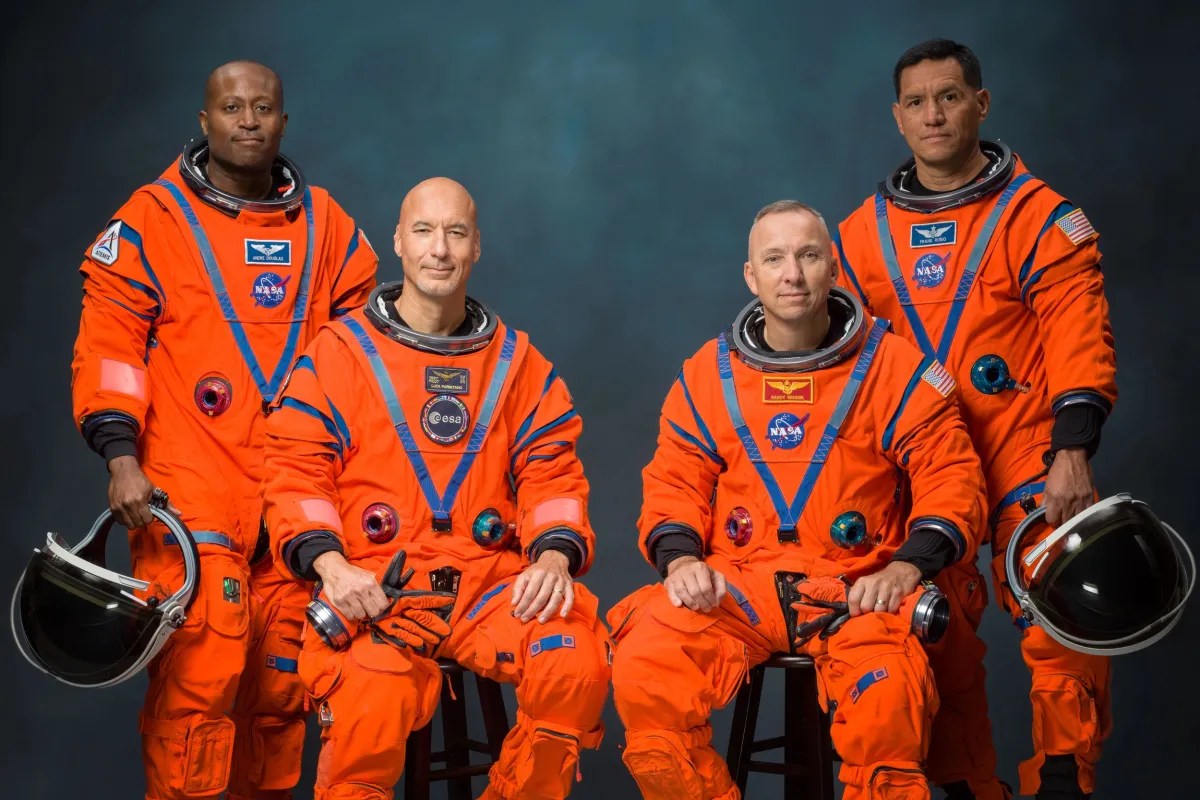
NASA Administrator Jared Isaacman announced the crew during a ceremony in Houston on Tuesday, naming astronauts Randy Bresnik, Andre Douglas and Frank Rubio, along with European Space Agency astronaut Luca Parmitano, for the mission.
The flight will mark the second crewed mission of NASA’s Artemis program and serve as a critical test of the systems intended to support future astronaut landings on the Moon.
Artemis III Crew Announced
Veteran astronaut Randy Bresnik, a former test pilot who has flown in space three times, will serve as mission commander.
Introducing Artemis III.
Four astronauts. Three launches. Two dockings. One splashdown.
In 2027, the Artemis III mission will practice docking the Orion spacecraft with two lunar landers in low Earth orbit — the capability we need to return humanity to the Moon’s surface. pic.twitter.com/8uhMUxuuWX
— NASA (@NASA) June 9, 2026
The crew also includes Frank Rubio, who holds the U.S. record for the longest continuous spaceflight, and Andre Douglas, who will make his first trip to space.
Luca Parmitano of the European Space Agency will serve as mission pilot, becoming the first ESA astronaut assigned to an Artemis mission and only the second non-American astronaut to participate in the lunar exploration program after Canadian astronaut Jeremy Hansen, who flew on Artemis II.
Testing Moon Landers in Earth Orbit
Unlike later Artemis missions that aim to land astronauts on the lunar surface, Artemis III will remain in low-Earth orbit throughout its approximately two-week mission.
The primary objective is to demonstrate docking operations involving NASA’s Orion spacecraft and lunar landers developed by SpaceX and Blue Origin.
“Artemis III is an incredibly exciting, complicated and highly coordinated multi-launch campaign,” said Jeremy Parsons, NASA’s Artemis program manager.
“It’s going to happen in a short period of time with three of the world’s most powerful rockets.”
According to NASA, Blue Origin’s Blue Moon lander will launch first, followed by Orion carrying the Artemis III crew aboard NASA’s Space Launch System rocket.
After docking with Orion, Blue Moon will remain attached for approximately two days while astronauts conduct system evaluations and technology demonstrations.
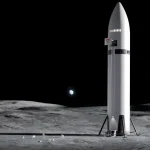
Once Blue Moon departs, SpaceX’s Starship lunar lander will rendezvous and dock with Orion for an additional series of tests before returning to Earth.
The mission will provide the first opportunity to evaluate both lunar lander systems in space ahead of future lunar landing operations.
Key Step Toward Future Moon Landings
Artemis III follows the successful Artemis II mission, which carried four astronauts around the Moon and back to Earth earlier this year.
NASA currently plans to use lessons learned from Artemis III before attempting a crewed lunar landing mission in 2028.
The Artemis program represents the United States’ primary effort to establish a long-term human presence on the Moon and is viewed as strategically important as China advances its own plans to land astronauts on the lunar surface by 2030.
SpaceX and Blue Origin Face Development Challenges
The mission comes as both SpaceX and Blue Origin continue developing their lunar landing systems.
NASA restructured parts of the Artemis program last year after both companies proposed accelerated development plans for their landers, resulting in the creation of the Artemis III docking demonstration mission.
The schedule requires both SpaceX’s Starship and a prototype version of Blue Origin’s Blue Moon lander to be ready for launch within a relatively short timeframe.
SpaceX recently conducted another test flight of its latest Starship vehicle, incorporating upgrades intended for lunar missions.
Blue Origin, meanwhile, is investigating an explosion that destroyed its New Glenn rocket on the launch pad last month. The incident temporarily grounded the heavy-lift launch vehicle that the company intends to use for future Blue Moon missions.
Despite the setback, NASA officials expressed confidence that both companies will be prepared in time for the Artemis III mission.
“We are confident that New Glenn will be ready for Artemis III,” Parsons said.
A Milestone for Italy and Europe
Parmitano’s selection also represents an important achievement for Italy and the European Space Agency.
The appointment comes after NASA revised its lunar exploration strategy earlier this year, canceling plans for the Gateway lunar-orbiting space station and placing greater emphasis on developing a permanent human presence on the Moon’s surface.
The decision prompted concerns among several international partners, including Europe, Canada and Japan, which had invested heavily in Gateway-related hardware.
NASA subsequently signed an agreement with Italy to support future lunar surface infrastructure, strengthening cooperation between the two nations.
Italian Space Agency President Teodoro Valente welcomed Parmitano’s selection.
“This confirms and enhances the role and capabilities of the European and Italian space system in the human exploration of the universe,” Valente said.
With Artemis III, NASA will conduct one of the most complex spaceflight campaigns in its history, bringing together multiple spacecraft, launch vehicles and international partners as it prepares for the next phase of human exploration beyond Earth orbit.