The Roman telescope is the successor to the James Webb Space Telescope and will operate as one of the next generation of space-based observatories. Scheduled to study dark energy, exoplanet atmospheres, and stellar evolution, Roman carries a primary mirror 2.4 meters in diameter and will operate in infrared and visible wavelengths. The mission is being built to deliver scientific capabilities that Webb cannot reach, including a wide field of view designed for surveys rather than deep-field observations. With cost discipline and technical execution improving, Roman’s on-time delivery would fundamentally change how the space agency manages major science programs.
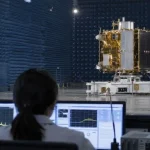
The eight month schedule advantage emerged as NASA and contractor teams completed critical assembly milestones without the cascading delays that defined recent flagship projects. The telescope’s optical components, instruments, and spacecraft bus are now integrated and entering environmental testing phases. Launch is targeted for the mid-2020s from Cape Canaveral Space Force Station aboard a Space Launch System rocket or, in contingency scenarios, a commercial heavy lift vehicle. The Johnson Space Center and Goddard Space Flight Center are overseeing development, with major contributions from partners including the Johns Hopkins University Applied Physics Laboratory and Ball Aerospace.
The schedule gain matters because it reshapes the narrative around NASA’s ability to execute billion dollar science missions. Webb’s 14 year delay forced the agency to fundamentally restructure how it manages large projects, implementing stricter testing protocols, cost controls, and schedule buffers. Roman appears to be the proof of concept that those changes work. The telescope is also running ahead of some missions that began development years earlier, creating implicit pressure on other NASA programs to improve their own execution. Success with Roman would validate that large observatories do not require decades of schedule slip and multi billion dollar budget growth as inevitable costs of innovation.
The next critical milestone arrives as environmental testing concludes and systems integration reaches final stages. NASA will conduct a formal pre launch review before proceeding to final assembly and transport to the launch pad. Any technical issues discovered during testing could compress the timeline advantage or eliminate it entirely, meaning Roman’s early delivery remains contingent on sustained technical performance through the coming months.