
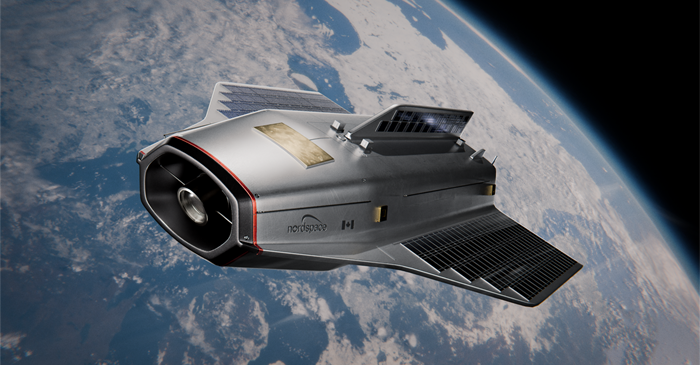
NordSpace is expanding Canada’s presence in the aerospace sector through the development of orbital launch vehicles, commercial spaceport infrastructure, hypersonic systems, propulsion technologies and satellite platforms. The company is focused on building an integrated ecosystem of Canadian-designed and manufactured space technologies intended to support commercial, scientific, defense and environmental applications. By combining launch vehicle development, reusable propulsion systems, hypersonic research platforms and satellite technologies under a unified architecture, NordSpace is positioning as one of the emerging companies working toward sovereign launch capability and advanced aerospace infrastructure in Canada. The company’s portfolio includes the Tundra orbital launch vehicle, the Atlantic Spaceport Complex (ASX), SHARP hypersonic platforms, additive-manufactured rocket engines and Athena-based satellite systems.
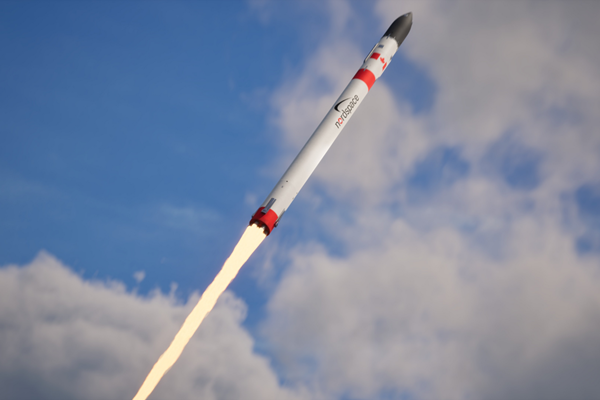
At the center of NordSpace’s launch portfolio is Tundra, a portable orbital launch vehicle designed to provide responsive and flexible access to space. Developed as Canada’s first orbital launch vehicle program, Tundra is engineered to transport payloads of up to 500 kilograms into Low Earth Orbit (LEO), supporting a wide range of commercial and government missions. The launch vehicle is powered by NordSpace’s Hadfield and Garneau engine series and is designed with operational portability in mind. According to the company, the complete launch architecture can be transported using standard sea containers through the StarGate system architecture, enabling deployment on land or at sea depending on mission requirements. This approach is intended to support rapid-response launch operations while improving deployment flexibility for customers requiring mobile launch infrastructure. Tundra is being designed as the first rocket compatible with carbon-neutral e-fuels and sustainable aviation fuels (SAF). The company also highlights the launch system’s low acoustic footprint and reduced emissions profile compared to traditional launch architectures. The vehicle’s first stage is also being engineered for ocean recovery and refurbishment, supporting the company’s long-term objectives related to reusability and lower launch costs. Combined with the compact deployment architecture and rapid launch capability, Tundra is intended to support a broad range of responsive launch missions from multiple geographic locations worldwide.
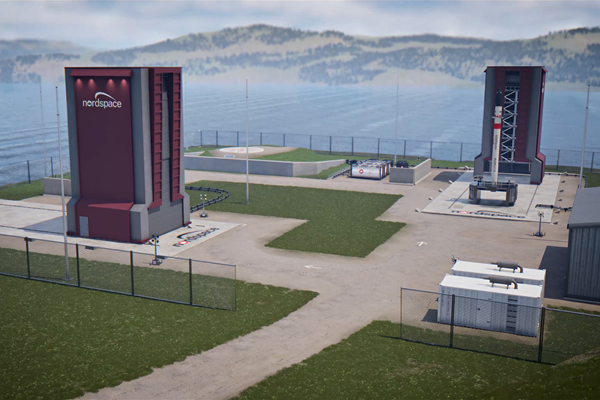
NordSpace is also developing the Atlantic Spaceport Complex (ASX), a commercial orbital launch site located in Newfoundland and Labrador. Owned and operated by the company, ASX is designed to support year-round launches for NordSpace’s Tundra and Titan launch vehicles and is intended to become Canada’s first operational commercial orbital spaceport. Situated at approximately 46 degrees latitude in the mid-Atlantic region, the spaceport is strategically positioned to support a wide range of orbital inclinations. NordSpace states that ASX will provide launch access ranging from approximately 44° to 105°, enabling missions to equatorial, mid-inclination, sun-synchronous and polar orbits.
This broad launch capability is expected to provide flexibility for commercial satellite deployments, Earth observation missions, scientific payloads and defense-related operations. The Atlantic Spaceport Complex has been designed with significant safety margins, including positioning the launch site more than five kilometers from the nearest town. This separation is intended to support the safe operation of medium-lift launch vehicles while meeting operational and regulatory requirements. The facility is approved for up to 20 launches annually, which would represent one of the highest launch frequencies currently planned for a Canadian launch site. The company views ASX as a key component of Canada’s long-term independent launch capability and broader commercial space infrastructure development.
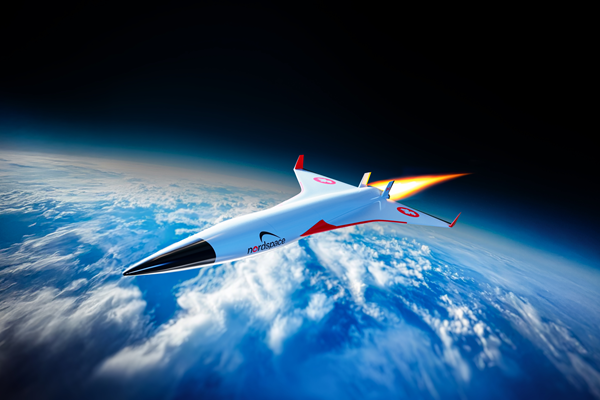
NordSpace is extending the aerospace portfolio through the SHARP (Supersonic and Hypersonic Applications Research Platform) program, which focuses on responsive hypersonic technologies and dual-use aerospace systems designed and manufactured in Canada. The SHARP ecosystem includes three major systems: the SHARP Arrow rocket-powered UAV, the SHARP Sabre sub-orbital rocket and the M2S-HyRock hypersonic engine. These platforms are derived from technologies originally developed for NordSpace’s orbital launch systems, enabling cross-platform integration and commonality across propulsion and aerospace architectures. SHARP Sabre is based on a modified version of the company’s Taiga rocket and is designed to support large payloads at hypersonic velocities. The platform is intended for high-speed research applications, aerospace testing and specialized mission profiles requiring rapid atmospheric flight. SHARP Arrow is a fixed-wing rocket-powered unmanned aerial vehicle capable of operating from standard airport runways. The UAV can be autonomously operated or remotely piloted depending on mission requirements and is designed to carry medium-sized payloads for reconnaissance, scientific research, intercept missions and experimental aerospace applications. NordSpace highlights broader civilian and scientific applications for SHARP technologies beyond defense-oriented missions. These include microgravity biological research, telecommunications, advanced manufacturing experiments, environmental monitoring and disaster response operations.
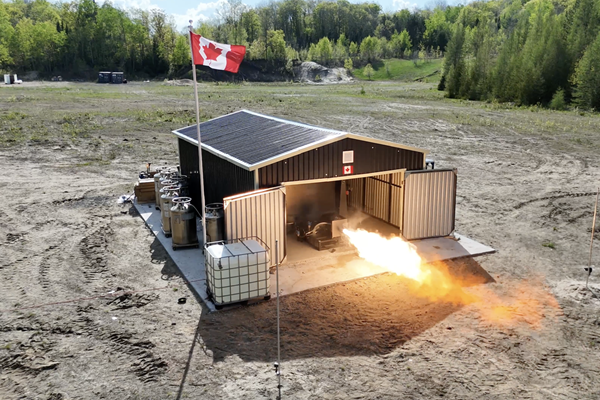
The company’s propulsion portfolio includes the Hadfield, Garneau and Bondar engine families, which are designed for high efficiency, reusability and operational flexibility. NordSpace states that its engines are engineered to support multiple fuel types, including conventional kerosene-based fuels such as Jet-A and RP-1, as well as sustainable aviation fuels. A significant aspect of NordSpace’s propulsion strategy is the use of advanced additive manufacturing technologies. The company manufactures its engines in-house using powder bed fusion 3D printing processes to create single-piece engine structures. According to NordSpace, the combination of aerospace-grade superalloys and proprietary manufacturing techniques contributes to lightweight and high-performance engine designs. To support propulsion development and testing, NordSpace operates the Canadian Space Research Range, a privately owned 50-acre propulsion test facility dedicated to activities including fully integrated static fire testing and vertical hop tests. This infrastructure enables the company to conduct propulsion validation and reusable launch system development within Canada. NordSpace is also developing the M2S-HyRock propulsion system, a tactical hypersonic liquid rocket engine designed for mass production and rapid deployment. Vehicles powered by the M2S-HyRock engine are intended for applications such as hypersonic reconnaissance, intercept missions and threat response operations.
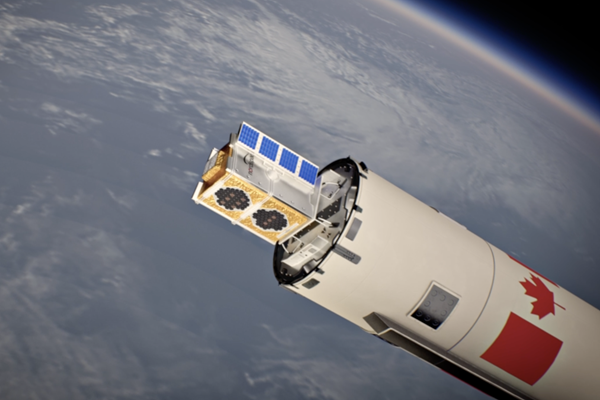
Beyond launch systems and propulsion technologies, NordSpace is developing satellite and in-space systems through the Athena spacecraft architecture. The Athena spacecraft bus is being co-developed as a unified platform intended to support the company’s satellites, launch vehicles, robotics and future orbital systems. NordSpace plans to deploy a cluster of eight satellites focused on environmental monitoring and connectivity services across Canada. The company’s first satellite mission, Terra-Nova, is scheduled as a technology demonstration mission beginning in 2026. Terra-Nova will validate several internally developed technologies, including the Athena spacecraft bus, the Zephyr propulsion system and the Chronos edge-AI imaging system. The Zephyr platform includes both electric propulsion (Zephyr-EP) and chemical propulsion (Zephyr-CH) variants designed for applications such as station keeping, orbital transfer, attitude control and de-orbiting operations. NordSpace states that Zephyr propulsion systems are fully designed, manufactured and tested in-house, providing the company’s additive manufacturing and propulsion expertise. The Chronos imaging platform integrates onboard edge-AI processing capabilities optimized for Earth observation, situational awareness and rendezvous and docking applications. By processing imagery directly on-chip, the system is intended to enable faster decision-making while reducing communication and processing demands between orbit and ground infrastructure.
About NordSpace
NordSpace is a Canadian aerospace company focused on orbital launch systems, propulsion technologies, hypersonic platforms, satellite systems and spaceport infrastructure. Headquartered in Ontario, the company develops vertically integrated space technologies designed to support commercial, scientific and defense-related applications. NordSpace’s portfolio includes the Tundra orbital launch vehicle, the Atlantic Spaceport Complex (ASX), SHARP hypersonic platforms, additive-manufactured rocket engines and Athena-based satellite systems. The company is also developing propulsion technologies such as the Hadfield, Garneau, Bondar, Zephyr and M2S-HyRock engine systems for launch vehicles, spacecraft and hypersonic applications. The company’s launch systems are designed to support responsive orbital access, including missions to Low Earth Orbit (LEO), polar, sun-synchronous and equatorial trajectories. NordSpace is also working on reusable launch technologies, sustainable fuel compatibility, portable launch infrastructure, and in-space propulsion systems for orbital maneuvering and satellite operations. NordSpace is developing satellite technologies focused on Earth observation, situational awareness, onboard edge-AI processing and in-space mobility. Through the integrated approach across launch vehicles, propulsion, satellites and space infrastructure, the company is contributing to the development of Canada’s commercial space ecosystem.