The production push follows heavy use of U.S. interceptors in recent conflicts. Last week the department announced multibillion-dollar agreements involving Lockheed Martin and Northrop Grumman to increase output of PAC-3 Missile Segment Enhancement and Terminal High Altitude Area Defense interceptors and components. Those actions follow a $1 billion Pentagon investment in L3Harris Technologies intended in part to expand solid rocket motor capacity.
Speaking with reporters at the Space and Missile Defense Symposium on August 11, Lt. Gen. John Rafferty, commander of U.S. Army Space and Missile Defense Command, said he could not discuss how the Pentagon was addressing shortages of advanced hit-to-kill weapons used against ballistic missiles. Pentagon leaders, he said, are the ones signaling the need and urgency for quantities. We are not really in the quantity business, we are more in the consumption business, Rafferty said. He added that the future of missile defense is a mix of high end and lower cost interceptors, potentially including guns, electronic warfare systems and, eventually, directed-energy weapons. High-energy lasers and high-power microwave systems remain years away, he said, because the technology has to be proven out.
A research note dated August 10 from BNP Paribas Equity Research, citing Tom Karako of the Center for Strategic and International Studies, described U.S. missile-defense inventories as at dire levels after heavy use in Ukraine and the Middle East. Karako said solid rocket motors remain a chokepoint, though pressure could ease as Northrop and L3Harris increase output and newer suppliers seek qualification. He also said definitive awards needed to support parts of the production ramp have not been made because fiscal 2027 appropriations are still required.
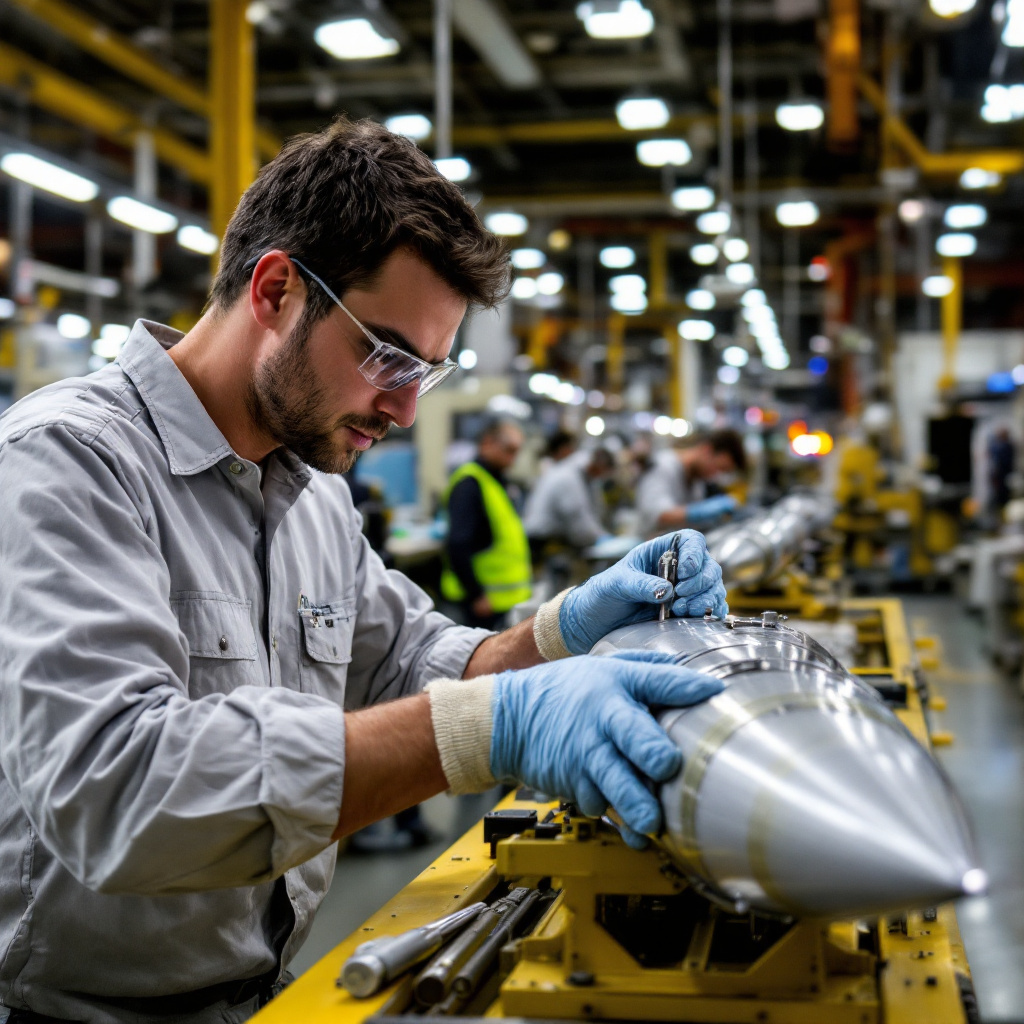
Northrop’s recently announced PAC-3 arrangement, a seven-year framework worth roughly $2 billion, positions the company to supply PAC-3 MSE solid rocket motors as a newly qualified second source and to increase production of ignition-safety devices. Under a separate agreement valued at about $1 billion, Northrop plans to quadruple production of interceptor shell structures, aft bulkhead assemblies and heat shields, supplied exclusively to Lockheed, the THAAD prime contractor. That work is part of a wider effort to raise annual THAAD production capacity from 96 interceptors to 400. This will enable us to invest millions to expand our manufacturing capacity in support of the THAAD program, said Dan Federico, director of vehicle engineering at Northrop Grumman Space Sector’s Western Region.
The moves are significant because they add Northrop as an alternative propulsion supplier to L3Harris, creating program-level competition on PAC-3 MSE between the two established U.S. motor producers. Karako said the U.S. might not need such a broad field of suppliers over the longer term, raising the possibility of consolidation after the current expansion cycle. Reaching the higher THAAD target cannot be achieved through Lockheed’s final assembly alone, requiring propulsion, seeker, structural and thermal-protection suppliers to increase output at roughly the same time.
Karako sees little chance of significant budget progress before the midterm elections and said Congress could have difficulty completing spending legislation during a lame-duck session at year’s end. Definitive production awards and revenue are expected to follow under the frameworks once fiscal 2027 appropriations are settled.