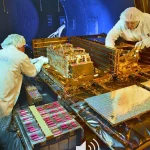
SiriusXM confirmed on September 15 that its SXM-11 geostationary communications satellite has completed in-orbit testing and entered full commercial service. The spacecraft, described by the company as the most powerful broadcast satellite in its fleet, is designed to improve signal reception, expand coverage in Alaska and strengthen the delivery of satellite audio and information services across the United States, Canada and the Caribbean.
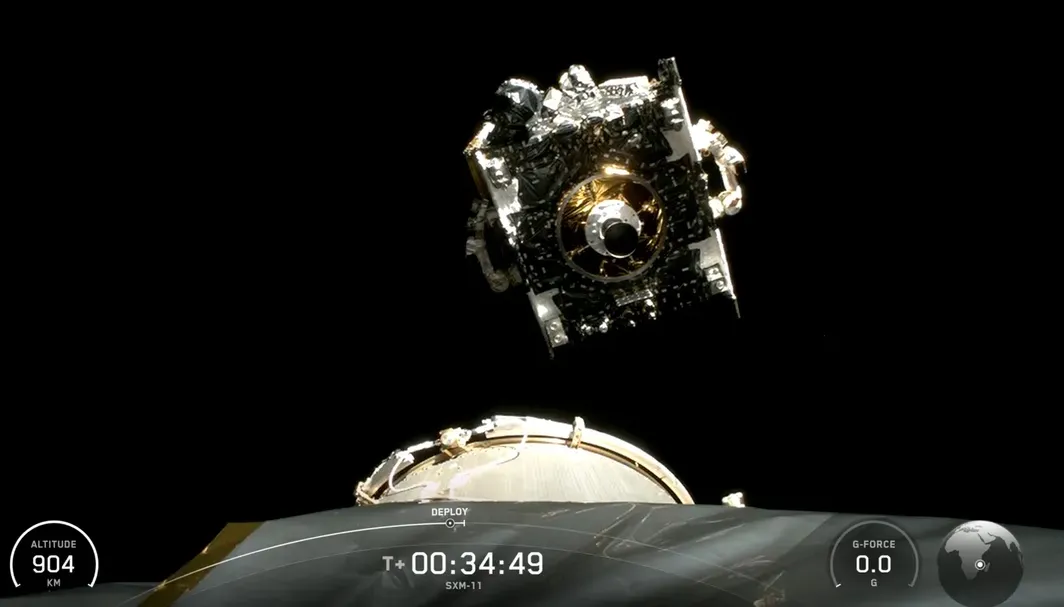
Intuitive Machines completed the commissioning campaign and handed the satellite over to SiriusXM following testing of its platform and communications payload in orbit. SXM-11 was launched aboard a SpaceX Falcon 9 from Space Launch Complex 40 at Cape Canaveral Space Force Station on June 28 and deployed into geosynchronous transfer orbit approximately 35 minutes after liftoff.
The satellite subsequently used its onboard propulsion system to reach geostationary orbit, deployed its solar arrays and antennas, and underwent functional and performance testing before beginning commercial operations. At geostationary altitude, the spacecraft remains over the same region of Earth, allowing SiriusXM to provide continuous broadcast coverage to fixed and mobile receivers without the frequent handovers required by low Earth orbit systems.
SXM-11 is based on Intuitive Machines’ IM 1300 series platform, previously known as the Maxar 1300 platform. It weighed approximately 7,500 kg at launch and spans about 32.3 meters with its solar arrays deployed. Around 60% of the spacecraft’s launch mass was attributed to propellant, supporting orbit raising, station keeping and other operations over its planned service life.
The spacecraft carries a high-power Digital Audio Radio Service payload optimized for direct reception by compact antennas installed in vehicles and other mobile platforms. High transmitted power and a large deployable reflector are particularly important for maintaining reception when users are moving or operating near the edge of the satellite’s coverage area.
SiriusXM said the satellite will support its in-car entertainment services as well as information products used by marine and aviation customers. Its satellite network also serves as the broadcast component of the company’s 360L platform, which combines nationwide satellite delivery with internet connectivity for interactive and on-demand functions.
Four-Satellite Fleet Renewal
SXM-11 is the third spacecraft activated under SiriusXM’s current four-satellite fleet modernization program. SXM-9 entered service in January 2025, followed by SXM-10 in July 2025. Work is continuing on SXM-12, the final satellite in the series.
SiriusXM ordered SXM-11 and SXM-12 in 2022 after contracting for SXM-9 and SXM-10 in 2021. The four spacecraft were developed to renew an aging portion of the company’s geostationary infrastructure and increase the capacity, coverage and resilience of its proprietary satellite broadcasting network.
SXM-11 is expected to replace XM-5, which was launched in 2010. SXM-12, still under construction, is intended to replace Sirius FM-5, launched in 2009. Moving the newer satellites into primary service allows older spacecraft with remaining capability to be retired or retained as orbital spares, improving network redundancy.
The satellite was built by the space systems business formerly known as Maxar Space Systems and later Lanteris Space Systems. Intuitive Machines acquired the operation in January 2026 as part of an expansion beyond lunar missions into larger spacecraft and space infrastructure. According to the company, the manufacturing team has now delivered 13 spacecraft for SiriusXM over a relationship spanning more than two decades.
Unlike most media companies, which lease capacity from commercial satellite operators, SiriusXM owns and operates a dedicated geostationary broadcast fleet. That architecture gives the company direct control over coverage, capacity and redundancy for a service designed primarily around receivers in moving vehicles. The next step in the renewal program will be completion, launch and commissioning of SXM-12.