
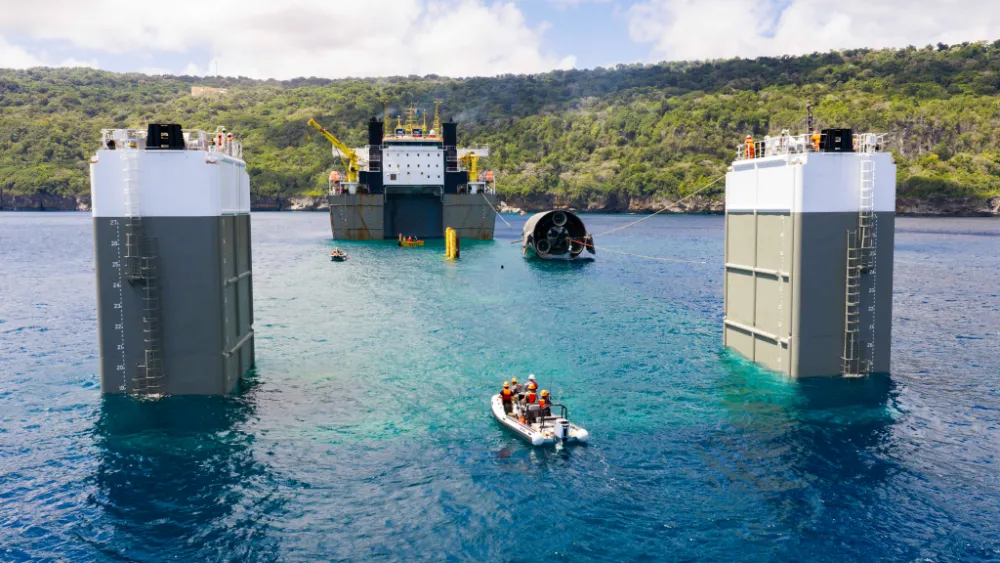
SpaceX has achieved a major milestone in the development of its fully reusable Starship system, successfully loading the upper stage from Starship Flight 13 onto a semi-submersible transport vessel in the Indian Ocean more than a month after the spacecraft completed its mission and splashed down at sea. The recovery marks the first time a Starship upper stage has survived atmospheric reentry, ocean landing, and extended exposure to open-ocean conditions well enough to be transported back for detailed inspection.
The recovered vehicle, Ship 40, has been floating since July 24, when it concluded Flight 13 with a controlled splashdown in the Indian Ocean west of Australia. SpaceX said the spacecraft has now been secured aboard a large semi-submersible vessel and will begin a months-long journey back to the company’s Starbase facility in Texas for post-flight analysis.
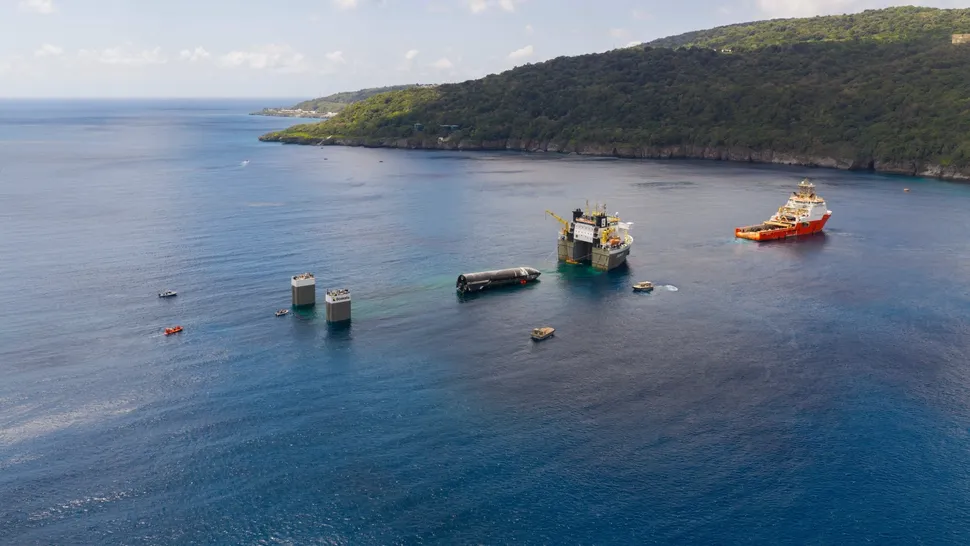
SpaceX loads the upper stage that flew on Starship’s 13th test flight onto a “semi-submersible” ship off Christmas Island. The company posted this photo on X on Aug. 27, 2026. (Image credit: SpaceX)
Flight 13 Delivered Key Program Milestones
Flight 13 represented one of the most successful Starship test missions to date. During the roughly one-hour suborbital flight, Ship 40 successfully deployed 20 Starlink Version 3 satellites and performed an in-space relight of one of its six Raptor engines before beginning reentry.
The spacecraft then executed a controlled descent and soft splashdown in the Indian Ocean. Previous Starship upper stages either disintegrated during reentry or were destroyed shortly after touching down in the water. Ship 40’s survival therefore provided engineers with a rare opportunity to inspect an actual flight vehicle rather than relying solely on telemetry and recovered debris.
The mission also demonstrated progress in several areas critical to Starship’s long-term reusability goals, including thermal protection performance, engine restart capability, and controlled atmospheric return.
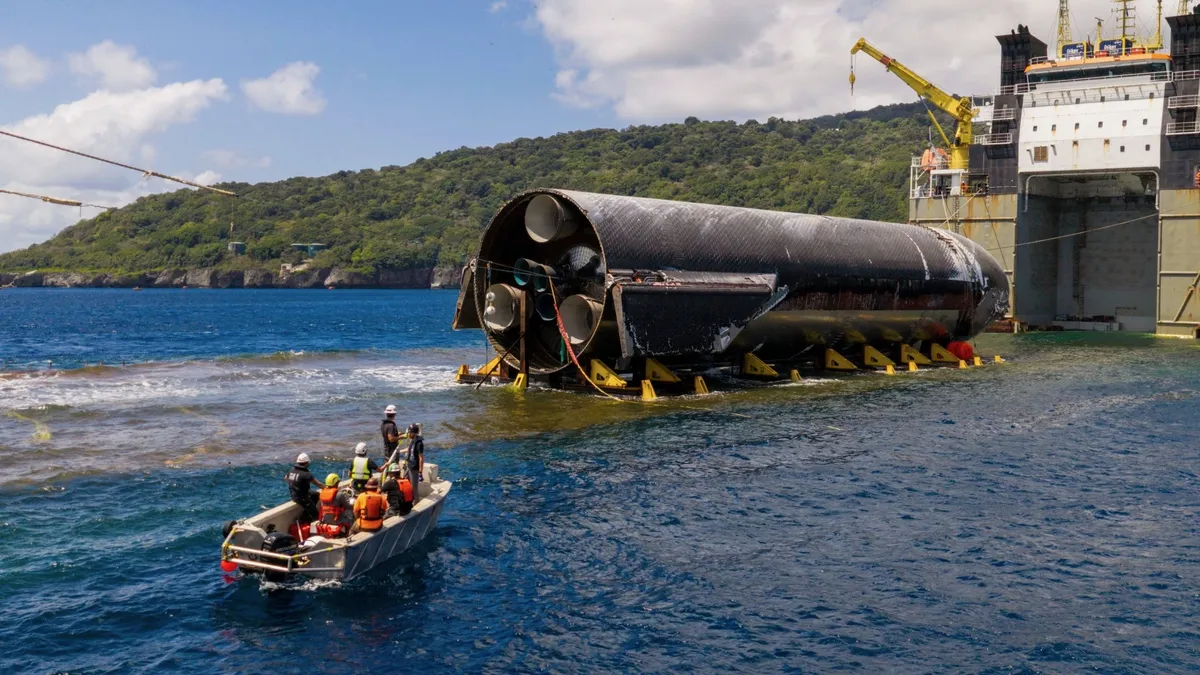
The semi-submersible’s deck rises with Ship on board. (Image credit: SpaceX)
Recovery Effort Faced Significant Challenges
The spacecraft’s survival did not guarantee recovery. Soon after splashdown, rough seas and adverse weather raised concerns that the vehicle could be lost before reaching shore. Elon Musk publicly acknowledged that recovery prospects appeared uncertain as towing operations encountered deteriorating ocean conditions.
Despite those concerns, SpaceX recovery teams succeeded in towing the 52-meter-long spacecraft toward Christmas Island, an Australian territory in the Indian Ocean. After spending more than three weeks adrift, the vehicle arrived near the island, where calmer waters allowed engineers to conduct inspections and prepare for the complex lifting operation.
Photographs released by SpaceX show the spacecraft being loaded onto a semi-submersible vessel, one of the few maritime assets capable of handling an object of Starship’s size and mass.
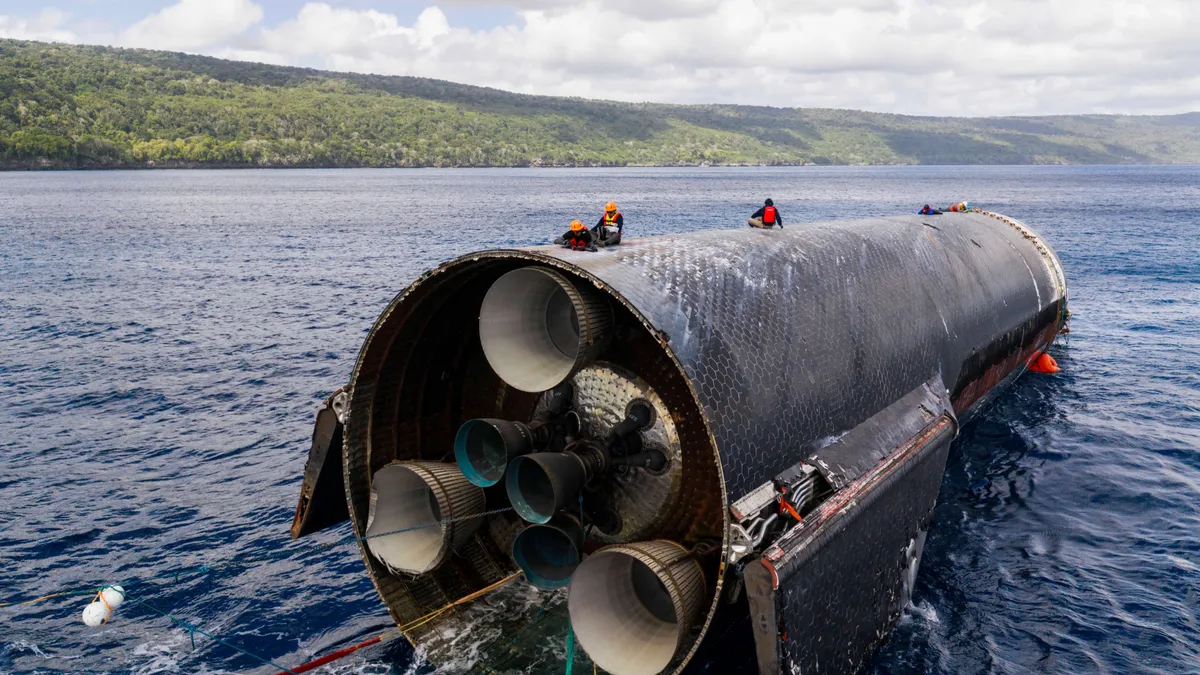
SpaceX engineers inspect Flight 13’s Ship as it floats off the coast of Christmas Island. (Image credit: SpaceX)
Why the Recovery Matters
The successful retrieval of Ship 40 could provide one of the most valuable datasets ever collected during the Starship program.
While telemetry provides extensive information during flight, physical inspection allows engineers to examine heat shield tile performance, structural loads, engine condition, corrosion effects, and localized damage that sensors may not fully capture. The ability to compare pre-flight manufacturing records with post-flight hardware condition is particularly important as SpaceX works toward routine vehicle reuse.
For reusable spacecraft, post-flight inspection often becomes a crucial design feedback loop. SpaceX previously relied heavily on recovered Falcon 9 boosters to refine refurbishment procedures and identify hardware wear patterns. Recovering an intact Starship upper stage offers a similar opportunity, but for a vehicle operating under significantly harsher thermal and aerodynamic conditions during reentry.
The mission is also relevant to future Starship landing concepts. SpaceX ultimately intends to eliminate ocean recoveries and instead return both the Super Heavy booster and Starship upper stage directly to launch sites using the company’s “Mechazilla” catch system. Data gathered from Ship 40’s reentry and splashdown could help validate thermal protection and flight-control models needed before attempting tower catches of returning spacecraft.
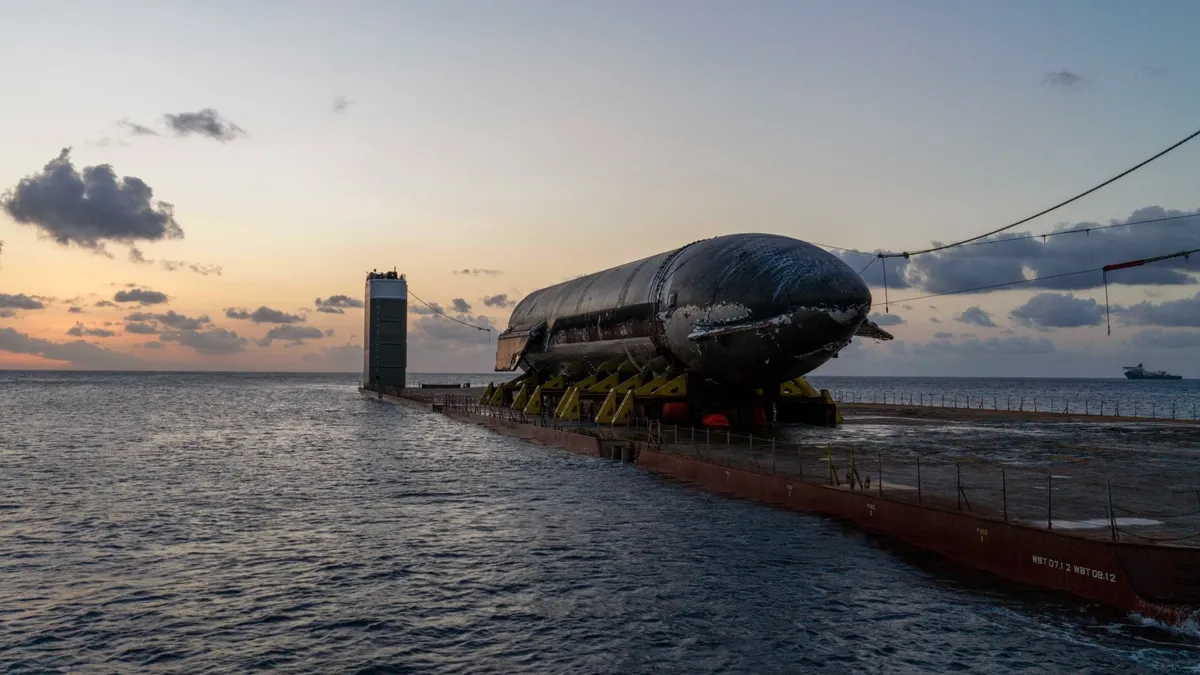
Ship is now on its its way back to Texas. (Image credit: SpaceX)
Stepping Stone Toward Full Reusability
Starship remains central to SpaceX’s long-term strategy for reducing launch costs and increasing payload capacity. The vehicle is designed to transport more than 100 metric tons to low Earth orbit while eventually achieving rapid reuse of both stages. It is also expected to support future Starlink deployments, NASA Artemis lunar missions, and eventual Mars transportation plans.
The recovery of Ship 40 does not mean Starship reusability has been solved. The spacecraft still requires extensive inspection after spending more than a month in seawater, and SpaceX has not yet demonstrated recovery and relaunch of an upper stage. However, preserving an intact flight article through reentry, splashdown, towing, and retrieval represents a significant advance compared with earlier Starship test campaigns.
As the vehicle begins its voyage back to Texas, engineers will gain access to hardware that could help shape the next phase of Starship development. For a program focused on rapid iteration and full reusability, the return of Ship 40 may prove nearly as valuable as the flight itself.