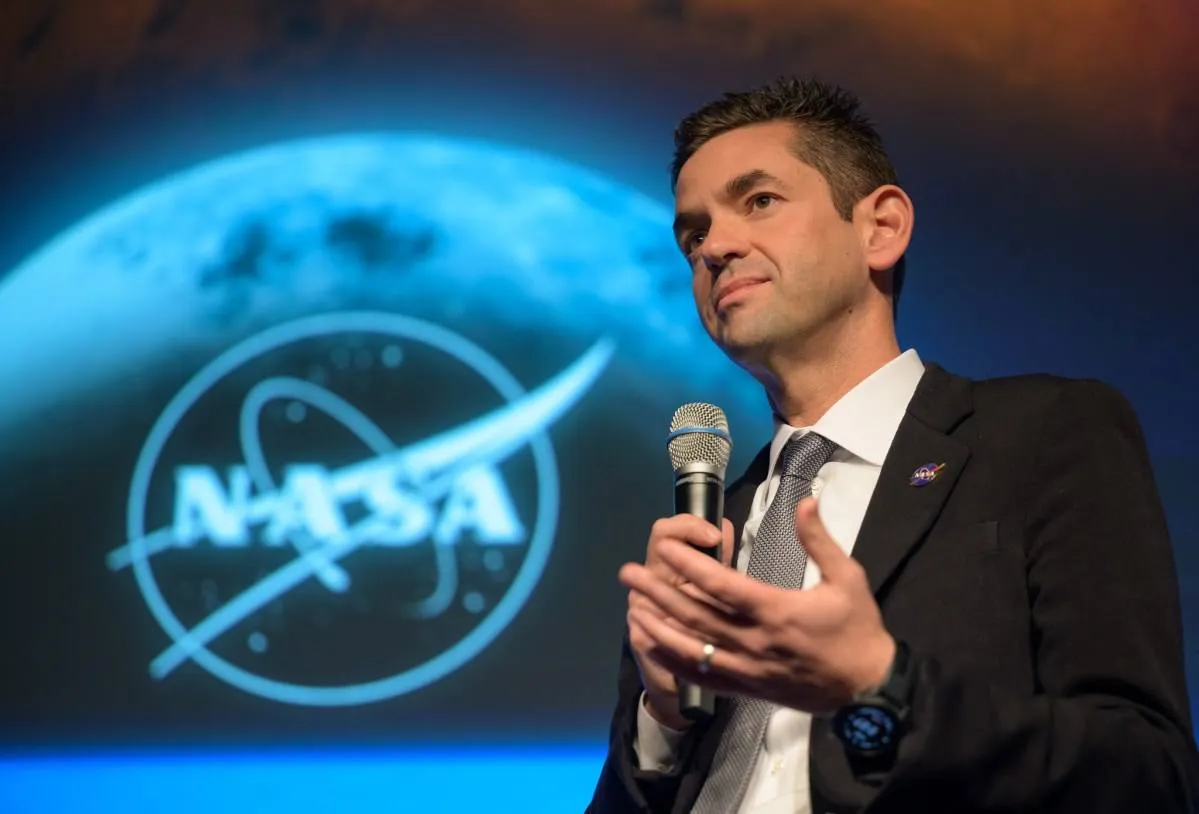
NASA Administrator Jared Isaacman has publicly endorsed the idea of placing data centers in orbit, arguing that space-based computing infrastructure could eventually address growing concerns over the energy consumption, land use, and local opposition associated with terrestrial AI facilities.
Speaking on a recent podcast appearance, Isaacman suggested that future data centers could take advantage of abundant solar energy in space rather than relying on increasingly constrained terrestrial power grids. He described the concept as a potential long-term solution to the rising political and environmental debates surrounding large AI computing campuses.
The remarks come as demand for AI computing capacity accelerates worldwide, driving a surge in data center construction and triggering disputes over electricity consumption, water usage, and community impacts in several regions. Industry leaders have increasingly warned that power availability is becoming a key constraint on AI growth.
Space-Based Computing Moves From Concept Toward Industry Discussion
While orbital data centers have long been viewed as a speculative concept, they are gaining renewed attention as launch costs decline and AI infrastructure requirements expand.
The basic proposition is straightforward: satellites equipped with large solar arrays could generate power continuously in orbit and process data without drawing electricity from terrestrial grids. Advocates argue that such systems could eventually avoid many of the permitting, transmission, and local opposition challenges facing large ground-based facilities.
However, significant engineering hurdles remain.
Unlike Earth-based facilities that rely on air or liquid cooling systems, orbital computing platforms must dissipate heat through radiative cooling. High-performance processors generate substantial thermal loads, making heat rejection one of the most challenging aspects of any space-based data center architecture. Radiation protection, satellite servicing, component replacement, and high-bandwidth communications links would also require major technological advances.
For satellite manufacturers, such systems would represent an entirely new class of spacecraft. Instead of communications payloads or Earth-observation instruments, future orbital data centers would need to integrate large computing clusters, power management systems, thermal-control hardware, and high-capacity networking equipment.
Growing Commercial Interest in Orbital AI Infrastructure
Isaacman’s comments arrive amid increasing industry discussion about moving portions of AI infrastructure into space.
SpaceX has recently outlined plans for Nvidia-powered AI satellites and has reportedly explored large-scale orbital computing concepts that could eventually function as space-based data centers. Some proposals envision constellations numbering in the hundreds of thousands or even millions of satellites, although such plans remain highly ambitious and face substantial technical and economic challenges.
The emergence of these proposals reflects a broader shift occurring across both the AI and space sectors. AI companies are searching for new sources of power and computing capacity, while launch providers are seeking large-scale commercial demand that could justify high-flight-rate transportation systems such as Starship.
If launch costs fall dramatically through reusable heavy-lift vehicles, the economics of placing industrial-scale infrastructure in orbit could become more attractive. Nevertheless, analysts note that current orbital computing concepts remain far more expensive than conventional terrestrial facilities.
Manufacturing and AIT Challenges Would Be Enormous
Building orbital data centers would also create unprecedented demands on spacecraft manufacturing and Assembly, Integration and Testing (AIT) operations.
Traditional communications satellites are typically produced in relatively small numbers. By contrast, orbital computing architectures would require industrial-scale production lines capable of manufacturing large numbers of power-intensive spacecraft.
Such satellites would likely undergo extensive thermal-vacuum testing, electromagnetic compatibility verification, power-system qualification, and thermal-management validation before launch. The need to ensure reliable operation of advanced processors in the radiation environment of low Earth orbit could further complicate testing campaigns.
For manufacturers, production throughput rather than individual spacecraft complexity could become the primary bottleneck. This would mirror trends already visible in broadband constellations, where satellite factories increasingly resemble automotive assembly lines rather than traditional aerospace facilities.
Environmental and Regulatory Questions Remain
The concept also faces growing scrutiny from scientists and environmental researchers.
Critics argue that deploying vast numbers of computing satellites could worsen orbital congestion, increase collision risks, and create additional challenges for astronomy. Others point to the environmental impact of manufacturing, launching, and eventually deorbiting large constellations of heavy spacecraft.
Regulators would also need to address spectrum allocation, orbital traffic management, cybersecurity requirements, and international governance issues associated with space-based computing networks.
Those concerns are becoming more relevant as the United States pursues policies designed to dramatically increase commercial launch activity. Recent federal initiatives have set ambitious targets for expanding launch capacity and supporting new space infrastructure developments.
Whether orbital data centers ultimately become a practical business remains uncertain. Yet Isaacman’s endorsement highlights how rapidly the conversation around space infrastructure is evolving. Concepts once confined to science-fiction discussions are increasingly being evaluated through the lens of AI demand, launch economics, and the growing industrialization of low Earth orbit.