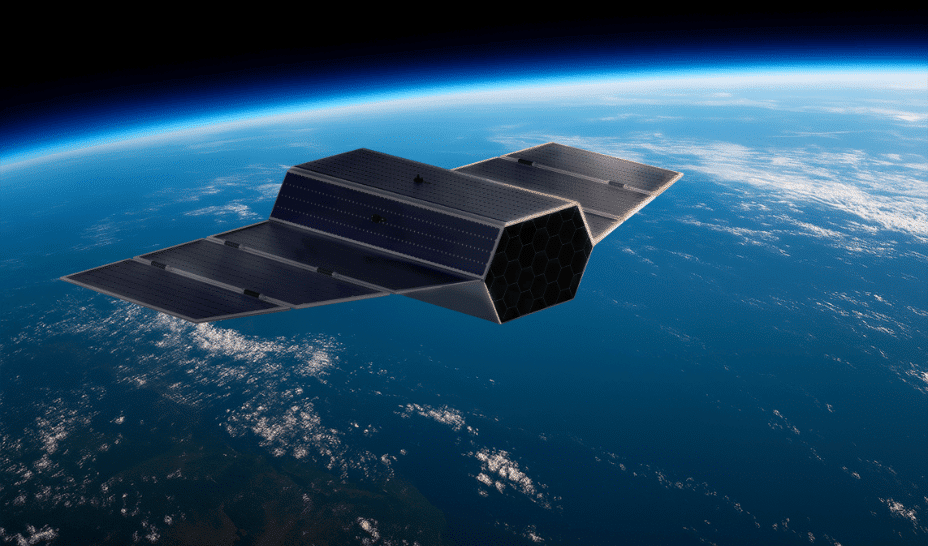
Spanish aerospace startup Kreios Space has raised €8 million in a seed funding round to support the launch of a demonstration mission of its air-breathing electric propulsion (ABEP) technology in very low Earth orbit (VLEO) in early 2027. The round was led by the NATO Innovation Fund and JOIN Capital, with participation from Grow Venture Partners, Xesgalicia, and Tasivia Global, bringing the company’s total funding to over €10 million.
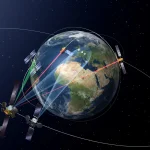
Founded in 2021 by six Spanish aerospace engineers, Kreios has been developing its ABEP system, which uses atmospheric air in low orbits to generate thrust, allowing satellites to operate at lower altitudes than traditional propulsion systems. ABEP aims to mitigate drag without requiring large amounts of fuel, enabling long-duration missions in VLEO.
“We’ve seen plenty of companies using the term VLEO without really being in VLEO, going to the highest areas of it at like 350 km or 400 km and saying that’s VLEO. Real VLEO is 200 kilometers,” Kreios CEO Adrían Senar told Payload.
Operating satellites at such low altitudes offers advantages for commercial and defense applications. Telecommunications satellites in VLEO can transmit signals faster and with greater precision, while Earth observation satellites can capture high-resolution images and deliver them in near real-time. Kreios expects to pursue dual-use missions, leveraging NATO partnerships for government contracts and highlighting commercial benefits for civil applications.
Senar added that ABEP provides significant performance improvements without increasing costs compared with conventional low Earth orbit operations. “[With ABEP] you keep the same cost as we would have in LEO, but get an improvement in performance between three to sixteen times depending on the payload,” he said. “Basically we aim to be the leaders in very low Earth orbit…We have the resources, the partners, and the technology, so that’s our vision.”