SPUTNIX LLC, headquartered in Moscow’s Skolkovo Technopark, is a private Russian company dedicated to the development and commercialization of nano- and microsatellite technologies. Specializing in scalable spacecraft platforms, payload integration, and advanced satellite devices, SPUTNIX has emerged as a comprehensive space systems provider. With expertise spanning from satellite design to launch logistics and mission control, the company offers turnkey solutions for both scientific and commercial missions.
Technology and Capabilities
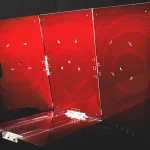
At the core of SPUTNIX’s technology is a unified system architecture that ensures mechanical, electrical, and software compatibility across platforms and subsystems. Their CubeSat and microsatellite devices are built with standardized interfaces, making them adaptable, scalable, and easy to integrate for rapid satellite development. SPUTNIX also develops ground support infrastructure, including anechoic chambers, mission control systems, and educational satellite kits like OrbiCraft, supporting a full ecosystem of satellite design and operation.
Products and Solutions
Satellite Devices
CubeSat Devices
Designed for SXC1/3/6/12 satellite configurations, the CubeSat product line includes on-board computers, power supply systems, GaAs solar panels, UHF transceivers, sun sensors, and reaction wheels. These flight-qualified components are crucial for mission reliability and efficient satellite assembly. SPUTNIX provides a robust portfolio of flight-ready devices tailored for CubeSat missions, designed to be seamlessly integrated into its SXC1, SXC3, SXC6, and SXC12 satellite buses. These components combine mechanical compactness, electrical reliability, and software compatibility to streamline the satellite design process.
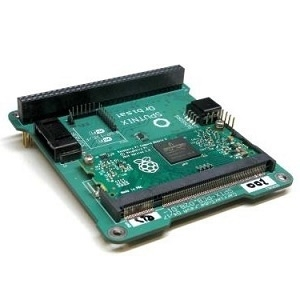 One of their flagship onboard computers is the SXC-MB-04-RPI, a flight-qualified computing unit that includes an integrated Raspberry Pi Compute Module 4. This board serves as a powerful processing unit with extensive I/O and communication support, enabling it to handle complex satellite operations, payload management, and ADCS functions. Its compact form and space-proven resilience make it suitable for missions requiring onboard autonomy.
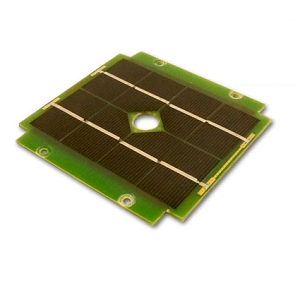 To meet energy demands, the SXC-SSE-03 solar panel provides efficient power generation using high-performance GaAs cells. Designed for CubeSat missions, this panel delivers optimized surface-area-to-power ratios, supporting stable operation across various orbits. The panel’s rugged structure ensures durability in space while maintaining lightweight characteristics essential for small satellites.
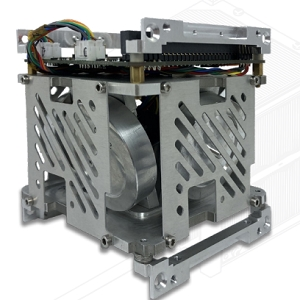 For attitude control, SPUTNIX offers the SXC-FW4-02 reaction wheel, a compact actuator that facilitates precise three-axis stabilization and maneuvering. It features low-vibration performance and is specifically engineered for CubeSats where power efficiency and pointing accuracy are essential. Completing the orientation system, the SX-SSM-01 sun sensor provides high-precision sun vector measurements.
This sensor is used for coarse and fine sun tracking, aiding spacecraft in establishing attitude awareness during initial deployment and ongoing orbital operations. It is a crucial component for energy optimization and autonomous orientation determination. These subsystems reflect SPUTNIX’s commitment to delivering modular, interoperable CubeSat technologies that reduce development time while ensuring mission reliability.
Microsatellite Devices
These products serve satellites ranging from 10 to 200 kg, including high-speed radio transmitters, GNSS antennas, X-band data links, SpaceWire routers, thermal regulation systems, and advanced attitude control sensors like fiber-optic gyroscopes and magnetometers. The modularity supports fast development for missions up to 800 km orbits with lifespans of 3–5 years.
SPUTNIX supports microsatellite missions with a suite of scalable and high-reliability subsystems engineered for satellites ranging from 10 to 200 kilograms. These components are purpose-built for long-duration missions and are compatible with SPUTNIX’s modular Pallada platform.
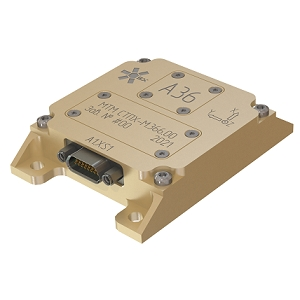 Among the key attitude determination solutions is the SX-SBOX-MAG-01, a compact three-axis magnetometer designed to assist with satellite orientation, damping control, and momentum unloading. Featuring a measurement range of ±100 µT and a low noise threshold of 100 nT, it enables accurate vector field readings essential for fine-tuned attitude control. The magnetometer is optimized for low-Earth orbit operations where precise control is critical.
SPUTNIX also offers components such as X-band data transmission systems, GNSS receivers, high-speed transceivers, and fiber-optic gyroscopes. These systems form the foundation for advanced payload operations, including Earth observation, maritime tracking, and scientific data collection. The company’s microsatellite electronics are engineered with extended operational lifespans, modular form factors, and proven flight heritage, making them ideal for both institutional and commercial space programs.
CubeSat Debug Tools
To support payload developers, SPUTNIX provides tools such as the SXC-MBB-03 debug baseboard for CubeSats. These tools streamline payload integration and testing, ensuring compatibility with SPUTNIX satellite buses and significantly reducing development cycles.
Satellite Platforms
SPUTNIX offers a family of standardized satellite buses that support varied mission sizes and complexities:
OrbiCraft-Pro CubeSat Platform Line
Ranging from 1U to 12U (SX1, SXC3, SXC6, SXC12), these platforms offer full backward compatibility, meaning payloads developed for smaller satellites can migrate to larger ones with minimal changes. This is ideal for educational and research projects seeking scalability.
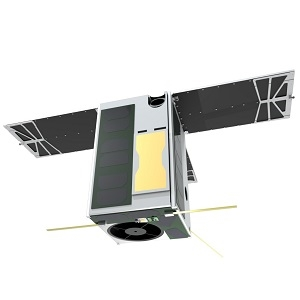 The SXC12 is a 12U CubeSat platform designed for Earth remote sensing missions. It includes a full ADCS suite with a star tracker, sun sensors, GPS, angular velocity sensor, and magnetometer. Offering up to 0.1° pointing accuracy and 0.01° stabilization, it supports up to 3 years of orbital operation in LEO. Its compact 30 kg structure supports advanced payloads and a data link of up to 500 Mbps.
Standard CubeSat Platform Configurations
These include service subsystems (power, communication, ADCS) and embedded software libraries, enabling teams to focus on mission payloads while relying on robust and qualified platform subsystems.
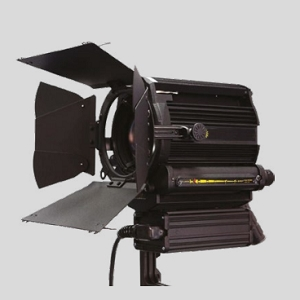 SPUTNIX’s SXL-SCoE-ADCS is a ground simulator for testing spacecraft ADCS performance under dynamic conditions. It supports payloads up to 160 kg and simulates solar, magnetic, and GPS conditions. The platform features a 10 µm air bearing gap, 0–4π steradian angular orientation, and precision light spot control ideal for validating ADCS algorithms and calibration procedures before launch.
Microsatellites on the Pallada Platform
The Pallada platform is a modular bus designed for small satellites between 80–200 kg. It integrates onboard service systems for Earth observation, AIS, and synthetic aperture radar missions.
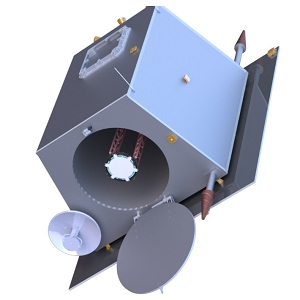 The Pallada platform is built for microsatellites with 80–200 kg mass. It accommodates 100 kg payloads with up to 1000 W peak power capacity and 500 W average. With a 27 V bus voltage and ±0.05° attitude knowledge accuracy, Pallada is optimized for demanding commercial and scientific missions in LEO.
Interface Control Documents (ICD)
SPUTNIX also provides publicly accessible ICDs for integration with SXC1, SXC3, and SXC6 satellite platforms, aiding customers and developers in building compatible payloads and reducing technical barriers.
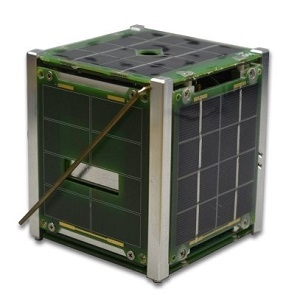 The SXC1 is a compact 1U CubeSat platform used as a mechanical and electrical ICD reference. With a 1.33 kg total mass and support for electromagnetic-type ADCS (B-dot damping, orientation modes), it includes detailed structural and interface standards for design validation and deployment alignment.