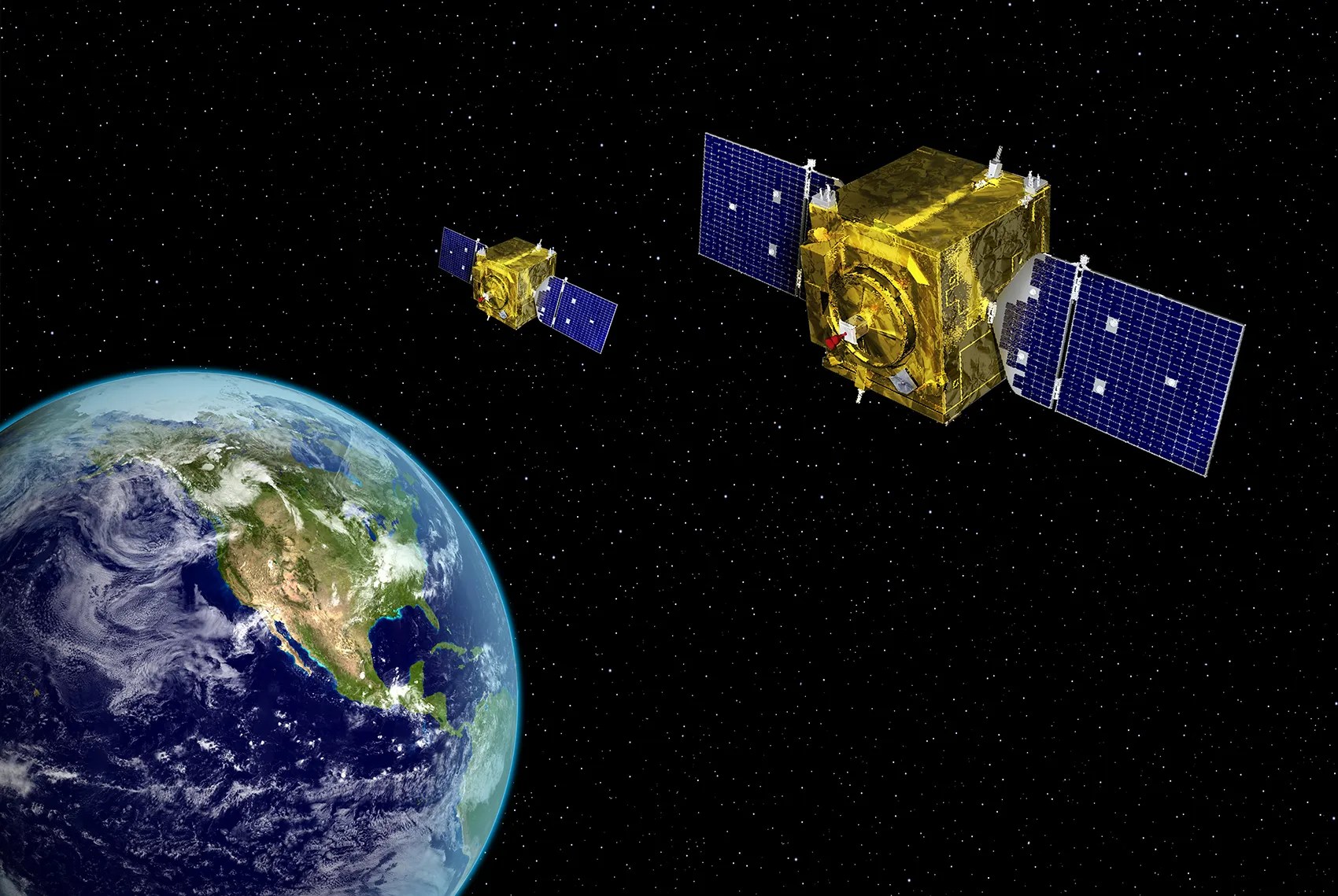
The U.S. Space Force expects to select contractors by March 2026 for its Geosynchronous Reconnaissance & Surveillance (RG-XX) program, a new generation of satellites aimed at improving monitoring of objects and potential threats in geostationary orbit, program officials said.
The RG-XX effort is designed as a “proliferated” constellation, relying on a larger number of commercially derived satellites rather than a small fleet of highly customized spacecraft. Proposals were requested in early January under an indefinite delivery, indefinite quantity (IDIQ) contract structure, with bids due in February, according to SpaceNews.
“RG-XX is really about building a proliferated GEO architecture to deliver surveillance reconnaissance for space warfighting at scale,” Lt. Col. Darren Ng, the program’s manager at Space Systems Command, said in comments reported by SpaceNews.
The program will succeed the existing Geosynchronous Space Situational Awareness Program (GSSAP), developed by Northrop Grumman, which consists of a limited number of high-end satellites. While GSSAP has provided detailed awareness of the GEO environment, Space Force officials say fuel constraints and the growing threat environment argue for a more numerous and resilient architecture.
Col. Bryon McClain, program executive officer for space combat power, said the service is seeking to capitalize on changes in the defense and commercial space industries. “GSSAP has provided us with a phenomenal capability,” McClain said. “What we’re trying to do with RG-XX is look at the opportunity to harness a lot of change in the defense industry since we started the GSSAP program.”
The Space Force plans to continue operating GSSAP alongside RG-XX during the transition. Launches of GSSAP satellites 7 and 8 are scheduled for mid-February 2026 aboard a United Launch Alliance Vulcan rocket, officials said, allowing time for RG-XX ground and space segments to mature.
The RG-XX approach aligns with broader U.S. efforts to counter growing counter-space capabilities from potential adversaries, including China and Russia. The service has indicated that the first RG-XX satellites could become operational around 2030, supplementing other space domain awareness systems such as the Silent Barker program.
Alongside space-based surveillance, the Space Force is upgrading its ground infrastructure. Northwood Space recently won a $49.8 million, three-year contract to modernize the military’s Satellite Control Network (SCN), which supports telemetry, tracking and command for government satellites. The award followed a demonstration in late 2024 and comes as the number of satellites in orbit continues to grow.
“The SCN handles a huge variety of consequential space missions for our government,” Northwood Chief Executive Bridgit Mendler said previously, adding that increased capacity is needed to support larger constellations.
In a separate development, the Space Force last month launched the GPS III SV09 satellite aboard a SpaceX Falcon 9 rocket after shifting the mission from a Vulcan launcher to maintain schedule flexibility. The satellite, equipped with enhanced anti-jamming capabilities, is the ninth in the GPS III series and is intended to strengthen the resilience of the U.S. navigation system.
Space Force officials say these parallel efforts—new surveillance satellites, upgraded ground systems and flexible launch options—reflect a broader acquisition shift toward faster integration of commercial technology.
“What we’re trying to do is move at the speed of relevance,” McClain said, referring to the service’s use of IDIQ contracts and commercial procurement pathways.