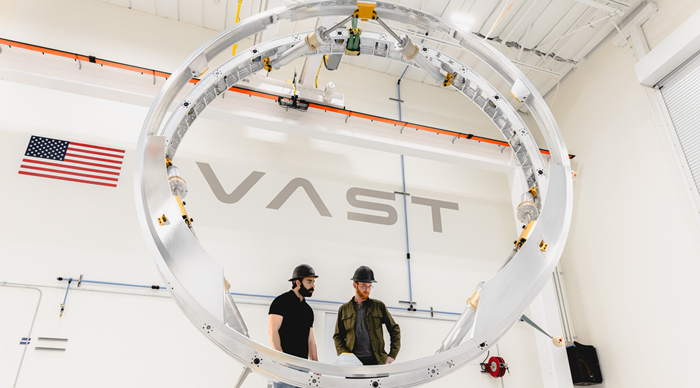
Vast, the company developing next-generation space stations, announced at the 41st Space Symposium the Large Docking Adapter, including its current development, its availability for purchase, and Vast’s plans to open-source its interface. Future space stations will use larger modules, have greater overall mass, and dock with a new generation of bigger crewed vehicles.
New docking standards and universal hardware are required for the future generation of space vehicles and habitats. The Large Docking Adapter is engineered to support higher mass and increased structural demands while enabling varying types of modules and vehicles to dock together. By open-sourcing the interface, slated for May 2026, Vast is intending to encourage industry-wide collaboration and accelerate the development of interoperable space systems.
The adapter is purpose-built to support:
- Launch vehicle separation of larger payloads with higher mass, providing the required load capability and stiffness
- Support for 2 to 20+ module structures, including module-to-module connections for scalable station architectures
- Compatibility with existing International Docking System Standard approach rates and loads
- Large crewed vehicle-to-station docking and standardized interfaces across commercial and international partners
Engineered for Strength, Scale and Accessibility
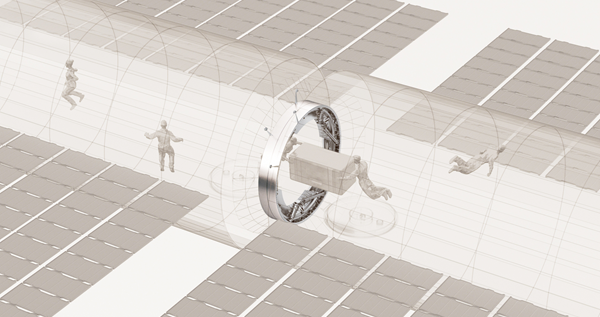
Designed for the structural and operational demands of next-generation stations, the adapter delivers substantial performance improvements. The androgynous architecture allows any two compatible vehicles or modules to dock without predefined active/passive roles. This architectural feature enables more optionality in orbit to accommodate future increased cadence of crew and payload arrivals and departures in addition to easing logistical burdens.
System components include a soft-capture system with petals, latches, and six passive actuators and a hard-capture system with alignment pins, twelve powered bolts, and redundant, androgynous pressure seals.These features provide the structural strength and stiffness required for larger stations while improving internal accessibility for crew and payload operations. This structure is up to 30 times more rigid than the International Docking Adapter. The adapter can accommodate up to a 6.6 m² pressurized opening area, enabling greater crew and cargo transfer.