
The NASA General Environmental Verification Standard (GEVS) is a foundational document in aerospace engineering that outlines comprehensive test methodologies for verifying the structural integrity and operational reliability of space systems. Developed and maintained by NASA’s Goddard Space Flight Center (GSFC), GEVS acts as a critical quality assurance framework for evaluating spacecraft components, subsystems and entire assemblies can survive and function under the extreme environmental stresses encountered during launch, orbit and extended mission durations in space. Environmental testing is a mandatory step in space mission planning, and GEVS provides a unified, standardized approach to it. For both government and commercial missions, adherence to GEVS helps guarantee reliability, safety and performance in high-stakes environments.
GEVS stands for General Environmental Verification Standard a document that specifies environmental testing requirements for spacecraft hardware. As a NASA standard, it outlines minimum acceptable practices and test thresholds that equipment must meet to demonstrate its ability to withstand the spaceflight lifecycle, from ground handling to launch and orbital operations. The standard is issued and updated by NASA GSFC, and is widely referenced by aerospace contractors, system integrators, and satellite developers. It encompasses a broad spectrum of mechanical, thermal and acoustic stress simulations, making it a holistic framework for verifying the robustness of both individual components and complete space systems.
GEVS includes detailed guidelines for performing tests such as:
- Random Vibration Tests – to simulate the mechanical stress during rocket launch.
- Thermal Vacuum Tests (TVAC) – to replicate the vacuum and temperature swings in space.
- Shock Testing – to assess performance under sudden impulses (e.g., stage separation).
- Acoustic Testing – to simulate the high-decibel noise levels experienced during launch.
- Sine Burst and Sine Vibration – for resonant frequency identification and endurance assessment.
These tests are typically conducted on both engineering qualification units (EQUs) and flight units (FUs) to ensure that the hardware meets required margin-of-safety thresholds before integration into a mission.
Role of GEVS in the Satellite and Spacecraft Lifecycle
GEVS plays a vital role in the design verification and qualification phases of satellite and spacecraft development. During these phases, engineers use GEVS to plan environmental test campaigns that validate a product’s capability to function as intended throughout its operational lifespan. This includes both qualification testing (verifying that a design meets requirements) and acceptance testing (verifying that a manufactured unit conforms to the qualified design). For instance, a satellite subsystem such as a power processing unit (PPU), star tracker, or antenna would be subjected to thermal cycles, vacuum environments, and vibration tests in accordance with GEVS specifications. This ensures that the unit can maintain performance across orbital temperatures ranging from -150°C to +120°C, or endure the violent forces of a 40g shock event during separation. By complying with GEVS, manufacturers and mission planners can also demonstrate compatibility with launch providers, as many commercial launch services require adherence to GEVS or equivalent standards as part of their payload integration criteria.
Purpose of NASA GEVS
The primary objective of the NASA General Environmental Verification Standard (GEVS) is to provide a consistent and robust framework for verifying that spacecraft systems and components are capable of surviving the extreme conditions they will encounter from launch through mission completion. As space missions become more ambitious and hardware integration more complex, GEVS acts as a vital assurance tool to confirm the readiness and reliability of space-bound technologies. One of the core functions of GEVS is to ensure that spacecraft and satellite hardware can withstand the mechanical stresses of launch. During liftoff, aerospace systems are subjected to intense vibration, high acoustic loads, and shock events. These can potentially damage or degrade sensitive equipment if not properly mitigated through pre-flight testing. GEVS prescribes test methodologies that simulate these conditions, thereby confirming the mechanical integrity of systems before they leave Earth. In addition to launch verification, GEVS plays a pivotal role in confirming that systems will operate reliably in the harsh space environment. Once in orbit, satellites and spacecraft are exposed to extreme temperature fluctuations, radiation, vacuum conditions, and microgravity. GEVS outlines thermal vacuum tests, thermal cycling protocols, and radiation exposure tests that help engineers evaluate how systems will perform in these challenging conditions. This step is essential for minimizing in-orbit failures, which are costly and often irreparable.
GEVS also ensures that systems maintain their intended functionality for the entire duration of the mission. This is particularly important for long-term missions, such as interplanetary probes or geostationary satellites, which must remain operational for years without direct maintenance. By simulating long-duration exposure to stressors like thermal fatigue, mechanical wear, and material degradation, GEVS helps validate the design lifespan of each component. GEVS applies to both Commercial Off-the-Shelf (COTS) components and custom-engineered flight hardware. Given the increasing use of COTS parts to reduce development time and costs, it is crucial that these components are tested to the same rigorous standards as custom-built systems. GEVS provides test levels and acceptance criteria to qualify such components, ensuring they are space-ready even if originally designed for terrestrial use.
Key Features of NASA GEVS

1. Unified Testing Standard: One of the most critical strengths of the NASA General Environmental Verification Standard (GEVS) is its ability to serve as a unified testing standard across a wide variety of missions, hardware providers, and engineering teams. By establishing a single, comprehensive set of test procedures, GEVS reduces the variability and subjectivity that can arise when multiple contractors or organizations define their own environmental test regimes. This standardization streamlines collaboration between NASA centers, commercial partners, and subcontractors by ensuring everyone is working from the same baseline expectations. Unified procedures also improve system compatibility and integration across hardware sourced from different vendors. When flight components are manufactured by multiple suppliers, it’s essential that each undergoes consistent verification processes. GEVS addresses this by reducing ambiguity in test execution, thereby mitigating development risk and ensuring a smoother integration process. The standard ultimately helps projects stay on schedule and within budget while upholding NASA’s rigorous reliability requirements.
2. Customizable Guidelines: Despite its standardized nature, GEVS is not a one-size-fits-all document. One of its major strengths lies in its flexibility and customizability. Engineers are encouraged to tailor test plans based on the mission’s classification, budget constraints, and acceptable risk levels. NASA missions are typically categorized into classes—Class A (high priority, human-rated or flagship missions) through Class D (low-cost, lower-risk tolerance demonstrations). GEVS accommodates all these mission types by offering scalable test severities, durations, and margin allowances. This means that a highly sensitive, long-duration interplanetary mission might require stringent thermal and vibration testing, whereas a short-term CubeSat mission in LEO could follow a less intensive test profile. This modularity allows for effective risk management, ensuring that resources are allocated where they are most needed, while still maintaining an adequate level of verification for every flight element.
3. Applicable to Various Spacecraft Classes: Another standout feature of NASA GEVS is its broad applicability across a wide range of spacecraft and mission profiles. The standard is designed to support testing for everything from small, rapidly developed CubeSats to massive geostationary communication satellites and deep-space robotic missions. This versatility is vital in an era where space missions are becoming increasingly diverse in both scope and complexity. For instance, low Earth orbit missions, such as Earth observation satellites or LEO constellations may face repeated thermal cycling and higher drag-related disturbances. On the other hand, geosynchronous orbit (GEO) platforms experience prolonged radiation exposure and more stable thermal environments, but require long-term component durability. Deep-space missions to Mars, Jupiter, or beyond must survive intense launch vibrations and extreme thermal environments far from the Sun. GEVS addresses all of these challenges by offering environmental test methodologies that can be adapted to each mission type, ensuring comprehensive and relevant qualification across the full spectrum of spaceflight applications.
Major Environmental Tests Outlined in NASA GEVS
The NASA General Environmental Verification Standard (GEVS) outlines a rigorous and systematic suite of environmental tests designed to simulate the real-world conditions a spacecraft and its subsystems will encounter during launch and spaceflight. These tests ensure the structural and functional integrity of satellite components under extreme physical and environmental stresses. Each category of testing plays a critical role in validating spacecraft readiness, from the intense forces of launch to the harsh conditions of space.
1. Vibration Testing: Vibration testing is essential for replicating the mechanical stresses encountered during a spacecraft’s launch phase. Rocket launches subject spacecraft to intense vibrational loads due to engine thrust, aerodynamic forces, and structural resonances. GEVS mandates both random vibration and sine sweep testing to evaluate whether components can withstand these conditions without failure. Random vibration testing involves exposing hardware to a broad spectrum of frequencies simultaneously, simulating the chaotic vibrational profile of launch. Sine sweep testing, on the other hand, incrementally sweeps through specific frequencies to detect resonant points that could lead to mechanical fatigue or failure. The standard clearly distinguishes between qualification levels which test the limits of component robustness and acceptance levels, which verify that production units meet required performance thresholds.
2. Acoustic Testing: Acoustic testing addresses the extreme sound pressure levels generated during liftoff, especially near the launch pad. Rocket engines create an acoustic environment with noise levels exceeding 140 decibels, which can induce structural vibrations and potentially damage sensitive instruments or electronics. GEVS prescribes the use of reverberant acoustic chambers where spacecraft or subsystems are exposed to these high-decibel environments. The goal is to validate the efficacy of acoustic shielding, damping materials, and component fastening systems. This test ensures that the spacecraft structure remains intact and mission-critical hardware remains operational throughout and after launch.
3. Shock Testing: Shock testing is designed to simulate abrupt mechanical shocks encountered during stage separations, pyrotechnic actuations (e.g., bolt cutters or explosive devices), and deployment events such as solar array extension or antenna release. These events introduce high-frequency, high-amplitude shock waves that can compromise delicate structures or electronic circuitry. GEVS includes pyroshock simulations, which replicate the shock environments caused by explosive devices, and mechanical shock testing, which recreates sudden impacts using mechanical means. By verifying the spacecraft’s resilience to such transient forces, these tests ensure reliable performance of separation mechanisms and post-deployment operations.
4. Thermal Vacuum (TVAC) Testing: Spacecraft operate in a vacuum environment with extreme temperature variations, often swinging between -150°C in shadow and +120°C in sunlight. GEVS mandates thermal vacuum (TVAC) testing to simulate these spaceborne conditions. In TVAC chambers, spacecraft are exposed to repeated thermal cycles under vacuum to assess thermal balance, material stability, and electronic performance. These tests help identify issues such as outgassing the release of trapped gases in materials that can contaminate optics or sensors and thermal expansion, which may cause mechanical stress or misalignments. TVAC testing is also crucial for evaluating the durability of thermal coatings, adhesives, and multilayer insulation (MLI).
5. Electromagnetic Compatibility (EMC) Testing: Modern spacecraft carry a multitude of electronic systems that must operate simultaneously without interfering with each other. Electromagnetic compatibility (EMC) testing evaluates the spacecraft’s ability to operate reliably in the presence of internal and external electromagnetic interference (EMI). GEVS includes both radiated emissions testing, which measures the amount of electromagnetic energy emitted by onboard systems, and conducted emissions testing, which focuses on interference transmitted through power and signal lines. Additionally, susceptibility testing is conducted to determine whether systems are immune to EMI from other onboard or nearby sources. EMC testing ensures that the spacecraft’s communication, navigation, and control systems remain functional and error-free in the complex electromagnetic environment of space.
GEVS and Mission Risk Classes
The NASA General Environmental Verification Standard (GEVS) is designed with flexibility in mind, especially when addressing the varying risk profiles of space missions. NASA classifies missions into four major risk categories—Classes A through D—based on factors such as mission duration, budget, scientific or strategic importance, and tolerance for failure. These risk classes help determine how rigorously environmental tests must be applied under the GEVS framework.
Class A missions represent the most critical and highest-stakes undertakings such as flagship planetary exploration missions or national security payloads. These missions demand maximum reliability and resilience, and as such, GEVS requires full environmental qualification testing with added safety margins. Every component, subsystem, and assembly must undergo extensive testing under the harshest simulated conditions, including extended vibration, shock, and thermal vacuum cycles, to ensure zero tolerance for failure.
Class B missions, while still significant, are slightly less risk-averse. These might include long-term Earth observation satellites or important scientific payloads that have moderate redundancy or backup plans. GEVS still mandates comprehensive testing for Class B, but the safety margins and intensity may be somewhat reduced compared to Class A, offering a balance between cost-efficiency and mission assurance.
Class C and D missions are typically shorter in duration, lower in cost, or involve experimental or technology demonstration payloads—such as CubeSats, university-led experiments, or commercial low-Earth orbit missions. For these classes, GEVS supports selective environmental testing, allowing for reduced stress margins and shorter test durations. This enables faster development timelines and lower costs while still ensuring a baseline level of hardware qualification suited to the mission’s limited scope and acceptable risk levels.
By offering scalable testing standards across these risk categories, GEVS helps NASA and its industry partners make strategic decisions that balance mission reliability with development cost and schedule. This adaptability is one of GEVS’s key strengths, ensuring it remains relevant across a wide array of missions ranging from deep space explorations to rapid-turnaround CubeSat projects.
Why NASA GEVS Matters in Modern Space Missions
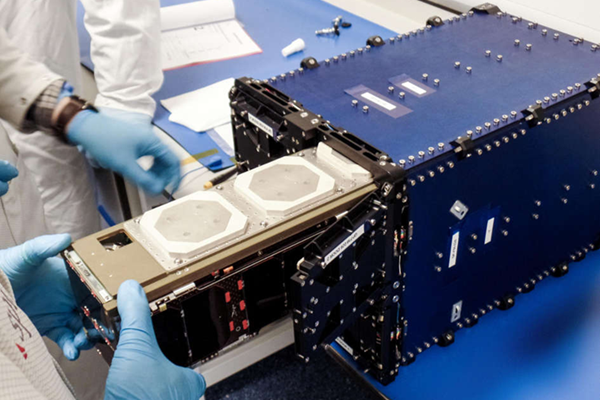
The General Environmental Verification Standard (GEVS) plays an increasingly vital role in the context of modern space exploration and satellite deployment. As the space industry evolves with new technologies, stakeholders, and mission types, a standardized environmental testing framework like GEVS becomes essential for ensuring mission success, cost efficiency and global collaboration.
1. Growing Use of Commercial Hardware: One of the most significant shifts in recent years is the increased reliance on Commercial Off-the-Shelf (COTS) components in spacecraft design. While traditional space hardware is custom-built and rigorously qualified for harsh space environments, COTS hardware often lacks native space-grade assurance. However, the cost and time advantages of COTS are too substantial to ignore, particularly for small satellite missions and startups. GEVS bridges this gap by establishing a clear and reliable framework to test and validate COTS components, ensuring they meet the minimum environmental durability needed for successful deployment. This reduces the risk of premature hardware failures while enabling broader adoption of commercial technologies in space systems.
2. Increasing Launch Cadence: With the democratization of space and the rapid emergence of small satellite constellations, lunar missions, and interplanetary payloads, the frequency of space launches has increased significantly. In such a high-tempo environment, delays due to hardware qualification issues can cascade and disrupt mission timelines. GEVS helps address this challenge by providing standardized environmental test protocols, which streamline the verification process and promote consistency across different projects and vendors. GEVS reduces unnecessary rework caused by in-orbit component failures or testing discrepancies, ultimately helping teams stay on schedule and within budget.
3. Enabling Private Space Innovation: The rise of private space companies and public-private partnerships has introduced new players, design philosophies, and accelerated timelines into the space ecosystem. In this dynamic setting, a consistent and well-established environmental verification methodology is critical. GEVS provides a common validation platform that both NASA and commercial entities can follow, promoting uniformity in component reliability standards. This shared framework facilitates smoother cross-agency collaboration, supports international partnerships, and ensures interoperability between government and commercial spacecraft components. It also instills confidence in investors and stakeholders by demonstrating that hardware has undergone industry-accepted testing protocols.
Key Benefits of Adopting NASA GEVS
The General Environmental Verification Standard (GEVS) by NASA offers a structured and proven approach to testing and validating space systems and components. It ensures that hardware intended for orbital or interplanetary missions is thoroughly evaluated for resilience under the extreme conditions of launch and space environments. Adopting GEVS aligns projects with NASA’s stringent engineering expectations and also provides a wide range of benefits that enhance the overall quality, safety and efficiency of a mission.
- Reduces Mission Failure Risks: GEVS acts as a preventive layer against mission-critical failures by thoroughly testing spacecraft systems under simulated mechanical, thermal, and vibrational stresses. By identifying potential weaknesses on the ground, engineers can resolve defects that could otherwise result in catastrophic failures in orbit. This systematic approach dramatically reduces the probability of in-flight anomalies, spacecraft malfunctions, or total mission loss. Especially for high-value or long-duration missions, this proactive risk mitigation is invaluable.
- Ensures Space Environmental Durability: The space environment is exceptionally harsh, with fluctuating temperatures, vacuum pressures, radiation, and mechanical stresses during launch and deployment. GEVS ensures that spacecraft hardwareboth structural and electronic is capable of surviving and operating effectively under these extreme conditions. Through environmental tests such as vibration, shock, thermal cycling, and vacuum exposure, GEVS verifies the robustness and longevity of the components, thereby ensuring that they continue to perform reliably throughout the mission’s life.
- Speeds Up Verification and Integration: By providing a standardized testing framework, GEVS eliminates ambiguity in the verification process and accelerates the overall integration timeline. Engineers and contractors can refer to well-defined procedures instead of reinventing testing protocols for each mission. This uniformity reduces delays during the development and integration phases, making it easier to coordinate among multiple teams, vendors and subcontractors. Faster verification also allows room for earlier detection of issues, giving engineers more time to rectify them without affecting launch schedules.
- Lowers Overall Lifecycle Costs: GEVS can lead to significant cost savings over the entire lifecycle of a mission. Early testing and validation reduce the risk of post-launch failures, which are not only expensive to investigate but may render the mission unrecoverable. Additionally, by reducing redesign cycles and minimizing rework through early detection of non-compliance, GEVS helps teams stay within budget. For missions using COTS hardware, GEVS testing ensures that inexpensive components meet required standards without compromising on reliability, offering a cost-effective path to space qualification.
- Enhances Mission Confidence and Success Rates: Perhaps the most valuable benefit of GEVS is the increased confidence it brings to mission planners, engineers, investors, and stakeholders. Knowing that every critical component has passed rigorous environmental testing builds assurance in the overall integrity of the mission. This heightened confidence translates to smoother launch operations, more accurate risk assessments, and stronger support from funding agencies and collaborators. Ultimately, adherence to GEVS contributes directly to higher mission success rates, reinforcing the standard’s essential role in modern space programs.
Future Outlook and Evolving Trends of NASA GEVS

- Accommodating AI-Powered Satellite Subsystems: One of the most significant trends in modern spacecraft design is the integration of artificial intelligence (AI) and machine learning (ML) algorithms for onboard autonomy. Satellites can self-optimize their orbits, analyze sensor data in real time, and adapt to unexpected situations without ground intervention. As these intelligent systems become more prevalent, GEVS may need to incorporate dedicated verification procedures for AI algorithms, such as stress testing under space conditions, evaluation of autonomous fault recovery, and validation of learning models in unpredictable scenarios. These tests would ensure that AI-based subsystems remain reliable, secure, and mission-compliant even in the most extreme space environments.
- New Standards for Reusable Spacecraft: With the rise of reusable space vehicles and spacecraft platforms such as SpaceX’s Starship and future NASA Artemis components, the traditional one-and-done testing approach may no longer suffice. GEVS is likely to evolve by introducing life-cycle testing standards for reusable systems, including endurance testing, re-entry stress simulation, thermal fatigue assessments, and multiple-mission qualification protocols. These additions would help verify whether hardware can withstand repeated launch, orbit, and recovery cycles while maintaining performance across multiple missions. As space transportation shifts from expendable to sustainable and cost-efficient reusable architectures, GEVS will play a central role in ensuring these systems meet high safety and reliability thresholds.
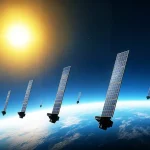
- Incorporating Testing for Low-Latency Communications and Cyber-Resilience: Modern satellite networks, such as Starlink and OneWeb, aim to provide high-speed, low-latency internet services on a global scale. These mega-constellations rely on real-time data routing, inter-satellite links, and software-defined networks, which demand precise communication system reliability and signal integrity. As such, GEVS is expected to integrate latency-focused testing criteria, addressing how hardware behaves under rapid data transmission conditions. Moreover, the increasing reliance on digital infrastructure raises the risk of cyberattacks. Future versions of GEVS may include cyber-resilience testing protocols to evaluate satellite hardware and software’s ability to resist and recover from digital intrusions, spoofing, and data corruption an area becoming increasingly vital for both commercial and defense-related missions.
NASA’s commitment to excellence and innovation ensures that GEVS remains a living standard, subject to continual refinement. As new mission types emerge ranging from Mars sample return and lunar infrastructure to deep-space observatories and autonomous swarms, GEVS will need to stay agile and adaptable. This commitment to evolution is already evident in NASA’s collaborative work with commercial space companies, academic institutions and international agencies.
The NASA Goddard Space Flight Center Environmental Verification Standard (GEVS) serves for ensuring the robustness and reliability of space missions. In an industry where precision and durability are paramount, GEVS acts as a comprehensive framework that rigorously bridges the gap between theoretical spacecraft design and real-world environmental conditions. By mandating a suite of standardized tests ranging from vibration and shock to thermal vacuum and electromagnetic compatibility, GEVS ensures that every component and system aboard a spacecraft can endure the extreme forces encountered during launch and the harsh realities of space. In a rapidly evolving landscape defined by the emergence of reusable launch systems, commercial off-the-shelf hardware and high-frequency launch schedules, GEVS continues to adapt. Its modular and customizable nature allows it to serve missions of varying complexities, durations and risk tolerances.
Click here to learn more about NASA Space Standards