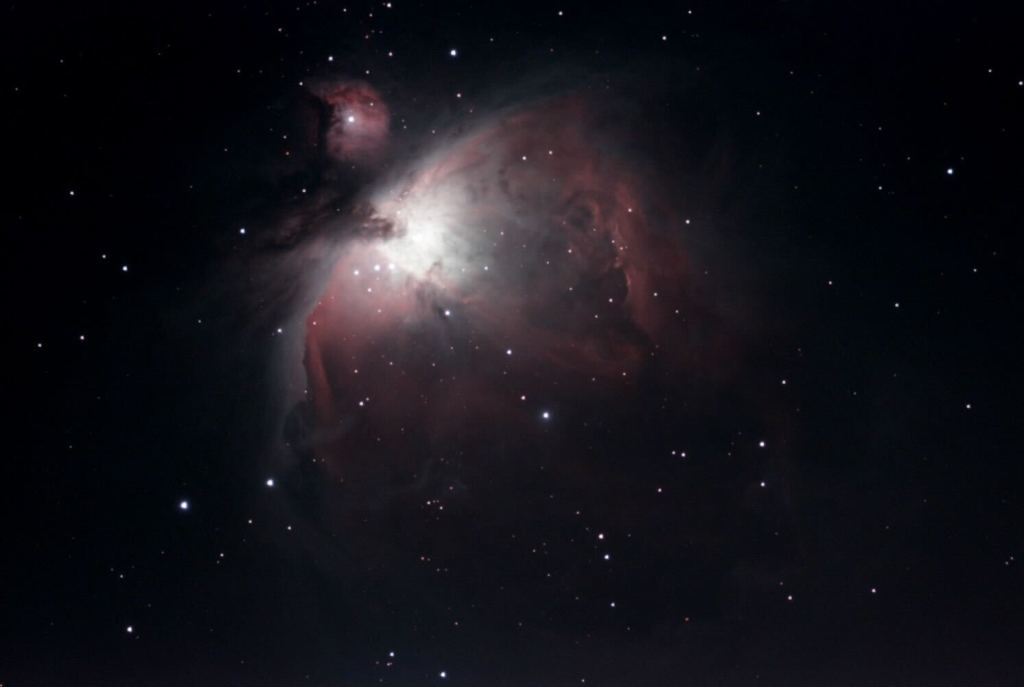
To say I was impressed would be an understatement. I was amazed at the quality and colors Stellina was able to capture and process. And knowing that I could even get the raw image files to process myself just added to the excitement.
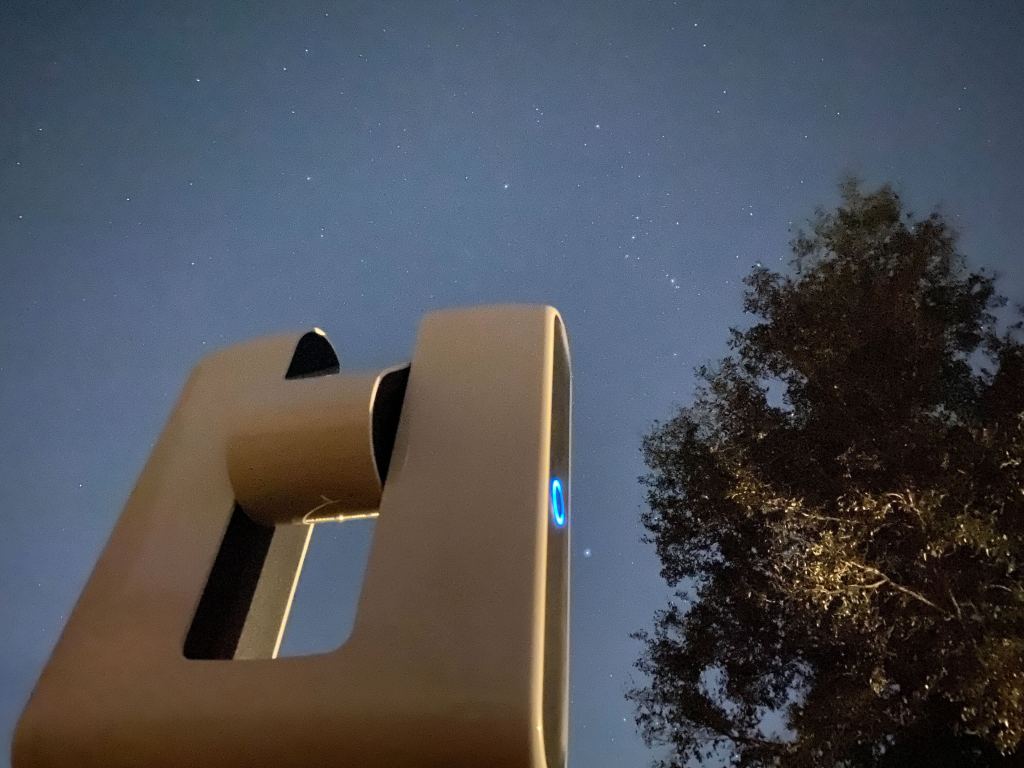
Every object you can photograph with Stellina has a recommended exposure time. This will allow the telescope to gather enough data to pull out details that would otherwise be faint. The Orion Nebula was the only target that I committed to getting the full time on during those first few nights. Afterward, I was excited to get an idea of how other targets would look for future nights, and expect more images with the full recommended time during my full review.
</p><p>” data-large-file=”https://spaceexplored.com/wp-content/uploads/sites/10/2022/02/Andromeda-Galaxy-Stellina-2-2-22.jpg?quality=82&strip=all&w=1024″ height=”687″ width=”1024″ src=”https://spaceexplored.com/wp-content/uploads/sites/10/2022/02/Andromeda-Galaxy-Stellina-2-2-22.jpg?w=1024″ alt=”” class=”wp-image-27824″ srcset=”https://spaceexplored.com/wp-content/uploads/sites/10/2022/02/Andromeda-Galaxy-Stellina-2-2-22.jpg 1493w, https://spaceexplored.com/wp-content/uploads/sites/10/2022/02/Andromeda-Galaxy-Stellina-2-2-22.jpg?resize=300,201 300w, https://spaceexplored.com/wp-content/uploads/sites/10/2022/02/Andromeda-Galaxy-Stellina-2-2-22.jpg?resize=768,515 768w, https://spaceexplored.com/wp-content/uploads/sites/10/2022/02/Andromeda-Galaxy-Stellina-2-2-22.jpg?resize=1024,687 1024w, https://spaceexplored.com/wp-content/uploads/sites/10/2022/02/Andromeda-Galaxy-Stellina-2-2-22.jpg?resize=350,235 350w, https://spaceexplored.com/wp-content/uploads/sites/10/2022/02/Andromeda-Galaxy-Stellina-2-2-22.jpg?resize=140,94 140w, https://spaceexplored.com/wp-content/uploads/sites/10/2022/02/Andromeda-Galaxy-Stellina-2-2-22.jpg?resize=150,101 150w” sizes=”auto, (max-width: 1024px) 100vw, 1024px”><figcaption>Andromeda Galaxy – 22m40s exposure time</figcaption></figure><p class=) I followed the Orion Nebula with the Andromeda Galaxy. This is a target that has been a personal pain to photograph with my equipment. Even though I didn’t reach the 30-minute exposure time that is recommended, it captured a great amount of detail.
I followed the Orion Nebula with the Andromeda Galaxy. This is a target that has been a personal pain to photograph with my equipment. Even though I didn’t reach the 30-minute exposure time that is recommended, it captured a great amount of detail.
</p><p>” data-large-file=”https://spaceexplored.com/wp-content/uploads/sites/10/2022/02/Cigar-Galaxy-Stellina-2-2-22.jpg?quality=82&strip=all&w=1024″ height=”687″ width=”1024″ src=”https://spaceexplored.com/wp-content/uploads/sites/10/2022/02/Cigar-Galaxy-Stellina-2-2-22.jpg?w=1024″ alt=”” class=”wp-image-27825″ srcset=”https://spaceexplored.com/wp-content/uploads/sites/10/2022/02/Cigar-Galaxy-Stellina-2-2-22.jpg 1509w, https://spaceexplored.com/wp-content/uploads/sites/10/2022/02/Cigar-Galaxy-Stellina-2-2-22.jpg?resize=300,201 300w, https://spaceexplored.com/wp-content/uploads/sites/10/2022/02/Cigar-Galaxy-Stellina-2-2-22.jpg?resize=768,516 768w, https://spaceexplored.com/wp-content/uploads/sites/10/2022/02/Cigar-Galaxy-Stellina-2-2-22.jpg?resize=1024,687 1024w, https://spaceexplored.com/wp-content/uploads/sites/10/2022/02/Cigar-Galaxy-Stellina-2-2-22.jpg?resize=350,235 350w, https://spaceexplored.com/wp-content/uploads/sites/10/2022/02/Cigar-Galaxy-Stellina-2-2-22.jpg?resize=140,94 140w, https://spaceexplored.com/wp-content/uploads/sites/10/2022/02/Cigar-Galaxy-Stellina-2-2-22.jpg?resize=1490,1000 1490w, https://spaceexplored.com/wp-content/uploads/sites/10/2022/02/Cigar-Galaxy-Stellina-2-2-22.jpg?resize=150,101 150w” sizes=”auto, (max-width: 1024px) 100vw, 1024px”><figcaption>Cigar Galaxy – 9 minute exposure time</figcaption></figure><p class=) The Cigar Galaxy is a target that I have never photographed myself. Knowing how dim it is coupled with the suburban light pollution around my house, it never came to mind. However, the light pollution filter that is integrated into the telescope helps. Again, I didn’t reach the recommended exposure time. This was where I called it a night.
The Cigar Galaxy is a target that I have never photographed myself. Knowing how dim it is coupled with the suburban light pollution around my house, it never came to mind. However, the light pollution filter that is integrated into the telescope helps. Again, I didn’t reach the recommended exposure time. This was where I called it a night.
The following night
</p><p>” data-large-file=”https://spaceexplored.com/wp-content/uploads/sites/10/2022/02/Flame-Nebula-Stellina-2-3-22.jpg?quality=82&strip=all&w=1024″ height=”677″ width=”1024″ data-id=”27827″ src=”https://spaceexplored.com/wp-content/uploads/sites/10/2022/02/Flame-Nebula-Stellina-2-3-22.jpg?w=1024″ alt=”” class=”wp-image-27827″ srcset=”https://spaceexplored.com/wp-content/uploads/sites/10/2022/02/Flame-Nebula-Stellina-2-3-22.jpg 2954w, https://spaceexplored.com/wp-content/uploads/sites/10/2022/02/Flame-Nebula-Stellina-2-3-22.jpg?resize=300,198 300w, https://spaceexplored.com/wp-content/uploads/sites/10/2022/02/Flame-Nebula-Stellina-2-3-22.jpg?resize=768,507 768w, https://spaceexplored.com/wp-content/uploads/sites/10/2022/02/Flame-Nebula-Stellina-2-3-22.jpg?resize=1024,677 1024w, https://spaceexplored.com/wp-content/uploads/sites/10/2022/02/Flame-Nebula-Stellina-2-3-22.jpg?resize=1536,1015 1536w, https://spaceexplored.com/wp-content/uploads/sites/10/2022/02/Flame-Nebula-Stellina-2-3-22.jpg?resize=2048,1353 2048w, https://spaceexplored.com/wp-content/uploads/sites/10/2022/02/Flame-Nebula-Stellina-2-3-22.jpg?resize=350,231 350w, https://spaceexplored.com/wp-content/uploads/sites/10/2022/02/Flame-Nebula-Stellina-2-3-22.jpg?resize=140,93 140w, https://spaceexplored.com/wp-content/uploads/sites/10/2022/02/Flame-Nebula-Stellina-2-3-22.jpg?resize=1513,1000 1513w, https://spaceexplored.com/wp-content/uploads/sites/10/2022/02/Flame-Nebula-Stellina-2-3-22.jpg?resize=150,99 150w” sizes=”auto, (max-width: 1024px) 100vw, 1024px”><figcaption>Flame Nebula – 31m20s exposure time</figcaption></figure><figure class=)
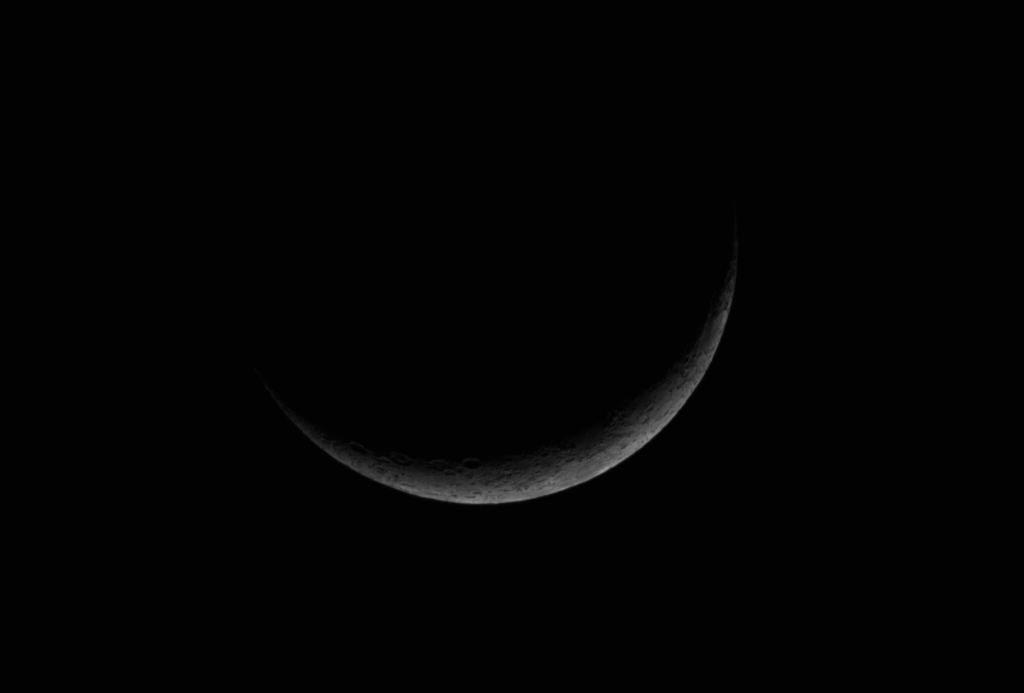
</p><p>” data-large-file=”https://spaceexplored.com/wp-content/uploads/sites/10/2022/02/Pleiades-Stellina-2-3-22.jpg?quality=82&strip=all&w=1024″ height=”673″ width=”1024″ data-id=”27828″ src=”https://spaceexplored.com/wp-content/uploads/sites/10/2022/02/Pleiades-Stellina-2-3-22.jpg?w=1024″ alt=”” class=”wp-image-27828″ srcset=”https://spaceexplored.com/wp-content/uploads/sites/10/2022/02/Pleiades-Stellina-2-3-22.jpg 2943w, https://spaceexplored.com/wp-content/uploads/sites/10/2022/02/Pleiades-Stellina-2-3-22.jpg?resize=300,197 300w, https://spaceexplored.com/wp-content/uploads/sites/10/2022/02/Pleiades-Stellina-2-3-22.jpg?resize=768,505 768w, https://spaceexplored.com/wp-content/uploads/sites/10/2022/02/Pleiades-Stellina-2-3-22.jpg?resize=1024,673 1024w, https://spaceexplored.com/wp-content/uploads/sites/10/2022/02/Pleiades-Stellina-2-3-22.jpg?resize=1536,1009 1536w, https://spaceexplored.com/wp-content/uploads/sites/10/2022/02/Pleiades-Stellina-2-3-22.jpg?resize=2048,1346 2048w, https://spaceexplored.com/wp-content/uploads/sites/10/2022/02/Pleiades-Stellina-2-3-22.jpg?resize=350,230 350w, https://spaceexplored.com/wp-content/uploads/sites/10/2022/02/Pleiades-Stellina-2-3-22.jpg?resize=140,92 140w, https://spaceexplored.com/wp-content/uploads/sites/10/2022/02/Pleiades-Stellina-2-3-22.jpg?resize=1522,1000 1522w, https://spaceexplored.com/wp-content/uploads/sites/10/2022/02/Pleiades-Stellina-2-3-22.jpg?resize=150,99 150w” sizes=”auto, (max-width: 1024px) 100vw, 1024px”><figcaption>Pleiades – 33m40s exposure time</figcaption></figure></figure><p class=) The following night I took Stellina for another spin. This time the Moon was high enough that I could capture an image. I was shocked when the picture appeared on my phone. I don’t know what I was expecting but the picture it got exceeded any expectations.
The following night I took Stellina for another spin. This time the Moon was high enough that I could capture an image. I was shocked when the picture appeared on my phone. I don’t know what I was expecting but the picture it got exceeded any expectations.
This night I planned on committing to the recommended exposure times for targets. The first object I chose was the Flame Nebula, located in the Orion constellation. I’ve captured this nebula before and knew it would be a challenge from my backyard. Overall the nebula is darker than I expected it would be but there is still great detail.
Next was the Pleiades star cluster. I knew this target would be an interesting test because the Pleiades is different than most star clusters; it has nebulosity. However, this nebulosity is hard to capture and can be a real tell between those just beginning in astrophotography and those who are experienced. After waiting for the recommended time I was sort of let down, but it was not the telescope’s fault. I didn’t anticipate the view of the star cluster to be so tight and excluding some of the stars. However, you can see some of the nebulosity that exists in the constellation in the areas around the brightest stars.
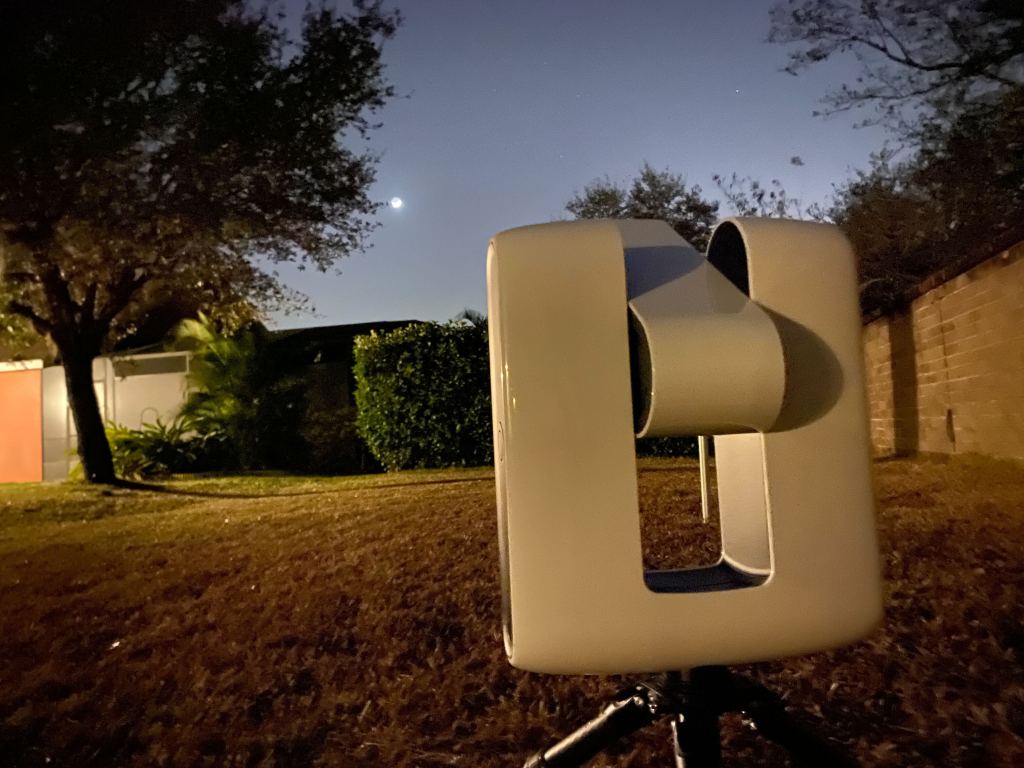
Overall, I am very excited to continue using Stellina. While every observation made so far has been from my backyard, I plan on taking it out to an area with darker skies. Also, look forward to a direct comparison piece between Stellina and the Unistellar eVscope 2. Once I can get more time under clear, night skies, I will publish my overall review of the Stellina telescope.
Want to help support Space Explored?
Directly support Jared by joining his Patreon (recurring support), or donate through Ko-Fi (one-off support)
Shop on Amazon to support Space Explored Writers.