
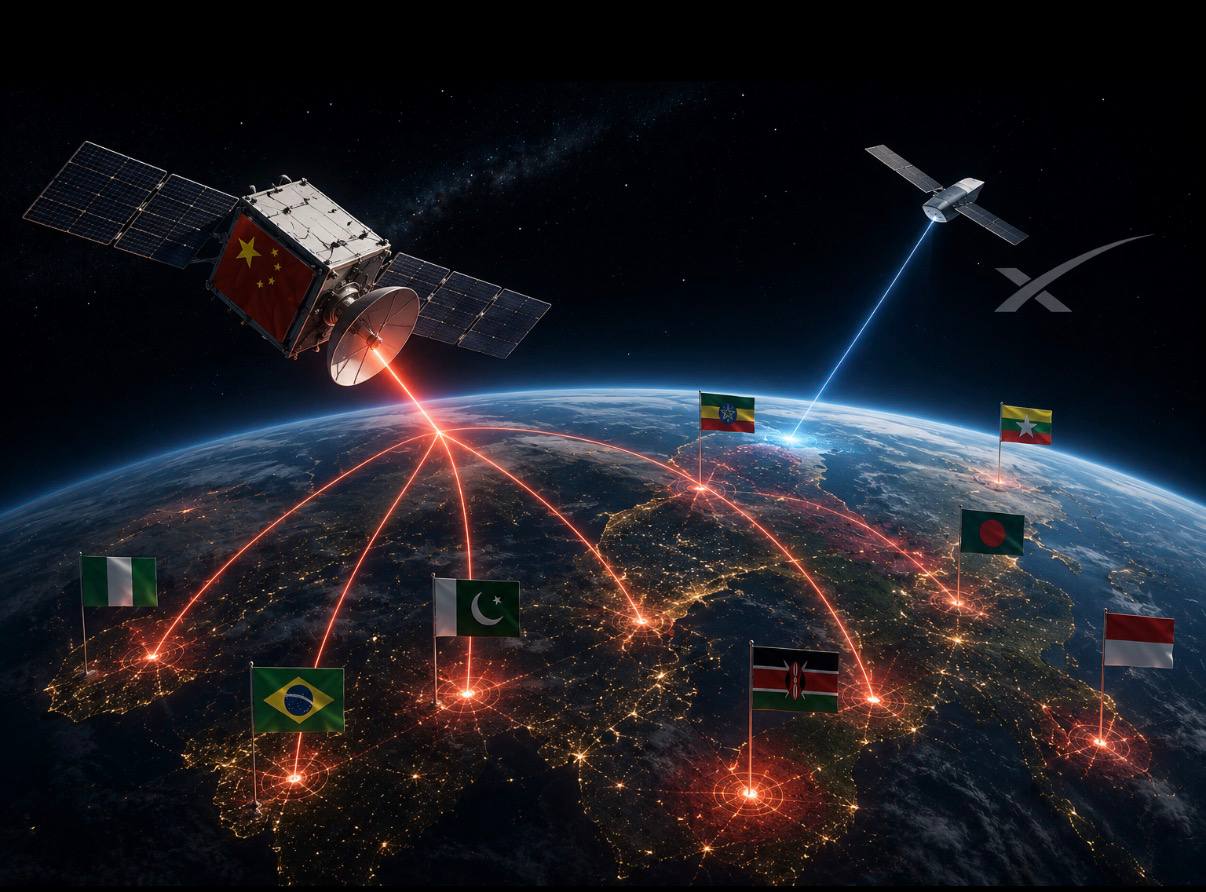
The competitive framing is explicit. China is targeting countries where Starlink has faced regulatory friction, sovereignty concerns, or geopolitical barriers that have prevented service launches. These are not marginal markets. They represent a category of governments that have either declined or been blocked from accessing SpaceX’s constellation for reasons outside the company’s immediate control.
India’s Starlink launch remains stalled, as previously reported on OST, making it one of the clearest examples of the gap China is now moving to fill. The Chinese effort appears designed to reach those governments before SpaceX can resolve the political and regulatory barriers that have kept its service out. The partnerships being pursued are with both national governments and regional operators, according to the available reporting.
The broader implication is structural. Satellite broadband competition is no longer a question of technical capability alone, despite Starlink having a clear first mover advantage. It is a question of which provider a government is willing to authorize, which geopolitical alignment a country prefers, and which operator arrives first with a signed agreement. China’s state backing gives it leverage in precisely those conversations where SpaceX, as a U.S. commercial entity, faces skepticism or outright exclusion. Markets that define themselves around digital sovereignty or non-alignment with Western technology providers now have a credible alternative with state-level support behind it.
The immediate pressure point is whether SpaceX can resolve its pending market access disputes, starting with India, before China’s partnerships advance from agreements to operational service. How many governments sign and how quickly those commitments translate to active deployments will determine whether this competitive push reshapes the satellite broadband market or remains a secondary challenge to Starlink’s expansion.