NASA will provide live coverage of launch activities for NISAR (NASA-ISRO Synthetic Aperture Radar), which is set to lift off at 8:10 a.m. EDT (5:40 p.m. IST), Wednesday, July 30, from Satish Dhawan Space Centre on India’s southeastern coast.
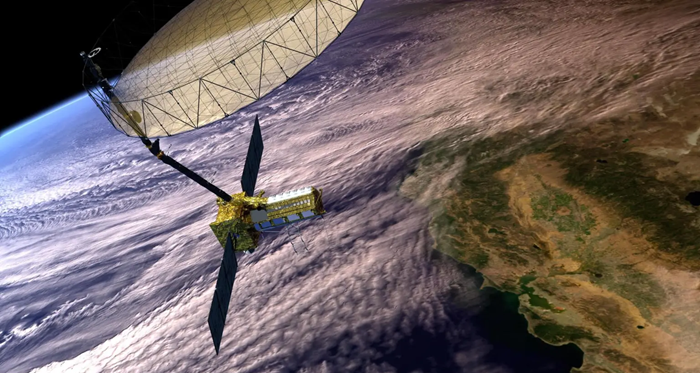
A collaboration between NASA and the Indian Space Research Organisation (ISRO), the first-of-its-kind satellite will lift off aboard an ISRO Geosynchronous Satellite Launch Vehicle. NASA-ISRO SAR (NISAR) is a Low Earth Orbit (LEO) observatory being jointly developed by NASA and ISRO. NISAR will map the entire globe in 12 days and provide spatially and temporally consistent data for understanding changes in Earth’s ecosystems, ice mass, vegetation biomass, sea level rise, groundwater, and natural hazards, including earthquakes, tsunamis, volcanoes, and landslides.
With its two radar instruments, an S-band system provided by ISRO and an L-band system provided by NASA, the NISAR mission will provide high-resolution data to help decision-makers, communities, and scientists monitor major infrastructure, agricultural fields, and movement of land and ice surfaces.
Hailed as a critical part of a pioneering year for United States – India civil space cooperation by President Trump and Prime Minister Modi during their visit in Washington in February, the NISAR launch will advance U.S. – India cooperation and benefit the U.S. in areas such as agriculture and preparation and response to disasters like hurricanes, floods, and volcanic eruptions.
NASA’s mission coverage is as follows (all times Eastern and subject to change based on real-time operations):
Monday, July 28
12 p.m. – Prelaunch teleconference with the following participants:
- Karen St. Germain, director of Earth science, NASA Headquarters
- Gerald Bawden, NISAR program scientist, NASA Headquarters
- Shanna McClain, Disasters program manager, NASA Headquarters
- Phil Barela, NISAR project manager, NASA Jet Propulsion Laboratory (JPL)
- Marco Lavalle, NISAR deputy project scientist, NASA JPL
Wednesday, July 30
7 a.m. – Launch coverage begins on NASA+ and YouTube.
The launch broadcast begins from NASA’s Jet Propulsion Laboratory in Southern California, where the U.S. portion of the mission is managed.