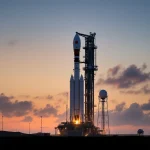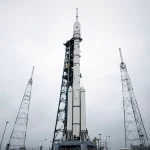
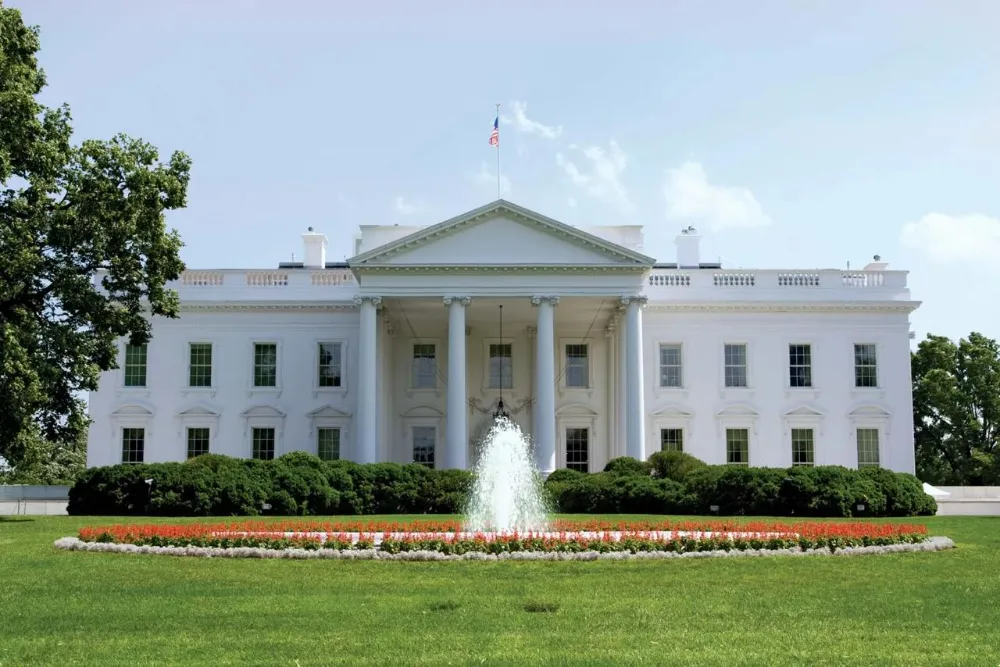
The White House is targeting more than 1,000 space launches and reentries from U.S. soil every year by 2030 under a new national space transportation policy signed by President Donald Trump on Aug. 20, 2026.
The National Security Presidential Memorandum replaces the previous National Space Transportation Policy issued in 2013 and establishes a commercial-first framework intended to expand launch infrastructure, accelerate regulatory approvals and strengthen the U.S. space transportation industrial base.
The scale of the target is substantial. The United States recorded 178 launches in 2025, meaning the new objective would require launch and reentry capacity to increase by more than five times in just four years. The 2025 total was already roughly 10 times the U.S. launch rate recorded in 2013, with SpaceX accounting for the overwhelming majority of commercial activity.
The policy goes beyond launch vehicles themselves. It calls for additional federal launch and reentry sites, more efficient range scheduling, priority airspace for spaceflight corridors, expanded access to radio spectrum, faster environmental reviews and closer public-private development of space transportation infrastructure.
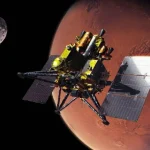
At the same time, NASA is being directed to expand commercial transportation beyond Earth orbit, including commercial logistics to and from the Moon, robotic access to Mars and studies of commercial architectures for human missions to Mars.
A Fivefold Expansion in Four Years
The numerical target is the clearest indication of how aggressively the administration wants to expand the U.S. space transportation system.
The memorandum states that U.S. space transportation ranges must be able to support more than 1,000 launches and reentries annually by 2030. That does not mean that every mission will be an orbital launch. The policy encompasses a broader transportation architecture spanning suborbital operations, very-low Earth orbit, conventional orbital missions, lunar operations, Lagrange points and deep space.
Using the 2025 baseline of 178 launches, reaching 1,000 annual launches would require an increase of more than 800 missions per year. Averaged across a full year, 1,000 missions would amount to roughly 2.7 launches or reentries every day.
That changes the infrastructure problem fundamentally. At lower launch rates, governments can manage bottlenecks through scheduling, temporary restrictions on airspace and relatively limited launch-site capacity. At the scale envisioned by the new policy, those bottlenecks become industrial constraints.
The White House is therefore treating launch capacity as infrastructure rather than simply as a collection of rockets. Roads, propellant supplies, payload processing, range operations, airspace management, communications spectrum, reentry zones and skilled labor all become part of the transportation system.
Federal Launch Sites Become a Commercial Growth Platform
A central element of the memorandum is greater commercial access to government-owned space infrastructure.
Federal agencies are directed to encourage co-development of launch and reentry infrastructure with private companies, including commercial investment, leases and public-private partnerships for improvements on federal property. Agencies are also instructed to facilitate commercial access to federal launch and reentry sites.
The policy calls for federal launch and reentry ranges to operate in a way that accommodates both government and nongovernment users. Within 180 days, the relevant agencies are expected to develop range-scheduling criteria designed to maximize commercial use while preserving government requirements, with range schedules to be published regularly.
This could become particularly important as reusable launch vehicles increase flight rates.
A conventional expendable launch campaign can be scheduled around relatively infrequent missions. A highly reusable vehicle operating on a rapid turnaround cycle requires something closer to an airline-style transportation network, in which launch pads, landing zones, tracking systems, maintenance facilities and airspace are coordinated continuously.
The memorandum also calls for federal agencies to identify additional locations for launch infrastructure and integrate launch and reentry management into modernization of the U.S. air traffic control system.
Within 90 days, the Interior Department is directed to identify federal land that could serve as an additional designated federal reentry site. The Transportation Department must subsequently evaluate the safety criteria for such a site, while the Commerce Department is tasked with developing a broader development plan within 240 days.
Airspace and Spectrum Are Becoming Launch-Capacity Constraints
The policy recognizes that increasing rocket frequency cannot be achieved solely by building more launch pads.
Launches and reentries occupy portions of the national airspace system and can require aircraft diversions, temporary flight restrictions and coordination among multiple government agencies. At very high flight rates, these disruptions can become an economic constraint for the wider aviation system.
The memorandum therefore directs agencies to designate priority airspace for critical launch corridors and integrate space transportation activities into broader air traffic control modernization.
Radio spectrum is another limiting resource. Launch vehicles and spacecraft require reliable communications for telemetry, tracking, command and other functions. As launch frequency rises, spectrum coordination becomes increasingly important.
The Commerce Department and Federal Communications Commission are directed to ensure reliable spectrum access for commercial and federal launch, reentry, recovery and on-orbit activities. They must report on their approach within 180 days and every two years thereafter.
The combination of airspace and spectrum measures shows that the administration views space transportation as an integrated national infrastructure system rather than a stand-alone aerospace activity.
Commercial Operators Are Being Put at the Center of Government Space Transportation
The new policy makes a significant shift in the relationship between government transportation programs and private launch companies.
Federal agencies are directed to favor commercial space transportation services when meeting government requirements. They are also instructed to refrain from conducting government transportation activities that preclude, discourage or compete with U.S. commercial space transportation, except when necessary for public safety or national security.
For government payloads, the policy generally calls for U.S.-manufactured launch vehicles and space transportation systems, with exceptions for certain international cooperative programs, technology demonstrations where no comparable U.S. service exists and hosted payload arrangements.
The government is also directed to maintain multiple reliable transportation options for key orbital regimes and payload classes. That provision is important because commercial dependence does not eliminate the need for resilience.
A transportation system dominated by a single provider could create its own strategic vulnerability. Multiple launch providers, multiple vehicle types and multiple launch locations can provide alternatives when a vehicle is grounded, a launch site is damaged or a technical problem interrupts operations.
The memorandum explicitly calls for technologies and concepts that could restore or augment space capabilities rapidly during a crisis, conflict or launch-system failure.
SpaceX Shows Both the Opportunity and the Scale of the Challenge
SpaceX is the clearest demonstration of what high-frequency commercial launch can already look like.
The company conducted 170 launches in 2025 and deployed about 2,500 satellites, according to reporting surrounding the new policy. That performance accounted for most of the U.S. launch activity and helped push national launch cadence to a historic level.
But the administration’s 1,000-launch objective is much larger than simply expanding SpaceX’s existing operations.
In May, the head of the Federal Aviation Administration said SpaceX was aiming to reach 10,000 launches annually within five years. SpaceX has also outlined extraordinarily ambitious plans for expanding satellite deployment, including a proposal announced in January for a constellation of as many as 1 million satellites intended to orbit Earth and support space-based power generation for artificial-intelligence data centers.
Whether such concepts ultimately reach their proposed scale is separate from the policy question. What matters for transportation infrastructure is that the commercial sector is increasingly designing spacecraft and launch architectures around much higher flight rates than traditional space programs.
The new policy could therefore reinforce the development of fully or partially reusable launch systems, automated ground operations, rapid payload processing and high-throughput ranges.
For smaller launch companies, however, the implications are more complicated. More federal infrastructure and faster approvals could lower barriers to entry, but a market dominated by an operator capable of flying at extraordinary frequency could also make it difficult for less mature companies to achieve competitive economics.
NASA’s Role Expands From Exploration to Commercial Transportation
The policy also changes the transportation role assigned to NASA.
NASA is directed to develop a lunar logistics architecture that facilitates commercial transportation to and from the lunar surface. It is also instructed to explore commercial robotic access to Mars and commercial architectures for transporting humans to the Martian surface and returning them to Earth.
The lunar component fits into the broader Artemis strategy, but it places greater emphasis on commercially provided transportation services rather than government-owned transportation infrastructure.
The White House also wants U.S. astronauts back on the Moon by 2028. Michael Kratsios, director of the White House Office of Science and Technology Policy, described the policy as a commercial-first approach that would support Americans on the Moon by 2028 and initial Moon base elements by 2030, while also providing rapid and resilient launch capabilities for national security.
That creates a long-term market for commercial lunar logistics. Instead of treating each lunar mission as an isolated government expedition, NASA could increasingly become an anchor customer for recurring transportation services.
The approach could eventually resemble commercial cargo and crew transportation in low Earth orbit, where NASA purchases services rather than owning every component of the transportation system.
The Moon Remains the Near-Term Focus as Mars Enters the Commercial Strategy
The memorandum also reflects the continuing tension between near-term lunar objectives and longer-term Mars ambitions.
Trump has repeatedly promoted human missions to Mars, while SpaceX has made Mars settlement a central element of its long-term strategy. During the beginning of Trump’s second term, Elon Musk, a major political donor, served as a close adviser and later as a government efficiency official.
Congress, meanwhile, has continued to place emphasis on the Moon and the Artemis program, into which billions of dollars have already been invested.
The new policy does not abandon the lunar program. Instead, it connects the Moon and Mars through a broader commercial transportation strategy.
The immediate objective is commercial transportation to and from the lunar surface. Robotic Mars access is identified as another area for commercial development, while human Mars transportation remains an architecture-development objective.
That sequencing matters. Regular lunar logistics can provide experience in high-frequency deep-space transportation, surface cargo delivery, refueling, navigation and communications before the much more demanding problem of transporting humans to Mars and bringing them safely back to Earth.
Building an Industrial Base to Support the Launch Surge
The White House is also attempting to address the workforce and manufacturing requirements behind higher launch rates.
Within 180 days, the Assistant to the President for Science and Technology is directed to coordinate development of a space transportation industrial base strategy. The strategy is intended to strengthen industry capability, affordability, security and resilience while supporting workforce development and retention.
That is a critical distinction from simply setting a launch target.
A rocket can be reusable, but its supporting industrial system still requires engines, avionics, composite structures, propellant, electronics, ground equipment and trained personnel. High launch rates can expose shortages in any one of those areas.
The policy therefore includes workforce development, military-to-industry transition pathways, government-industry exchanges and other talent pipelines.
It also directs the government to stabilize domestic supply chains and maximize purchasing efficiency. For government missions, commercial launch services are to be favored where appropriate, while procurement is to be coordinated to increase buying power.
A New Policy for International Commercial Launches
The new framework is not completely closed to foreign commercial vehicles.
Federal agencies are directed to consider requests to launch foreign space vehicles or permit their reentry in the United States on a case-by-case basis. Decisions will consider national security, foreign policy, nonproliferation commitments, the health of the U.S. industrial base, foreign investment, liability and the availability of federal launch infrastructure.
The policy also directs the State and Commerce departments to update export policies and programs to promote U.S. space transportation capabilities and standards abroad, protect intellectual property and expand market access.
This could give U.S. launch infrastructure a broader role in the international market. Foreign companies could potentially become customers of American spaceports or transportation services, while U.S. companies could gain stronger government support when competing for international business.
The Hardest Part May Be Making 1,000 Missions Routine
The significance of the 1,000-launch target is ultimately less about the number itself than about what must change to make such a number operationally normal.
At today’s launch cadence, every launch is still a major event involving extensive preparation, regulatory coordination and range management. A transportation network handling thousands of launches and reentries must instead operate with much greater standardization.
That means faster licensing, predictable range availability, standardized spacecraft interfaces, flexible payload processing and greater automation.
The memorandum already points in that direction. It calls for standardized and adaptable interfaces between launch vehicles and spacecraft, rideshare and hosted-payload opportunities, commercial access to flight safety data, and greater use of in-space transportation services such as debris removal and on-orbit servicing.
These measures could eventually transform launch from a bespoke mission into a repeatable transportation service.
The same shift could have consequences far beyond launch companies. Satellite manufacturers could design spacecraft for faster integration. Operators could build constellations around more frequent replacement launches. Military planners could assume that damaged or failed satellites can be replaced more rapidly. Lunar and Mars programs could depend on recurring commercial logistics rather than occasional government missions.
The result would be a substantially more responsive space economy.
A Major Policy Bet on Commercial Scale
Trump’s Aug. 20 memorandum represents one of the most aggressive attempts in decades to reshape the U.S. space transportation system around commercial launch cadence.
The immediate goal is clear: expand U.S. launch and reentry capacity from the 178-launch level recorded in 2025 to more than 1,000 missions annually by 2030.
The administration is pairing that numerical target with federal land access, additional launch and reentry sites, streamlined permitting, new airspace arrangements, spectrum coordination, improved range scheduling and commercial participation in infrastructure development.
The strategy also connects transportation policy to national security, lunar exploration and future Mars missions. NASA is being positioned not simply as an exploration agency but as a major customer and architect of a commercial deep-space transportation ecosystem.
Whether the United States can actually reach more than 1,000 annual launches and reentries will depend on factors beyond policy: vehicle reliability, reusability, launch-site construction, environmental and safety requirements, workforce availability, supply chains, airspace integration and sustained commercial demand.
But the policy establishes the direction. Rather than treating launch capacity as a scarce government-managed resource, Washington is now explicitly attempting to build a high-throughput commercial transportation network capable of supporting routine access to Earth orbit, the Moon and eventually Mars.