NASA’s Johnson Space Center (JSC) in Houston has long served as the nerve center of American human spaceflight, training astronauts for programs ranging from Gemini and Apollo to the Space Shuttle and the International Space Station (ISS). Now, as NASA and its industry partners prepare for the eventual retirement of the ISS around 2030, the agency is beginning a new transition: adapting its astronaut training infrastructure for a future dominated by commercially owned space stations.
The evolution is already underway. During an Aug. 4 media tour of JSC ahead of the planned SpaceX Crew-13 mission, NASA officials highlighted how facilities originally built for government-led missions are increasingly supporting private-sector spaceflight initiatives. The shift reflects NASA’s broader strategy to become a customer rather than the sole operator in low Earth orbit, purchasing services from commercial station operators while focusing its own resources on deep-space exploration programs such as Artemis and future Mars missions.
Building a Bridge Between the ISS and Commercial Destinations
NASA’s transition plan centers on the Commercial Low Earth Orbit Destinations (CLD) program, an initiative designed to ensure there is no gap in human presence and research capabilities in low Earth orbit after the ISS reaches the end of its operational life. In 2021, NASA awarded approximately $415 million in early development agreements to teams led by Blue Origin, Nanoracks, and Northrop Grumman to begin designing commercial space stations. Since then, the landscape has evolved, with companies such as Vast and the Starlab consortium advancing independent station concepts.
NASA continues to target ISS retirement around 2030, although agency officials have indicated they could support an extension if directed by Congress. The agency’s primary objective remains ensuring continuous access to microgravity research and crewed operations in orbit during the transition period.
The challenge is significant. The ISS has operated continuously since November 2000 and has become the cornerstone of international human spaceflight. Replacing its capabilities requires not only new orbital infrastructure but also new training models, operational procedures, and partnerships between NASA and private operators.
Mission Control’s Expanding Customer Base
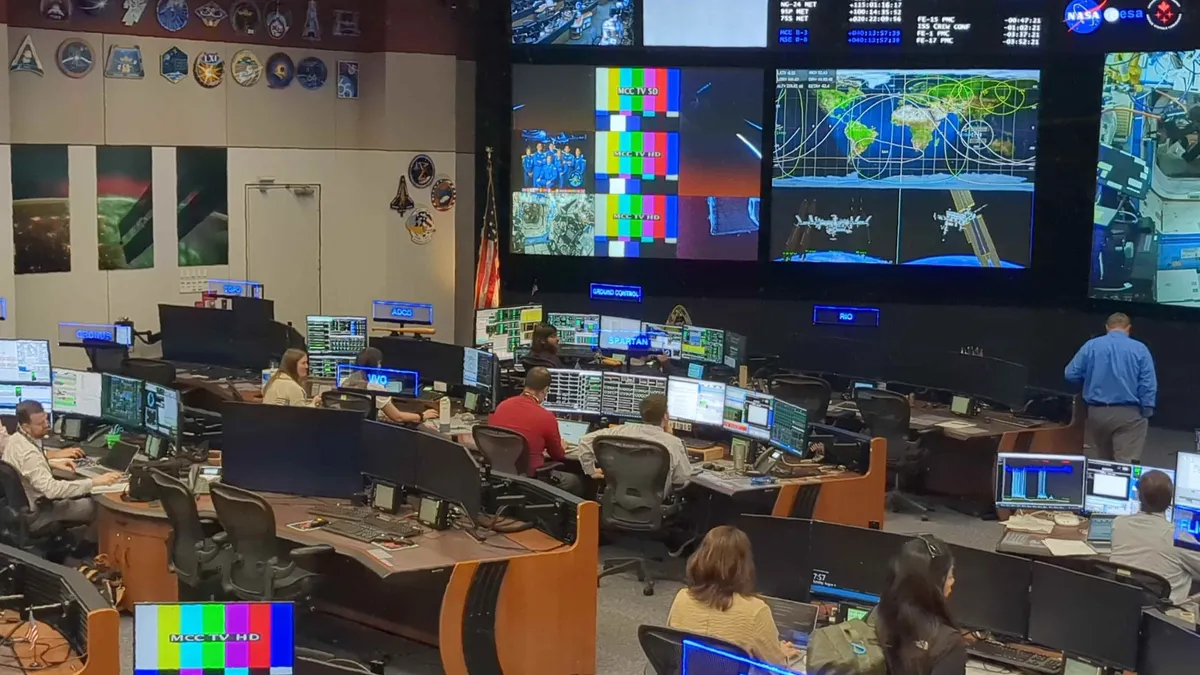
The mission control room at Johnson Space Center in Houston. (Image credit: Elizabeth Howell/Future)
One of the most visible symbols of NASA’s transformation is the ISS Mission Control Center at Johnson Space Center.
For decades, Mission Control has coordinated every aspect of U.S. crewed spaceflight operations, from shuttle missions to long-duration ISS expeditions. Today, controllers continue monitoring station systems, astronaut activities, visiting spacecraft, and emergency procedures. During the August media tour, flight directors explained how teams maintain continuous situational awareness of crew activities and station health.
In the commercial era, Mission Control expertise may become one of NASA’s most valuable services.
Rather than operating all orbital destinations directly, NASA is expected to provide technical support, safety expertise, training services, certification knowledge, and operational experience to commercial station operators. The agency has already demonstrated this approach through partnerships with Commercial Crew providers SpaceX and Boeing, which rely heavily on NASA training and operational infrastructure.
Future commercial stations may maintain their own control centers, but NASA’s decades of operational knowledge represent a resource difficult to replicate. Industry participants are therefore likely to continue working closely with JSC even after the ISS is retired.
Building 9: Where Future Space Stations Take Shape
Another key facility undergoing a quiet transformation is Building 9, formally known as the Space Vehicle Mockup Facility.
The building contains full-scale mockups of ISS modules and spacecraft interiors that astronauts use to rehearse routine and emergency procedures. Crews train for fires, equipment failures, medical emergencies, docking operations, and countless other scenarios before launching into space.
NASA officials noted that commercial companies are becoming increasingly visible within these facilities. During the tour, observers could see hardware and mockups associated with SpaceX, Blue Origin, and Starlab, highlighting the growing integration of private-sector programs into the traditional NASA training environment.
This trend is expected to accelerate as commercial stations move closer to operational status. Future astronauts may train for missions that involve transitioning between government and private facilities, operating on multiple station architectures, or performing commercial manufacturing and research tasks alongside traditional scientific investigations.
Unlike the ISS, which was developed through international government partnerships, many future stations are expected to pursue mixed business models that include research customers, national space agencies, private astronauts, tourism activities, and in-space manufacturing.
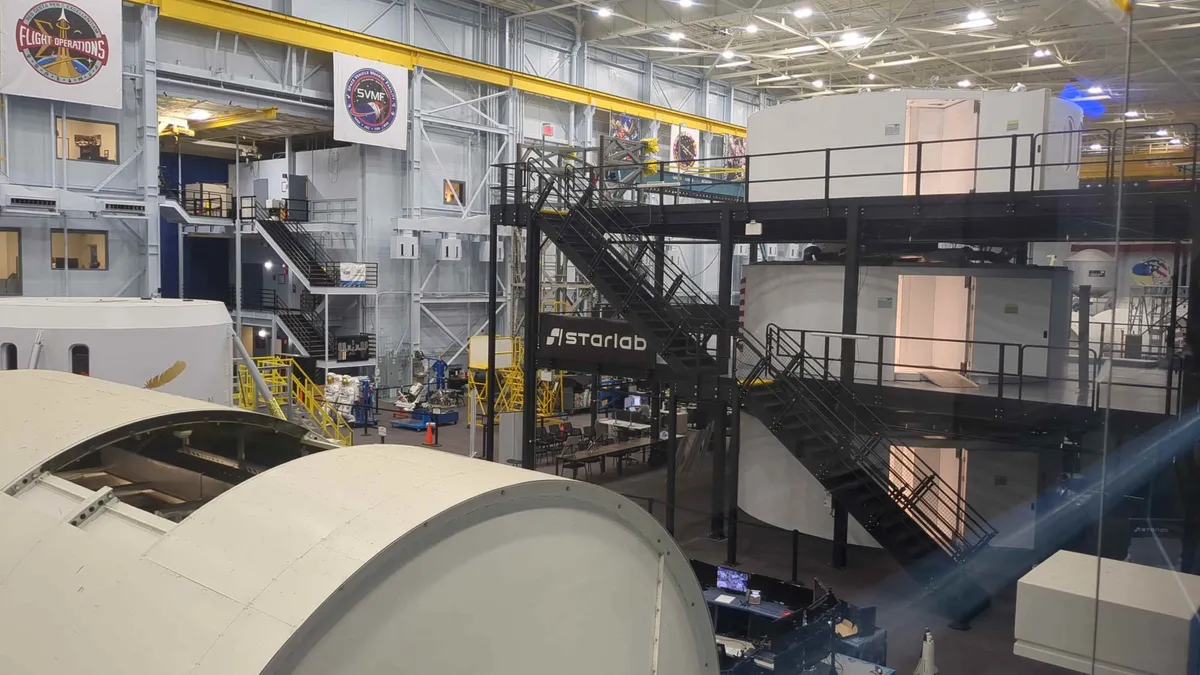
A view inside Building 9 at NASA’s Johnson Space Center in Houston. (Image credit: Elizabeth Howell/Future)
The Neutral Buoyancy Laboratory Remains Indispensable
Despite dramatic advances in virtual reality and simulation technologies, one of NASA’s most important astronaut training tools remains a giant swimming pool.
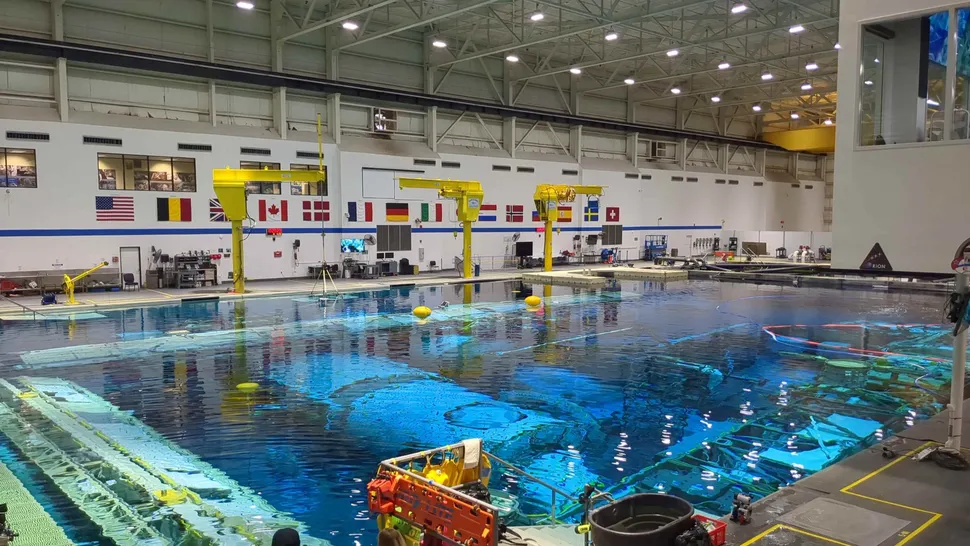
The Neutral Buoyancy Laboratory (NBL), located near Johnson Space Center, allows astronauts to rehearse spacewalks underwater using full-scale station hardware and spacesuit systems. By simulating microgravity conditions, the facility provides the closest practical approximation to working outside a spacecraft in orbit.
NASA trainers emphasized that astronaut candidates are gradually given more autonomy as they gain experience, mirroring the realities of actual space operations. The goal is to develop crews capable of solving problems independently rather than relying on constant guidance from Earth.
The NBL’s role may actually expand during the commercial era. Private companies developing stations, spacesuits, and spacecraft recovery procedures can use the facility to validate hardware and train personnel. Axiom Space has already utilized NASA facilities while developing the AxEMU lunar spacesuit intended for Artemis missions.
As commercial operators begin flying larger numbers of astronauts, demand for specialized EVA and operational training could increase substantially.
Lessons from Commercial Crew
NASA is not entering the commercial era without experience.
The agency’s Commercial Crew Program fundamentally changed how astronauts train for spaceflight. Since SpaceX began operational crew transportation missions in 2020, NASA astronauts have routinely trained not only at Johnson Space Center but also at commercial company facilities such as SpaceX headquarters in Hawthorne, California. Similar arrangements were established for Boeing’s Starliner program.
This distributed training model offers a preview of how future commercial station operations may function.
Astronauts assigned to commercial destinations could complete portions of their preparation at company-owned facilities while still relying on NASA’s expertise for mission operations, ISS heritage systems, safety certification, and emergency response training.
The result is a more collaborative ecosystem where government and industry responsibilities overlap rather than remain strictly separated.
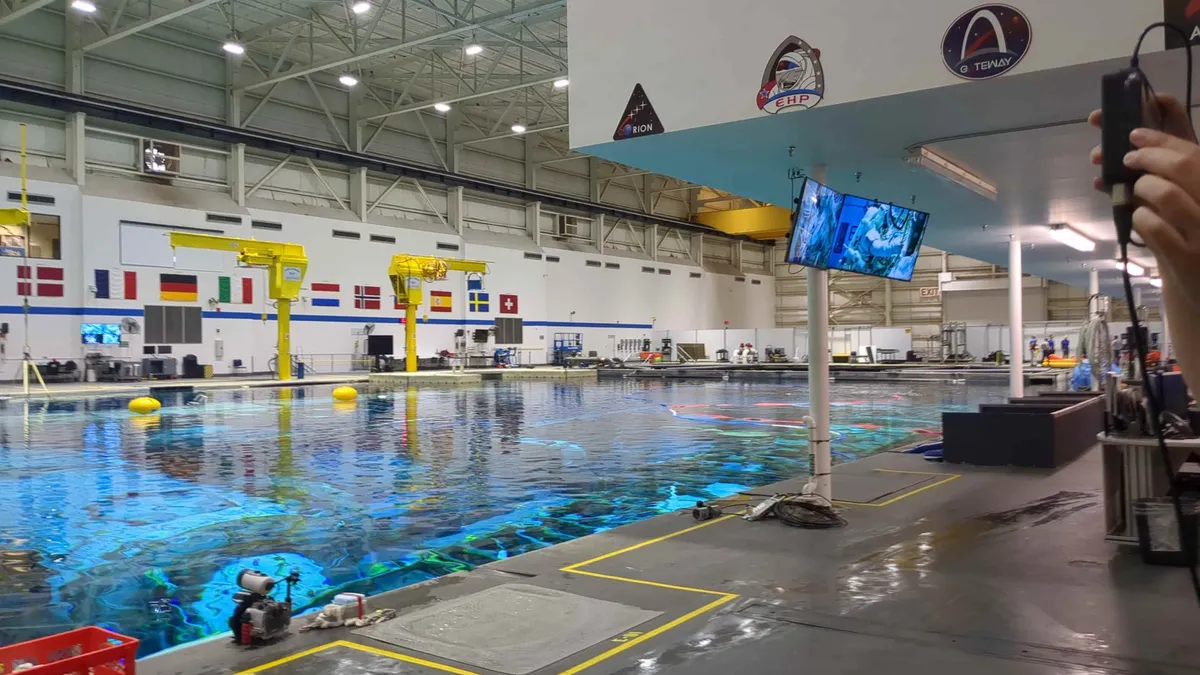
NASA’s Neutral Buoyancy Laboratory at Johnson Space Center in Houston. (Image credit: Elizabeth Howell/Future)
Why NASA Wants Industry to Lead in Low Earth Orbit
The shift toward commercial stations is driven by more than budget considerations.
NASA views low Earth orbit as a mature environment where commercial companies can eventually provide routine transportation, habitation, research, and manufacturing services. By purchasing those services instead of owning all infrastructure directly, NASA hopes to redirect resources toward exploration beyond Earth orbit.
This strategy mirrors the agency’s successful transition from government-owned cargo transportation systems to commercially provided cargo services, and later to commercial crew transportation.
The long-term objective is to create a self-sustaining low Earth orbit economy in which NASA is one customer among many. Universities, pharmaceutical companies, materials manufacturers, national governments, and private researchers could all become regular users of orbital facilities.
If successful, commercial stations would allow NASA to focus increasingly on Artemis lunar missions, the Gateway lunar outpost, human landing systems, and eventual crewed expeditions to Mars.
A Training Center for a New Space Economy
Johnson Space Center’s future may look different from its Apollo and Shuttle-era past, but its importance is unlikely to diminish.
Mission Control, Building 9, the Neutral Buoyancy Laboratory, and other training facilities remain unmatched resources for preparing humans to live and work in space. As commercial operators develop their own stations and spacecraft, many will continue relying on NASA’s expertise, infrastructure, and training capabilities.
Rather than replacing NASA’s astronaut training hub, the rise of commercial space stations appears poised to expand its customer base. The facilities that once supported exclusively government astronauts are increasingly becoming shared assets for an emerging orbital economy.
With the ISS expected to retire around 2030 and several commercial stations racing toward operational readiness, Johnson Space Center is positioning itself not merely as NASA’s training headquarters, but as a cornerstone of the next generation of human spaceflight.