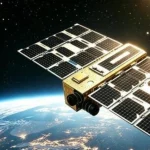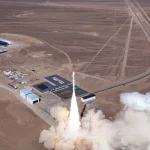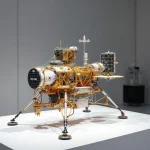
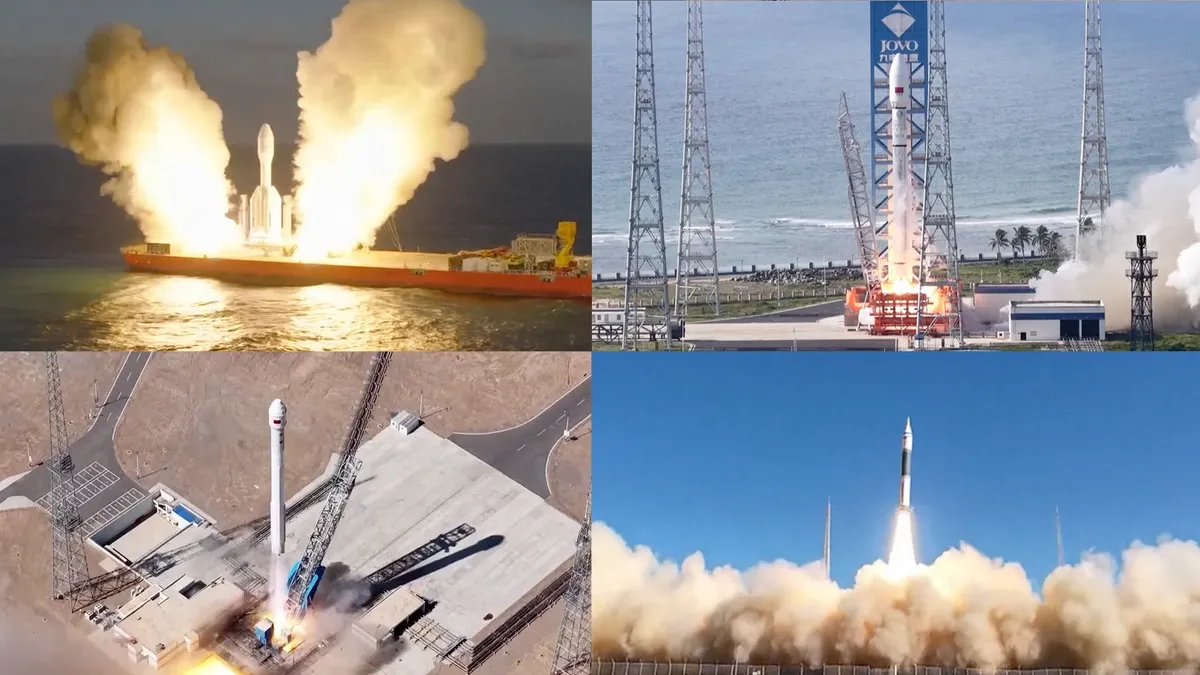
China completed four orbital launches with four different rockets in just over 44 hours between September 15 and 17, 2026, deploying satellites from Jiuquan, an offshore platform east of Shanghai, and the Hainan Commercial Space Launch Site. The sequence involved two commercially developed launch vehicles and two rockets operated by state-owned groups, highlighting the growing range and cadence of China’s launch infrastructure.
The campaign began at 2:26 p.m. Beijing Time on September 15, when LandSpace launched a Zhuque-2 Enhanced Y7 rocket from the Dongfeng Commercial Space Innovation Pilot Zone near Jiuquan in northwestern China.
The methane-fueled rocket placed 10 Qianfan Polar Orbit Group 19 satellites into their planned orbits. The spacecraft are part of the Qianfan broadband constellation, also known as Thousand Sails, one of China’s major low-Earth-orbit communications projects.
Zhuque-2 uses liquid oxygen and methane propellants, a combination also selected for SpaceX’s Starship, Blue Origin’s New Glenn and several other next-generation launch vehicles. Methane can reduce engine deposits compared with kerosene, making it attractive for reusable propulsion systems, although the Zhuque-2 mission did not include a recovery attempt.
LandSpace has also incorporated technologies shared with its larger reusable Zhuque-3 rocket, including upgraded Tianque-series engines and a pneumatic payload-separation system. The overlap allows the company to test production and operational processes while Zhuque-3 advances through its own flight campaign.
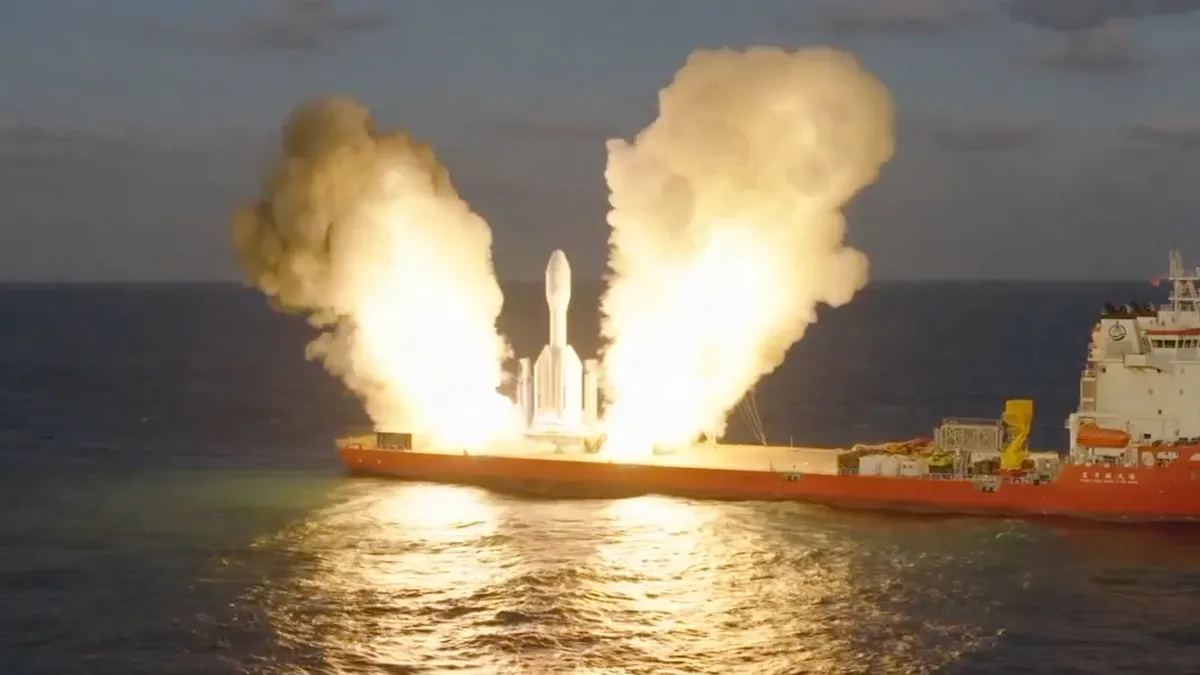
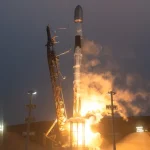
An Orienspace Gravity-1 rocket launches from a sea-based platform on Sept. 15, 2026. (Image credit: CCTV)
Gravity-1 Conducts Offshore Constellation Launch
At 6:00 a.m. Beijing Time on September 16, Orienspace launched a Gravity-1 Y3 rocket from a mobile sea platform in waters east of Shanghai. The mission carried nine spacecraft: eight Qianfan Polar Orbit Group 26 constellation satellites and one EUHT technology demonstration satellite.
Gravity-1 is a three-stage solid-propellant rocket with four solid strap-on boosters. Orienspace describes it as the world’s most powerful all-solid launch vehicle. Its low, wide configuration is designed to lift relatively large payloads without relying on a liquid-propellant core stage.
The mission was Gravity-1’s fourth flight and further demonstrated the vehicle’s ability to operate from offshore locations. Sea launch platforms can provide additional flexibility in selecting orbital inclinations and locating launch trajectories away from populated areas. They can also supplement China’s fixed launch centers as constellation deployment increases demand for launch opportunities.
The Zhuque-2 and Gravity-1 missions together deployed 18 Qianfan satellites in less than 16 hours. That pace illustrates how commercial launch companies are moving beyond occasional demonstration flights and into repeated constellation-delivery operations.
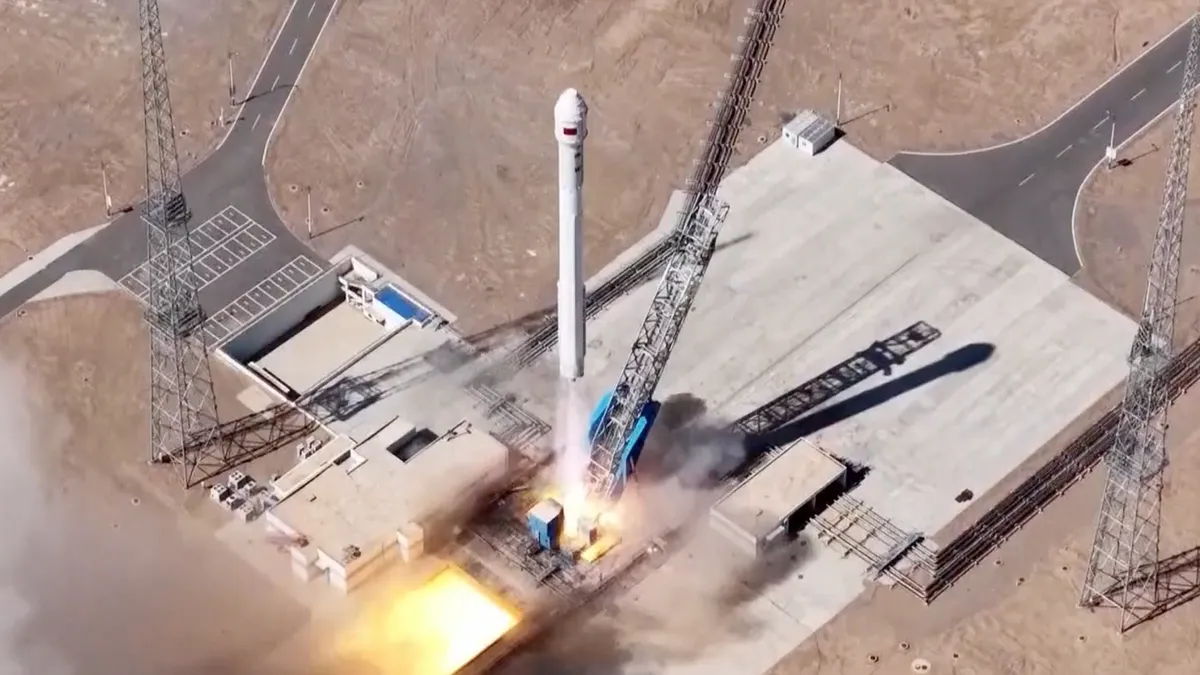
A LandSpace Zhuque-2E rocket launches 10 broadband satellites to orbit on Sept. 15, 2026. (Image credit: CCTV)
Long March 12 and Kuaizhou-11 Complete the Sequence
The third launch took place at 8:32 a.m. Beijing Time on September 17. A Long March 12 lifted off from the Hainan Commercial Space Launch Site and placed the Satellite Internet Low-Orbit Group 25 spacecraft into orbit.
Chinese authorities identified the payload as a group of satellites rather than publishing the number of spacecraft aboard the rocket. The mission supported China’s separate state-backed low-Earth-orbit broadband network, commonly known internationally as SatNet or Guowang.
Developed by the Shanghai Academy of Spaceflight Technology under China Aerospace Science and Technology Corporation, the Long March 12 is China’s first 4-meter-diameter, single-core launch vehicle. It is designed to carry at least 12 metric tons to low Earth orbit or at least 6 metric tons to a 700-km sun-synchronous orbit.
The rocket uses a horizontal assembly, testing and transfer process intended to simplify launch-site operations. Its September 17 mission also demonstrated the Hainan commercial spaceport’s ability to support different rocket configurations as China expands dedicated infrastructure for high-frequency commercial and constellation launches.
About two hours later, at 10:40 a.m., a Kuaizhou-11 Y3 rocket launched from Jiuquan, completing the four-mission sequence. Operated by Expace, a subsidiary of the state-owned China Aerospace Science and Industry Corporation, the solid-fueled rocket placed the Tianyi-51 and Tianyi-52 satellites into their planned orbits.
The two spacecraft, developed for commercial satellite company Spacety, carry synthetic aperture radar payloads for Earth observation. Radar satellites can collect imagery at night and through clouds, giving them advantages for applications including disaster response, infrastructure monitoring and maritime observation.
The flight was the seventh launch of a Kuaizhou-11. Solid-fueled vehicles such as Kuaizhou-11 can generally be stored for extended periods and prepared comparatively quickly, making them suitable for responsive launch missions and smaller satellite deployments.
None of the four rockets attempted a recovery. The launch sequence nevertheless followed two notable Chinese recovery milestones: the Long March 10B’s offshore net recovery on July 10 and the Zhuque-3 Y2’s landing-leg recovery on land on August 19. China has not yet reflown a recovered orbital-class first stage, leaving refurbishment and reflight as the next major test of its emerging reusable launch capabilities.