Chinese commercial launch company Space Epoch has completed a Series B++ financing round, bringing its total funding raised over the past six months to more than 2.3 billion yuan, or approximately $343 million. The capital will support the first orbital flight of its reusable Yuanxingzhe-1 methane-fueled rocket, first-stage recovery testing and the development of commercial launch-delivery capacity.
The company did not disclose the value of the B++ round separately. The 2.3 billion yuan figure represents cumulative financing across its Series B rounds during the six-month period.
IDG Capital, Chaos Investment, Hangzhou Capital and Songyuan Venture Capital jointly led the Series B financing. Heda Investment, Linglan Capital, Huafu Capital, Yida Capital, Shangshi Capital and Renai Group also participated, while existing investors including Jiuzhi Capital, Tianwen Times and Jinsha Capital increased their investments.
Space Epoch said the new funding would be used to support preparations for Yuanxingzhe-1’s maiden flight, verify recovery and reuse technologies and build the infrastructure required for commercial deliveries. The company is also continuing engineering work on a platform-based booster capture system.
Two Yuanxingzhe-1 vehicles, designated Y1 and Y2, are being prepared as Space Epoch moves toward flight operations. The company said it has completed more than 30 critical ground tests ahead of the inaugural mission and that the results met its flight requirements.
Yuanxingzhe-1 is expected to be ready for its maiden flight by the end of 2026. Space Epoch plans to apply for a launch license, conduct the rocket’s first orbital mission when approvals and launch conditions permit, and attempt a first-stage recovery demonstration during the same campaign. Commercial launch services are scheduled to begin in 2027 following the initial flight and recovery tests.
A Stainless-Steel Methalox Launcher
Yuanxingzhe-1 is a two-stage, medium-to-heavy launch vehicle designed around a stainless-steel airframe and liquid oxygen-methane propulsion. The rocket is 66 meters long, has a liftoff mass of approximately 580 metric tons and uses a common 4.2-meter diameter for both stages.
Space Epoch lists a payload capacity of 13.8 metric tons to a 200-kilometer low Earth orbit and 9 metric tons to an orbit at an altitude of 1,100 kilometers. The company says the first stage is designed for as many as 20 flights, although that target will depend on the results of recovery, inspection and reflighting campaigns.
Methane propulsion is attractive for reusable vehicles because it generally produces less soot than kerosene, potentially reducing contamination and inspection requirements between flights. Stainless steel can also offer relatively low material costs, established industrial manufacturing methods and favorable performance under the thermal loads encountered during atmospheric return. Those advantages must still be demonstrated across repeated operational missions.
Space Epoch is developing several recovery approaches. Its near-term work has emphasized powered descent and offshore recovery, while the company is also pursuing a mechanical platform-capture system intended to recover a returning booster without relying on conventional landing legs.
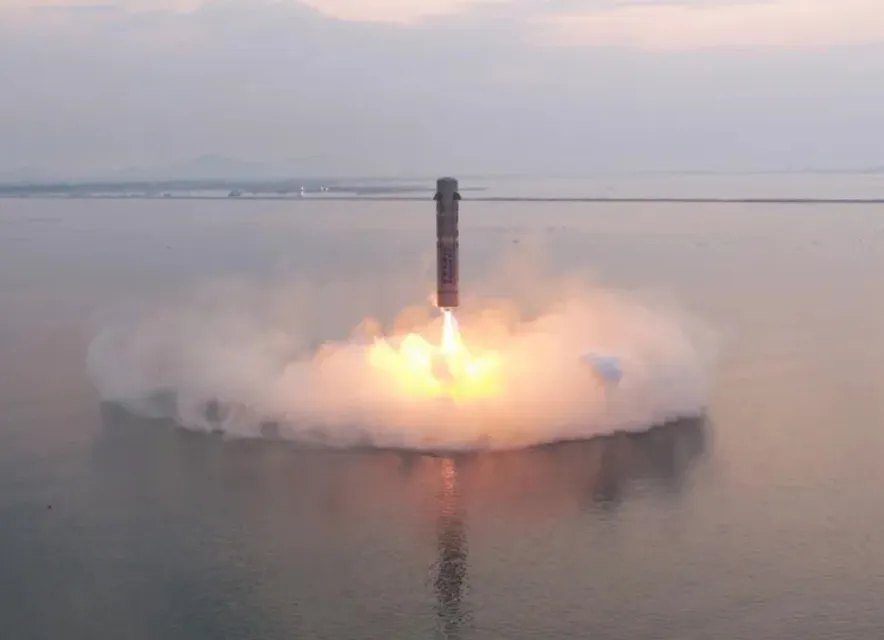
The company completed a major suborbital recovery demonstration in May 2025 from the Oriental Spaceport off China’s Shandong coast. A full-diameter Yuanxingzhe-1 test vehicle climbed to approximately 2.5 kilometers during a 125-second flight before restarting its engine, performing a controlled descent and completing a soft splashdown.
The test vehicle was about 26.8 meters tall, 4.2 meters in diameter and had a liftoff mass of approximately 57 metric tons. Space Epoch subsequently recovered the vehicle from the sea, cleaned it and returned its hardware for inspection, providing operational data on offshore retrieval and post-flight processing.
Production Capacity Becomes the Next Test
The financing comes as Chinese launch providers expand reusable rocket development to serve the country’s planned low Earth orbit communications constellations. Sustained constellation deployment requires not only higher-capacity launch vehicles but also production lines, test facilities, launch infrastructure and recovery systems capable of supporting a substantially higher flight cadence.
Space Epoch is building a rocket manufacturing and reuse complex in Hangzhou with a reported investment of 5.2 billion yuan. The project includes production, inspection and recovery-support facilities and is designed for an eventual annual output of 25 rockets.
The company’s immediate challenge is to convert its suborbital recovery experience and ground-test program into an orbital launch. If the inaugural mission proceeds as planned, it will test the complete Yuanxingzhe-1 architecture while providing the first operational evidence of whether the vehicle’s recovery system can support Space Epoch’s planned transition to commercial launches in 2027.