The statement, published on 13 November by trade unions FIM, FIOM and UILM, detailed the outcome of a meeting with Thales Alenia Space’s management team. Among the items discussed was the status of the company’s proposal for ESA’s ALADDIN initiative, with the company explaining that it expected the agency to complete its evaluation by the end of November.
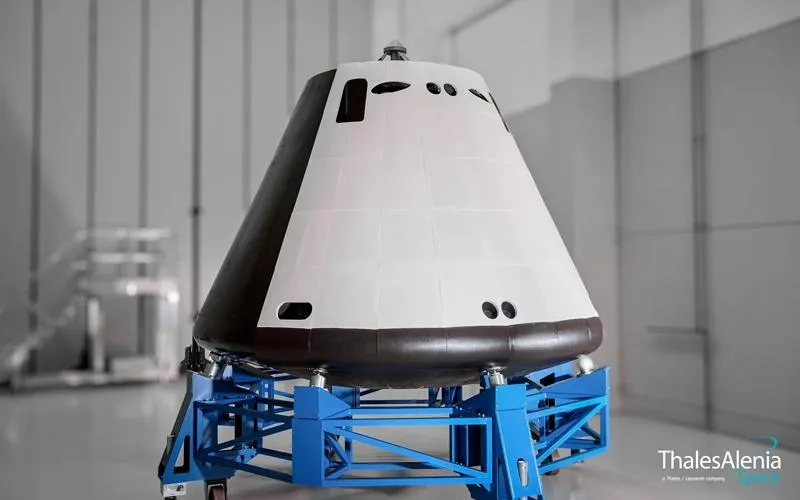
If the proposal succeeds, Thales Alenia Space plans to bring in private investors and establish a special purpose vehicle, a separate legal entity created specifically to manage the development, financing and commercialization of its cargo transportation service. The company has been working on its proposed cargo spacecraft since May 2024, when ESA awarded it and The Exploration Company contracts for the initial phase of the agency’s LEO Cargo Return Service initiative. That initiative aimed to foster a commercially operated European service capable of transporting cargo to and from low Earth orbit, with an initial demonstration mission targeted for 2028.
In early 2026, ESA revised the scope of the initiative’s second phase, renaming it ALADDIN, for Autonomous LEO Accelerated Demo Docking to ISS Node. Under the revised scope, companies could propose demonstration missions either to the International Space Station by mid-2029 or to a future commercial space station by the end of 2031.
On 10 September, ESA awarded The Exploration Company a contract worth up to 760 million euros under the ALADDIN initiative. That contract includes an initial 310 million euros for the demonstration mission to the International Space Station and a further 450 million euros in options for additional missions. At the time, the agency confirmed it was continuing the tendering process with Thales Alenia Space, stressing its commitment to maintaining competition in the emerging European commercial cargo transportation market.
Establishing a separate company signals Thales Alenia Space’s intent to compete in commercial cargo return, positioning the firm to manage the development, financing and commercialization of the service through a distinct legal entity backed by private investors.
ESA was expected to complete its evaluation of the Thales Alenia Space proposal by the end of November. The company’s decision to bring in private investors and stand up the special purpose vehicle is contingent on a successful outcome.