
On September 3, the Beijing Municipal Bureau of Commerce released the Work Plan for the Development of China (Beijing) Pilot Free Trade Zone Linkage Development Areas. The commercial space section presents a more detailed industrial coordination map than the previous “Southern Rockets, Northern Satellites” concept: Haidian focuses on constellation R&D, Fengtai on satellite application services, Yizhuang on rocket development, and Shijingshan on deep space exploration.
The plan does not redraw the industrial boundaries of the four districts, and each area has developed from different foundations. Instead, it focuses on a long-standing challenge in Beijing’s commercial space industry: how constellation designs can be jointly tested with terminals and ground systems, where rocket and satellite companies can access shared testing facilities, how deep-space research achievements can move from laboratories into industry, and how resources across districts can be jointly utilized.
The plan sends three signals:
1. Beijing’s commercial space layout is expanding beyond rockets and satellites as standalone products toward application services and deep-space technology commercialization.
2. The policy places cross-district integration testing, verification, pilot production, and prototype manufacturing within a unified framework, aiming to reduce duplicated infrastructure investment by companies.
3. The maturity level of the four districts is different: Yizhuang, Haidian, and Fengtai already have established industrial foundations, while Shijingshan’s national-level deep-space technology commercialization base remains in the co-development planning stage.
Why has Beijing become one of China’s major commercial space clusters? The answer is not only found in the list of companies located there. More importantly, system design capability, research talent, leading enterprises, testing platforms, application customers, and financial tools can connect frequently within a single city. Beijing may not undertake all mass production activities, but it is highly likely to become a center for mission definition, technology decisions, and resource coordination.
From “Southern Rockets, Northern Satellites” to Four-District Coordination: What Has Been Added?
For years, Beijing has used the phrase “Southern Rockets, Northern Satellites” to summarize its commercial space layout: the southern Beijing Economic-Technological Development Area (Yizhuang) gathered commercial rocket companies, while northern Haidian focused on satellite R&D and constellation ecosystems.
In April 2026, public information from the Beijing Municipal Science and Technology Commission stated that Beijing had more than 300 commercial space-related enterprises, with over 70% of privately owned launch vehicle companies in China concentrated in the city. The same source noted that the area around Rocket Avenue in Yizhuang and the Haidian Satellite Town had already developed into significant industrial clusters.
The new plan expands beyond the original “Southern Rockets, Northern Satellites” framework by adding satellite application services and deep-space technology commercialization.
Fengtai is positioned around “application services.” The plan proposes establishing mechanisms for technology commercialization and supply-demand coordination centered on satellite services and application scenarios, while promoting joint integration testing between Haidian’s constellation solutions and Fengtai’s terminals, ground systems, and related products.
This goes beyond simple investment attraction and is closer to engineering collaboration: spaceborne systems, ground stations, user terminals, and data services must be jointly validated through interfaces, frequency coordination, protocols, and real-world scenarios.
Shijingshan corresponds to deep-space exploration. The Beijing research area of the Deep Space Exploration Laboratory was officially launched in the Shougang Park area on December 31, 2025, giving the institution a physical presence in the district. The new plan proposes relying on the laboratory to jointly build a national deep-space exploration technology commercialization base with Haidian and Yizhuang.
Table 1. Current status of Beijing’s four-district commercial space coordination model.
What Beijing Has First Concentrated Is System Capability and Critical Interfaces
Commercial space is not an industry that can be completed by a single factory. A launch vehicle requires engines, structures, avionics, launch control systems, and launch facilities to be integrated into a single mission. A satellite requires platforms, payloads, communication links, operations systems, and application services to become a long-term operational capability.
System design, mission planning, and supply chain management require extensive cross-disciplinary collaboration, as well as continuous communication with customers, regulators, and testing organizations.
Beijing’s advantage first comes from its high density of capabilities for “organizing complex systems.” Haidian concentrates universities, research institutes, and information technology companies. Yizhuang brings together commercial launch vehicle companies and supporting suppliers. Fengtai has traditional aerospace resources such as China Academy of Launch Vehicle Technology and China Aerospace Science and Industry Corporation institutes, while also attracting terminal, ground equipment, and data service companies. Public materials from the district state that Fengtai has gathered more than 40 central state-owned enterprises and major research institutions, along with more than 200 key industrial chain companies.
Companies establish headquarters or R&D centers in Beijing for another practical reason: many high-value decisions are made during the early stages of development. Orbital selection, payload choices, power and mass allocation, and decisions on which tests should be completed by suppliers can determine the direction of orders over the following years.
Being close to system institutes, overall design teams, and early customers can shorten the cycle of requirement clarification and design iteration.
Talent mobility further amplifies this concentration effect. Experienced engineers from established aerospace institutes—including specialists in system engineering, structures, thermal control, tracking and control, and quality management—move into commercial space companies. Information technology companies contribute chips, software, artificial intelligence, and cloud computing capabilities, while universities continue to provide advances in materials and algorithms.
This connection is not limited to traditional aerospace professionals joining commercial companies. Joint projects, supplier reviews, technical services, and research cooperation also create frequent exchanges of people and technologies.
For a space product requiring years of iteration, finding partners who understand engineering constraints is often more important than finding cheaper office space.
This also explains why “Beijing concentration” does not mean that all manufacturing remains in Beijing. Engine testing, large-scale structure manufacturing, final assembly, testing, and launch support require land, energy, safety distances, and specialized facilities, and are often distributed outside Beijing.
Beijing functions more like a high-density node for mission definition, system development, and resource allocation. The actual production of launch vehicles and satellite batches still depends on nationwide supply chains.
Table 2. Five connection mechanisms behind Beijing’s commercial space cluster.
Public Platforms Are Filling the Most Expensive Capability Gaps for Companies
Commercial space companies often cannot independently afford testing and operations facilities that are used infrequently, require high investment, and involve long certification cycles.
Rocket Avenue in Yizhuang covers approximately 145,000 square meters and is planned to include four functional zones: a common technology platform, an innovation R&D center, a high-end manufacturing center, and an exhibition and mission operations center.
In January 2026, the Beijing Economic-Technological Development Area announced the launch of six types of platforms, including tracking and control, common testing, public services, one-stop support for commercial space components and applications, spatiotemporal information, and space situational awareness. Among them, the common testing platform is planned to include more than 10 large-scale testing facilities.
These platforms have since begun moving into operational stages. On August 19, the Commercial Space Intelligent Tracking, Telemetry and Control Center, one of the six platforms, officially began operations. It participated in the launch of Zhuque-3 Yao-2, monitoring the entire process including launch, first-stage vertical landing recovery, and satellite deployment into orbit.
The platform approach directly addresses the cost structure of small and medium-sized companies. If vibration testing, thermal vacuum testing, tracking and control systems, and mission operations infrastructure all have to be independently built by each company, financing can quickly be consumed by fixed assets.
If shared facilities can operate on a stable and open basis, companies can allocate more resources toward product development and missions.
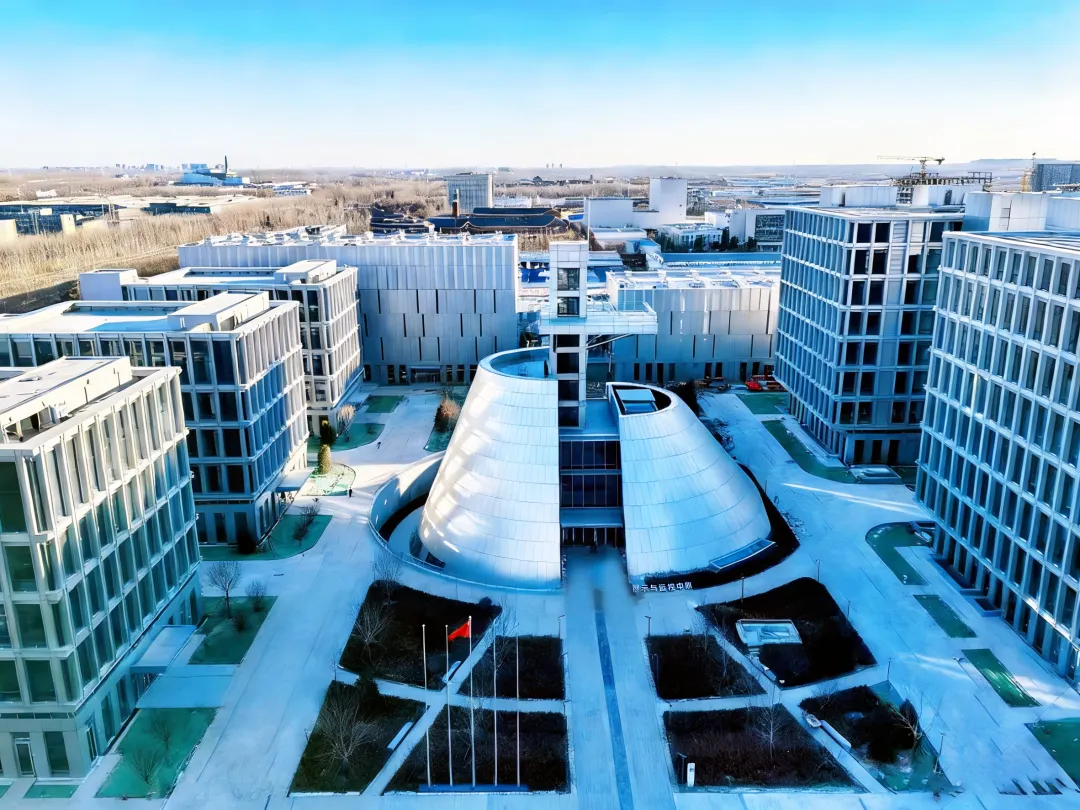
Commercial Space Intelligent Tracking, Telemetry and Control Center at Rocket Avenue. Source: Beijing Economic-Technological Development Area Administrative Committee, January 26, 2026.
Haidian Satellite Town is also building shared capabilities on the satellite side.
In July 2026, official information showed that 20 companies had signed agreements with the satellite town, including 10 formal agreements and 10 letters of intent. Nearly 40 companies and institutions were displayed in the industrial park, covering components, satellite manufacturing and testing, and satellite application operations.
According to public information released in April, the town plans to build a public testing service platform of approximately 20,000 square meters, expected to be operational in 2027, with testing capacity exceeding 100 satellites per year.
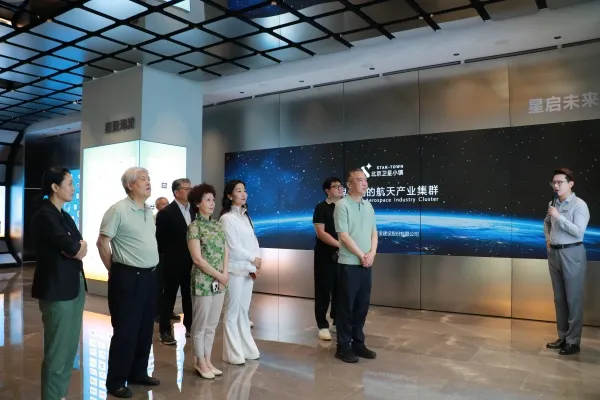
Haidian District CPPCC delegation visits the temporary exhibition hall of Beijing Satellite Town. Source: Haidian District CPPCC Office, June 12, 2026.
These platforms serve another purpose: creating comparable data.
Commercial space customers do not only evaluate promotional specifications. They also need to examine environmental testing results, flight records, fault handling capabilities, and lifecycle performance data.
If unified testing standards or mutual recognition mechanisms between platforms can eventually be established, the cost of repeated verification for suppliers entering satellite and launch vehicle programs could be reduced, while prime contractors could select components more efficiently.
Turning Industrial Clusters into an Industry Requires Scenarios and Orders
The concentration of research institutions and manufacturing capabilities does not automatically create commercial revenue.
Satellite applications, in particular, often face the challenge of having “data but no customers.” In June 2026, Fengtai released 36 aerospace demonstration application scenarios with a total planned investment of approximately RMB 4.6 billion.
These scenarios cover commercial space, satellite remote sensing, satellite communications, navigation and transportation, pilot-scale platforms, and aerospace finance. They include applications such as satellite terminal verification.
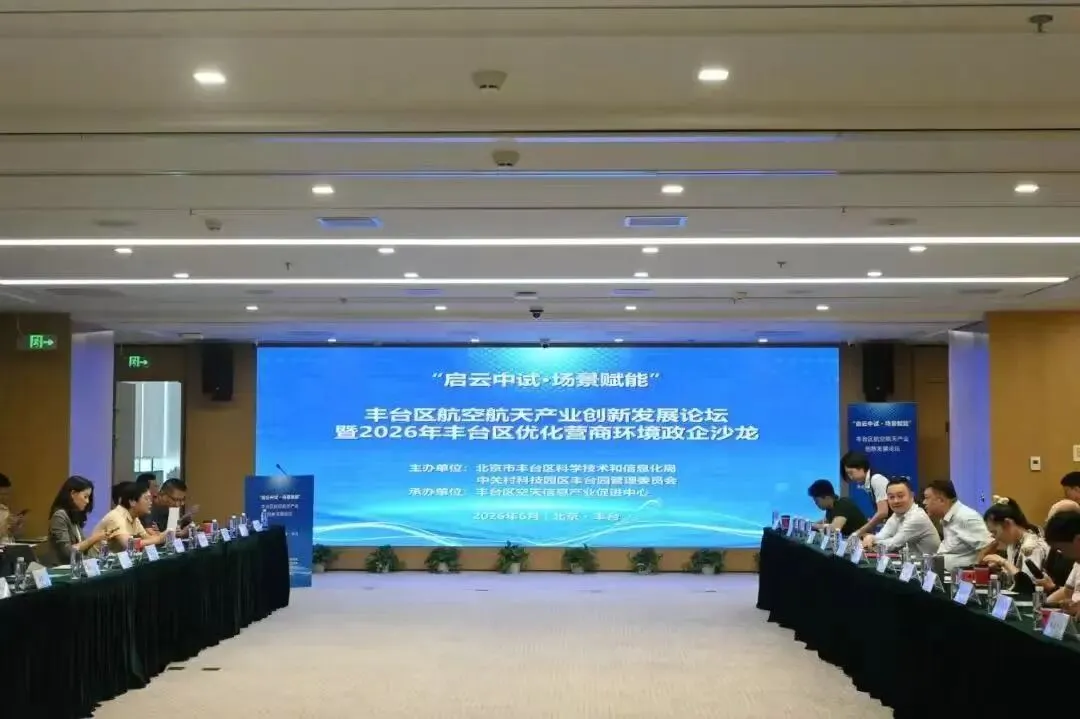
Fengtai District Aerospace Industry Innovation Development Forum. Source: Beijing Investment Promotion Service Center reposting Beijing Fengtai information; event held in June 2026.
In the same year, Beijing introduced measures to promote the development and utilization of commercial satellite remote sensing data resources.
The measures proposed multi-source data platforms, urban spatiotemporal digital infrastructure, data circulation and trading systems, and applications in urban governance, agriculture, finance and insurance, low-altitude economy, and intelligent connected vehicles.
Beijing also launched a 2026 initiative to collect three lists: application scenario demands, available capabilities, and demonstration projects. Government departments, state-owned enterprises, and leading companies can propose requirements for new technology and product procurement or trial applications, while projects can receive support through facilities, funding, equipment, and data resources.
The value of these policies for commercial space lies in changing the question from “what can the technology do?” to “who is willing to test it and who is willing to pay for it?”
Remote sensing data only creates value when integrated into business processes. Communication terminals must be validated through real networks and customers. Only then can constellations develop sustainable revenue models.
This is also why Fengtai’s role as an application service hub in the new plan is more distinctive than simply building another satellite R&D park.
Capital is equally important, but the actual status of funding matters more than headline figures.
Beijing has established a commercial space and low-altitude economy industrial investment fund with a total scale of RMB 10 billion, focusing on launch vehicle and satellite systems, key components, and innovative aerospace applications.
Such tools can share early-stage R&D and expansion risks, but the fund size itself does not mean every company has received equivalent financing.
What deserves attention is which companies complete investment transactions, which production lines receive funding, and when these investments translate into actual deliveries.
Why Beijing? Five Types of Resources Can Find Each Other More Easily Here
Putting these facts together, Beijing’s commercial space clustering logic can be summarized into five points.
First, Beijing has a high concentration of system engineering capabilities and research talent, enabling mission definition and breakthroughs in key technologies.
Second, rockets, satellites, terminals, ground systems, and data companies are located relatively close to one another, making repeated cross-disciplinary integration easier.
Third, public testing, tracking and control, and pilot-scale platforms are beginning to fill infrastructure gaps and reduce duplicated investment.
Fourth, urban governance needs and industrial customers provide application scenarios, creating entry points for validating satellite data and terminal products.
Fifth, government, state-owned capital, and market-based investment tools can provide support at different stages of company development.
Any single factor alone is insufficient to create an industrial cluster.
A large number of universities does not guarantee mass production. A large number of companies does not guarantee customer orders. Large amounts of capital can also simply create inflated valuations.
Beijing’s distinctive advantage is that these resources are geographically close and can be connected through policy mechanisms and leading enterprises.
The purpose of the new plan is to place capabilities originally distributed across different districts onto one coordinated map.
Beijing also faces clear constraints.
Land availability and overall costs are relatively high. Large-scale testing and mass production may not always be suitable for central urban areas. If cross-district platforms lack unified operating rules, they may remain only symbolic initiatives.
Satellite applications may also struggle to develop sustainable purchasing demand after demonstration projects end.
Ultimately, commercial space must be tested by launch success rates, in-orbit performance, delivery cycles, and cash flow.
Beijing’s clustering advantage mainly lies in system development, resource coordination, and customer connections. Whether the industry can mature depends on whether these capabilities can be converted into repeatable missions, deliveries, and revenue.
What Hard Indicators Will Determine the Success of Four-District Coordination?
First, whether cross-district integration testing actually takes place.
The key question is whether Haidian’s constellation solutions and Fengtai’s terminals and ground systems can form joint testing projects, and whether testing results can enter actual programs and procurement processes.
Second, the utilization rate of public platforms.
For platforms in Yizhuang and Haidian, key indicators include how many external customers they serve, how many test batches they complete, and whether they publish service catalogs and pricing mechanisms.
Third, how Shijingshan’s deep-space technology commercialization base is implemented.
The focus will be whether the co-development entities, operating organizations, facilities, initial projects, and commercialization mechanisms become clearly defined, and whether deep-space research achievements can eventually become companies, products, or missions.
Fourth, whether application-side repeat orders emerge.
After demonstration scenarios are launched, the industry needs to see whether remote sensing, communications, and navigation services generate annual contracts, cross-regional customers, and sustainable revenue.
Fifth, how Beijing coordinates with the national manufacturing network.
The fact that R&D centers, testing sites, production facilities, and launch sites are distributed across different regions is not itself a problem.
The key is whether interfaces, quality systems, and delivery responsibilities can be reliably connected.
The ability to organize cross-regional supply chains into repeatable missions is the most difficult capability for a commercial space cluster to replicate.
Table 3. Evidence ladder from policy initiatives to industrial outcomes. Signing agreements and announcing plans cannot replace actual missions, deliveries, and repeat purchases.
Therefore, Beijing’s emergence as a commercial space hub was not created by a single policy announcement.
The foundation comes from decades of accumulation in aerospace institutes, system engineering talent, and corporate headquarters. New industrial carriers—including Rocket Avenue, Satellite Town, satellite internet industrial parks, and deep-space research areas—provide physical platforms, while application scenarios and investment funds attempt to push technologies toward the market.
The plan released on September 3 is valuable because it fills the missing layer of cross-district coordination.
It places R&D, applications, and technology commercialization into the same industrial chain and also puts forward the next stage of evaluation criteria:
Platforms must have users.
Application scenarios must generate orders.
Research achievements must become products.
Companies must complete missions.
Only when these conditions are met can “four-district coordination” evolve from arrows on an industrial map into a real operating pathway for the commercial space industry.
References
[1] Beijing Municipal Bureau of Commerce, Work Plan for the Development of China (Beijing) Pilot Free Trade Zone Linkage Development Areas, drafted August 6, 2026, released September 3, 2026.
[2] Beijing Municipal Science and Technology Commission and Zhongguancun Science Park Administrative Committee, Commercial Space: Competing in a New Track and Unlocking New Momentum, April 7, 2026.
[3] Beijing Municipal Science and Technology Commission and Zhongguancun Science Park Administrative Committee, Deep Space Exploration Laboratory Establishes Beijing Research Area in Shougang Park, January 7, 2026.
[4] Capital Window reposting Fengtai District People’s Government, Central-Local Cooperation in Commercial Space Development: Fengtai to Build “Aerospace Science and Technology City”, December 17, 2025.
[5] Capital Window, Beijing Rocket Avenue Project Passes Completion Acceptance, January 15, 2026.
[6] Beijing Economic-Technological Development Area Administrative Committee, Six Common Platforms for Commercial Space on Beijing Rocket Avenue Fully Launched, January 26, 2026.
[7] Capital Window, 20 Commercial Space Companies Sign Agreements with Haidian Satellite Town, July 25, 2026.
[8] Fengtai District People’s Government / Fengtai Times, Fengtai Releases 36 Aerospace Application Scenarios, June 8, 2026.
[9] Beijing Municipal Bureau of Economy and Information Technology and other four departments, Several Measures of Beijing Municipality on Promoting the Development and Utilization of Commercial Satellite Remote Sensing Data Resources (2026–2030), January 23, 2026.
[10] Beijing Municipal Commission of Development and Reform, Notice on Soliciting the Three Lists of Scenario Demands, Scenario Capabilities, and Demonstration Projects for Beijing in 2026, June 22, 2026.
[11] Capital Window, Commercial Space Intelligent Tracking, Telemetry and Control Center on Beijing Rocket Avenue Officially Begins Operations, August 19, 2026.
[12] Capital Window, Building a Warm Home Amid the Commercial Space Boom: Beijing Satellite Town Core Area to Open Within the Year, April 18, 2026.
[13] Beijing Municipal Science and Technology Commission and Zhongguancun Science Park Administrative Committee, Five Years of Innovation: More Than 70% of Private Launch Vehicle Companies in China Gather in Beijing as “Southern Rockets, Northern Satellites” Builds Toward Space, March 20, 2026.
Data cutoff: September 4, 2026 (Beijing Time).
The numbers of companies, industrial scale figures, and platform development status cited in this article follow the timeframes and statistical definitions of the corresponding official materials. Planning, launch, signing, and completion statuses are described separately. This article does not constitute investment advice.