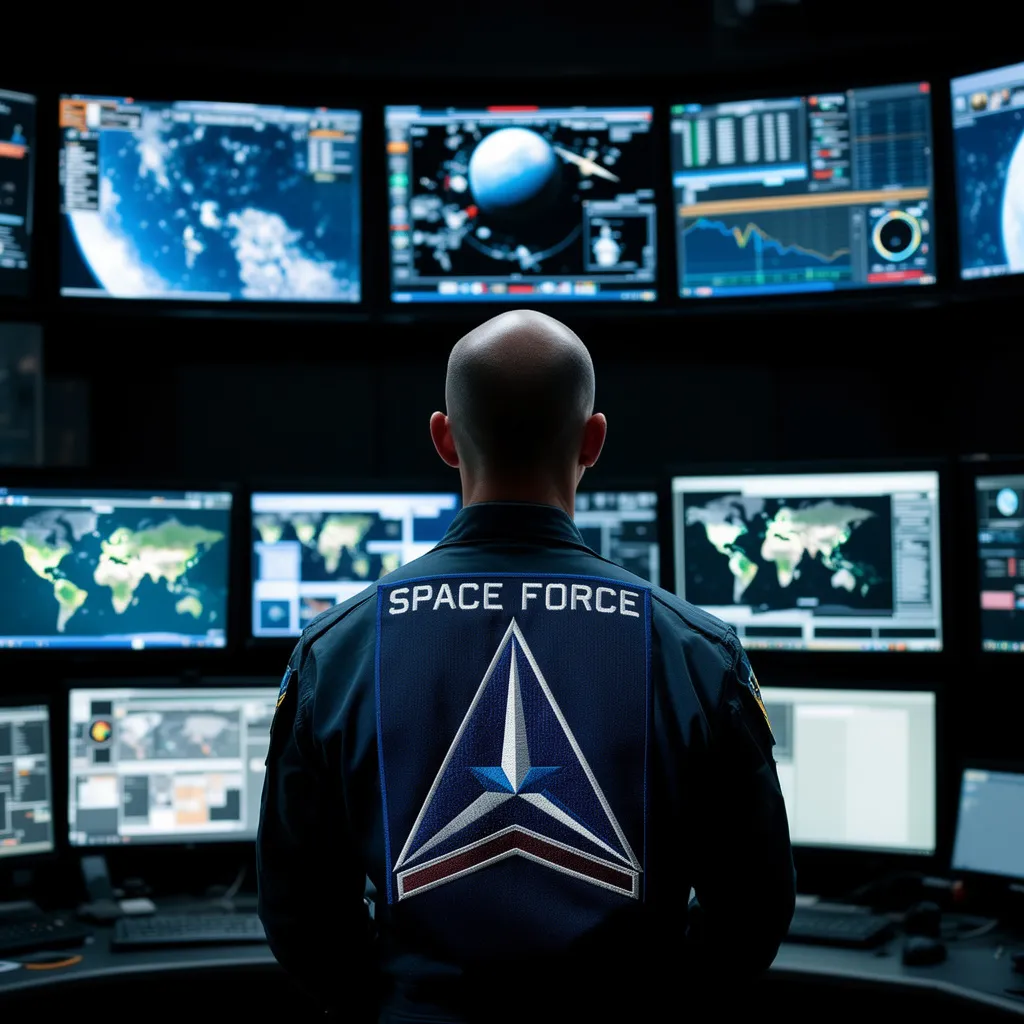
The U.S. Space Force plans to launch a prototype software environment later this fall that will automate the integration of commercial and military space-tracking data. Led by Mission Delta 2, the effort is intended to provide faster indications of new satellite deployments, debris clouds and potentially threatening activity without disrupting the service’s high-accuracy collision-avoidance systems.
Col. Barry Croker, commander of Mission Delta 2, said during the Advanced Maui Optical and Space Surveillance Technologies Conference in Hawaii that the unit intends to develop a minimum viable product capable of beginning operations quickly.
Mission Delta 2 organizes, trains and equips Guardians for space domain awareness missions. Its subordinate units include the 18th and 19th Space Defense Squadrons, which operate the Space Surveillance Network and the software used to characterize objects in orbit, including spacecraft controlled by potential adversaries.
The Space Surveillance Network combines observations from ground-based radars and optical telescopes distributed around the world. Those measurements are processed to determine the positions, trajectories and behavior of satellites, rocket bodies and debris.
Croker said Mission Delta 2’s immediate priority is improving support for space control operations. The prototype will therefore emphasize the speed at which information reaches operators, even when initial observations have lower fidelity than the data traditionally used for precise orbital calculations.
That approach could provide earlier warning of rapidly developing events, such as the creation of a debris cloud or the deployment of a large group of satellites from a single launch. Operators could receive an initial assessment quickly and refine it as additional observations become available.
“I now have the opportunity to get a more timely state of something, even if it’s not perfect,” Croker said. “Now I can start to have a more timely indication of what’s going on.”
Commercial Data Remains on a Parallel System
The Space Force currently obtains commercial space-tracking information through the Joint Commercial Operations cell, known as JCO. The data is stored in the cloud-based Unified Data Library, which aggregates information from government, allied and commercial sources.
However, commercial observations are not yet fused automatically into the operational computer systems used for military space domain awareness. Instead, the commercial information runs through a parallel architecture, according to Gen. Stephen Whiting, commander of U.S. Space Command.
This separation limits the military’s ability to combine the broad coverage and rapid revisit rates offered by commercial providers with the highly accurate observations collected by government sensors. It can also require operators and analysts to compare information manually across different systems, slowing the transition from detection to an operational assessment.
Whiting said existing space domain awareness capabilities are not yet sufficient to support the precise targeting of adversary satellites required for some military missions. He identified the automated integration of commercial tracking data—and consistent funding for its acquisition—as the largest near-term improvement available to the Defense Department.
“We could take the largest step forward if we could just better integrate the commercial data and consistently fund the acquisition of that data, and then be able to drive it into our programs of record for space domain awareness,” Whiting said. “That would be the biggest initial step we could take, and we could take that in the short term.”
Commercial companies operate an expanding mix of optical telescopes, radars and radio-frequency sensors. Their observations can supplement military coverage, particularly when tracking newly launched satellites, detecting maneuvers or monitoring objects that require frequent updates. The operational value of those observations depends not only on sensor performance but also on how quickly software can ingest, correlate and distribute them.
Protecting High-Accuracy Missions
Mission Delta 2 does not plan to merge all commercial observations directly into its existing high-accuracy processing environment at the outset. Croker said the separate prototype is designed to prevent lower-fidelity data from degrading military tracking products used for safety-critical missions such as collision avoidance.
This creates a two-tier approach. Existing systems can continue producing precise orbital solutions from trusted military sensor data, while the prototype tests whether commercial information can deliver faster operational awareness. Data that proves sufficiently reliable could subsequently inform more refined analysis without immediately changing established safety processes.
The architecture will also allow the Space Force to evaluate data quality, latency and operational usefulness across different providers. Those characteristics can vary by sensor type, orbital regime, weather conditions and the number of observations available for a particular object.
The initiative reflects a shift from treating commercial tracking information as a separate analytical resource toward incorporating it into military workflows. Its near-term objective is not to replace the Space Surveillance Network, but to reduce the time between an event in orbit and the delivery of actionable information to space operators.
Mission Delta 2 plans to establish the prototype environment later this fall and field an initial product quickly. The project’s progress will help determine how commercial observations can be introduced into operational space domain awareness systems while preserving the accuracy required for collision avoidance and other high-consequence missions.