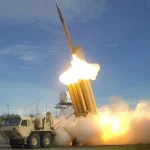
SpaceX launched 53 internet communication satellites to low Earth orbit on the Starlink Group 4-17 mission. With liftoff scheduled for 09:42 UTC (5:42 AM EDT), the Falcon 9 launched from historic Launch Complex 39A (LC-39A). This mission marked SpaceX’s 18th mission of 2022, making a pace of one Falcon 9 launch every seven days. In the event of a scrub, there was a backup window less than 24 hours later on May 7.
The 53 Starlink satellites will be placed into an initial 53.22-degree inclination, 285 km by 308 km low Earth Orbit. In a process that takes months, the satellites will slowly raise their orbit to a 53.2 degree, 540 km circular orbit using their onboard Krypton ion engines.
Citing the cumulus cloud rule as the primary weather concern, the 45th Weather Squadron’s weather forecast predicted conditions would be greater than 90% go for launch.
SpaceX’s autonomous spaceport drone ship A Shortfall of Gravitas was positioned 643 km downrange. ASOG was tugged downrange by SpaceX’s tri-purpose boat Doug, which served as the ASDS tug, support, and fairing recovery vessel.
The booster supporting this mission was B1058-12, the third Falcon 9 booster to fly for the 12th time.
| B1058’s missions | Launch Date (UTC) | Turnaround Time (Days) |
| SpaceX Demo-2 | May 30, 2020 19:22 | N/A |
| ANASIS-II | July 20, 2020 21:30 | 51.09 |
| Starlink v1.0 L12 | October 6, 2020 11:29 | 77.58 |
| CRS-21 | December 6, 2020 16:17 | 61.20 |
| Transporter-1 | January 24, 2021 15:00 | 48.95 |
| Starlink v1.0 L20 | March 11, 2021 08:13 | 45.72 |
| Starlink v1.0 L23 | April 7, 2021 16:34 | 27.35 |
| Starlink v1.0 L26 | May 15, 2021 22:56 | 38.27 |
| Starlink Group 4-1 | November 13, 2021 12:19 | 181.56 |
| Transporter-3 | January 13, 2022 15:25 | 61.13 |
| Starlink Group 4-8 | February 21, 2022 14:44 | 38.97 |
As the name implies, this Starlink mission targeted the fourth shell of Starlink phase one. This shell is in a 540 km circular orbit. The shell that a certain Starlink launch is targeting can be found inside of the name: the first number, in this case 4 for Starlink Group 4-17, is the shell that the satellites will be deployed into.
Aerospace industry analysis
(adsbygoogle = window.adsbygoogle || []).push({});
SpaceX is hoping to launch 60 missions in 2022, with about 40 of these being Starlink missions.
See Also
- Starlink 4-17 Updates
- SpaceX Missions Section
- L2 SpaceX Section
- Click here to Join L2
Ahead of the launch, B1058 did not perform a static fire. The rocket rolled out of the Horizontal Integration Facility (HIF) hours ahead of launch where it was then made vertical using the transporter erector (T/E). The T/E is used to fuel the second stage of the vehicle, provide structural support while vertical, provide power and air conditioning to the payload, and take the Falcon 9 from its horizontal position to its vertical position.
At T-38 minutes the Launch Director verified that the vehicle was go for propellant loading. Three minutes later, SpaceX began loading subcooled RP-1 onto both the first and second stages, as well as super chilled Liquid Oxygen (LOX) onto the first stage. The Falcon 9 uses RP-1 which is cooled to -7° C and LOX which is cooled to -205° C. By further chilling, therefore increasing the density of propellants, SpaceX can get more performance out of the Falcon 9—something that is crucial for reuse. This also comes with the trade-off that SpaceX is unable to hold the countdown once fuel loading has started.
At T-1 minute, the Falcon 9 entered start-up and began tank pressurization for flight. At this time, the Falcon 9 was fully in charge of its countdown—all technical aborts from this point forward would have been handled by the vehicle itself, and not the ground operators.
At T-3 seconds, the booster’s flight computer commanded the ignition of the first stage’s 9 Merlin 1D engines. The engines on the first stage ignited in pairs to reduce startup transients and loads on the vehicle.
Once the vehicle ensured that all systems were nominal, the Falcon 9 commanded the hydraulic clamps at the base of the vehicle to release, letting the Falcon 9 lift off from the pad.
| HR/MIN/SEC | EVENT |
|---|---|
| 00:01:12 | Max Q (moment of peak mechanical stress on the rocket) |
| 00:02:31 | 1st stage main engine cutoff (MECO) |
| 00:02:35 | 1st and 2nd stages separate |
| 00:02:41 | 2nd stage engine starts |
| 00:02:48 | Fairing deployment |
| 00:06:14 | 1st stage entry burn start |
| 00:06:33 | 1st stage entry burn complete |
| 00:08:04 | 1st stage landing burn start |
| 00:08:26 | 1st stage landing |
| 00:08:47 | 2nd stage engine cutoff (SECO-1) |
| 00:45:28 | 2nd stage engine starts |
| 00:45:29 | 2nd stage engine cutoff (SECO-2) |
| 00:54:30 | Starlink satellites deploy |
Once the satellites have deployed from the second stage, the second stage will perform a third deorbit burn.
SpaceX is expected to have two more Starlink missions in May: one from Vandenberg on May 10 and another from the Cape on May 17. Additionally, on May 25, SpaceX will launch the fifth dedicated rideshare mission, Transporter-5.
(Lead photo: Falcon 9 launches the Starlink Group 4-17 mission. Credit: Stephen Marr for NSF)